
Reviewing MBG Programme in Mimika, Gibran Finds Students Who Never Have Breakfast Before School
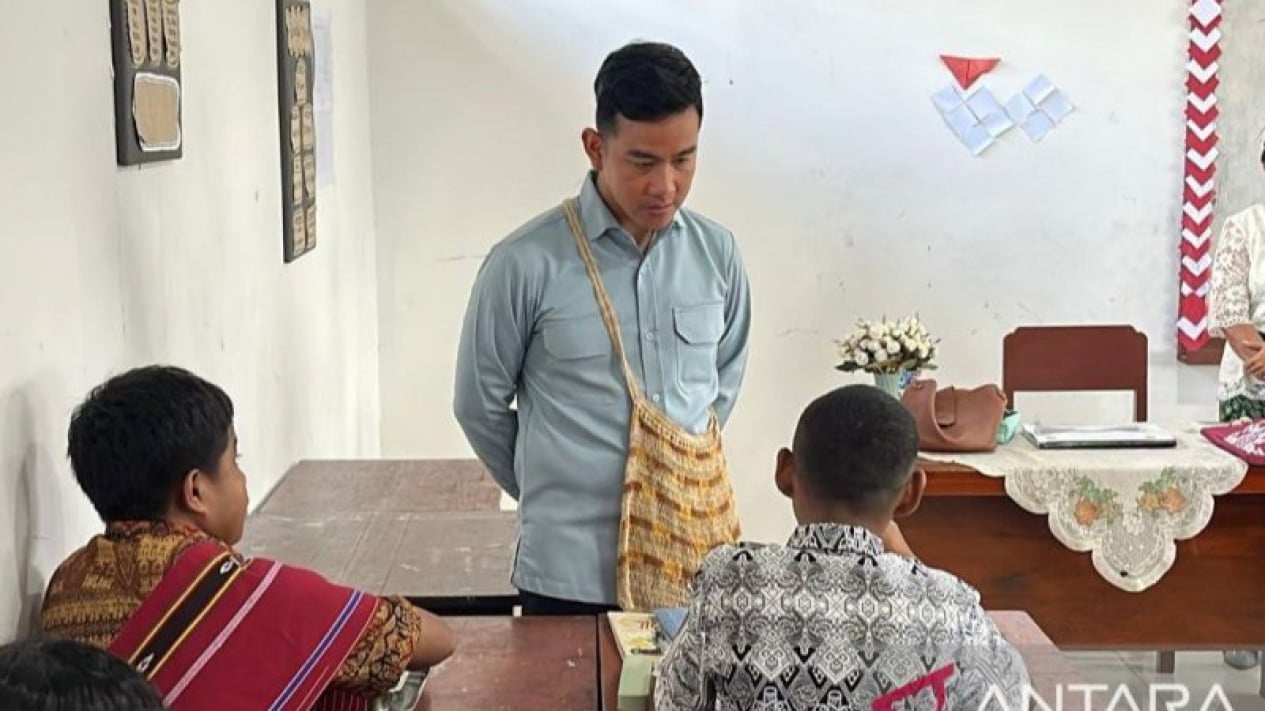
Vice President Gibran Rakabuming Raka discovered that several students at SMAN 4 Mimika do not eat breakfast at home before heading to school.
During his review of the Free Nutritious Meals (MBG) programme at SMAN 4 Mimika in Central Papua on Tuesday, Gibran found that the students were eating the MBG earlier, starting at 9:30 AM local time, because many had not had breakfast before arriving at school.
“Do you have breakfast at home?” Gibran asked one student who was eating the MBG.
“Never, sir,” the student replied, shaking his head at Gibran.
“You never have breakfast? Finish the side dish, finish the stuffed tofu. Do you like tofu?” Gibran asked again, which the student answered with a nod.
During the visit, Gibran directly observed the distribution of meals to students and interacted with teachers and pupils to understand the programme’s impact on the ground.
The MBG menu consisted of white rice with soy sauce chicken as the main dish, accompanied by stir-fried green beans and carrots, stuffed tofu, and an apple as dessert.
The visit coincided with Kartini Day, so teachers and students were seen wearing traditional attire from various regions.
Meanwhile, Suharti, a Sociology Teacher at SMAN 4 Mimika, stated that the MBG programme benefits students, especially those with limited access to food before going to school.
Suharti explained that many students do not have breakfast because there is no food available to eat at their homes.
She said that before the MBG programme, students were often found arriving late or even not attending school due to hunger.
“Before MBG, there were students who were late to school. When they didn’t come to school, the reason was? They wanted to go to school but we were hungry, we hadn’t eaten,” said Suharti.
According to her, the presence of MBG has brought positive changes to students’ discipline and learning readiness.
The number of students at SMAN 4 Mimika is recorded as 325, consisting of 150 male students and 175 female students across 11 classes at grades X, XI, and XII.