
Revealed: Why Canada Is Suddenly Targeting Turkish Military Technology
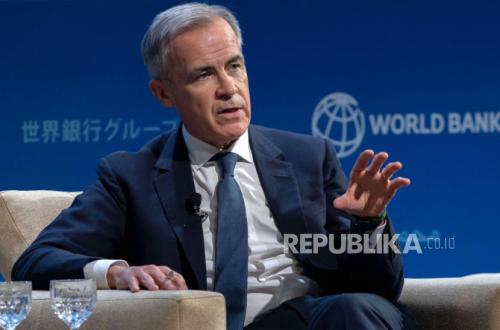
ISTANBUL — Canadian Prime Minister Mark Carney has warned of the dangers of a country relying on a single provider for strategic technology, after reported restrictions on Starlink and Starshield satellite communications disrupted Ukraine’s military operations. The incident has shown how decisions about access to communications infrastructure can affect the defence capabilities of a country at war.
Carney made the warning to journalists in Istanbul, Türkiye, on Friday (23 October 2026), as Ottawa seeks to broaden its technology and defence-industry partnerships with Ankara. Canada is exploring cooperation with Türkiye’s military industry to strengthen its national capabilities, particularly in drones, autonomous technology and the development of defence systems.
Carney condemned restrictions on satellite services used by Ukraine while the country was still facing Russia’s invasion. He said decisions that can undermine a country’s ability to defend itself raise serious security and humanitarian concerns.
“I struggle to find the right adjective to describe anyone who made this decision, or a group of people who made it, against a country that is genuinely fighting to protect its people’s lives from naked aggression,” Carney said, as reported by Bloomberg on Friday.
“Are we concerned? Yes, we are concerned,” he said.
Carney also warned that Canada must not allow its strategic capabilities to depend entirely on a single company that could change its service policies at any time or come under political pressure.
“As Canadians, we don’t want to be in a position where we depend on one provider that may change its views, or be forced to change them by a country, putting Canadians at risk or compromising our sovereignty,” he said.
The remarks came after several US media outlets reported that SpaceX satellite communications services had been speed-restricted, affecting the operation of some Ukrainian military systems.
However, developments on Saturday (24 October 2026) indicated that services had been restored. Ukraine’s Ministry of Defence said Starlink and Starshield connection speeds had returned to normal after restrictions lasting more than a week.
Reuters reported that Ukraine’s monitoring system recorded stable connections on devices moving at more than 400 kilometres per hour. Previously, restrictions were reported to have disrupted connections when devices were moving at around 160 kilometres per hour or faster.
The Ukrainian government has not explicitly confirmed, however, that all services have been fully restored.
The latest developments do not resolve the underlying concern raised by Carney: the vulnerability of defence systems when access to critical technology depends on the decisions of an external provider.
Starlink restored, but the issue is not resolved
The controversy began after reports emerged that access to satellite communications used by Ukraine’s military had been restricted.
The Wall Street Journal reported that speed restrictions on Starshield affected the operation of several Ukrainian drones. Some military commanders reportedly experienced communications problems and lost drones during operations.
Starlink is SpaceX’s satellite internet service. SpaceX was founded by Elon Musk. Starshield, meanwhile, is developed for government and national-security needs, including military communications applications.
The two services use related technology, but have distinct functions and service arrangements.
In modern military operations, satellite communications can connect personnel, transmit reconnaissance information and support the operation of uncrewed systems.
Disruption to a particular service can affect these capabilities, especially when equipment is moving at high speed or operating in areas without adequate ground communications infrastructure.
According to Reuters on Saturday, Ukrainian defence official Evhenii Khmara said service speeds had returned to normal.
Monitoring systems recorded stable connections at movement speeds of more than 400 kilometres per hour.
The statement marked an important development after Ukraine’s government had earlier reported continuing connection problems.
However, the restoration of service speeds does not automatically prove that all operational problems have been resolved.
There has been no comprehensive confirmation of the restrictions’ impact on every military unit, the number of drones that lost connection, or all the areas affected.
Reports of restoration should therefore be distinguished from claims that all Ukrainian satellite communications are once again operating without disruption.
Who ordered the Starshield restrictions?
The question of who was responsible for restricting the service is one of the most sensitive aspects of the controversy. The Wall Street Journal reported that Elon Musk ordered speed restrictions on the service used by Ukraine.
The newspaper also reported that US President Donald Trump contacted Musk to ask him to lift the restrictions. Reuters’ reporting on the issue, however, indicated that people in the White House were involved in the decision to restrict Starshield. The differing accounts suggest that the decision-making process remains unclear.
As of Saturday (24 October 2026), there had been no admission of responsibility that clarified the full decision-making process, including who issued the initial instruction and how the restrictions were implemented technically.
It therefore cannot be concluded that Musk acted entirely on his own initiative, or that Trump personally ordered the restrictions. The controversy escalated further after Trump said Ukraine’s communications service had returned to full speed.
Ukrainian defence officials, however, were still reporting signal problems on Friday. The conflicting statements show that announcements of restoration from Washington do not necessarily reflect the conditions experienced by users on the battlefield.
The Ukrainian Ministry of Defence’s report of restoration on Saturday provided a more recent update, although it did not answer all questions about the cause of the restrictions or who was responsible.
The issue has become a political concern in the United States because it involves the relationship between the government, private defence contractors and an allied country dependent on American technology.