
Revealed: What Prabowo Discussed in His Call with MSCI Chief
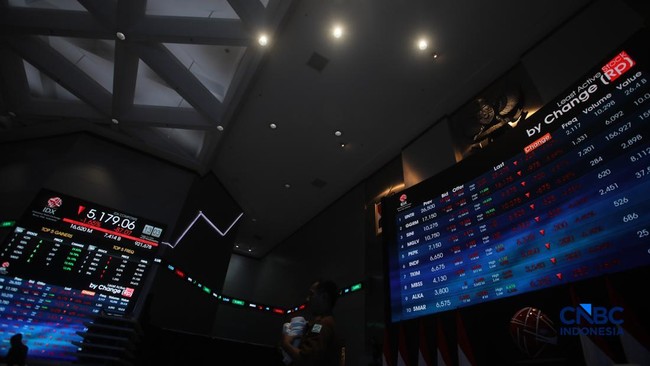
President Prabowo Subianto and Henry Fernandez, head of Morgan Stanley Capital International (MSCI), have discussed the outlook for Indonesia’s stock exchange and the implications for the country’s capital-market industry. The conversation took place by telephone, with Ray Dalio, an informal adviser to the Indonesia Investment Management Agency (BPI Danantara), acting as an intermediary.
BPI Danantara chief executive Rosan Roeslani disclosed some details of the discussion. The two main concerns were disclosure of highly concentrated shareholdings and firm enforcement against market violations.
“The first concern raised was disclosure, including disclosure of highly concentrated shareholdings. The second was compliance and enforcement. Those are the two main areas that need to be improved,” Rosan said, according to a statement cited on Thursday (26 November 2026).
Both issues form part of Indonesia’s capital-market reforms. Market regulators have also been addressing transparency around concentrated shareholdings, including the Indonesia Stock Exchange (IDX), the Financial Services Authority (OJK) and other relevant parties.
Hasan Fawzi, OJK’s chief executive for capital markets, financial derivatives and carbon exchanges, said that, alongside publishing the list of High Shareholding Concentration (HSC) stocks, regulators were gradually raising the minimum free-float requirement to 15 per cent, strengthening disclosure of ultimate beneficial ownership and expanding investor classifications.
“Capital-market reform does not stop at improving regulations or announcing policies. Our priority is to ensure consistent implementation, resulting in tangible improvements in transparency, liquidity, integrity and the investment appeal of Indonesia’s capital market,” Hasan said.
The IDX has identified 383 listed companies whose shares fall into the high shareholding concentration (HSC) category. The stocks have been disclosed publicly as a reference for investors making investment decisions.
OJK is also continuing enforcement efforts with law-enforcement agencies. It has sanctioned a number of parties found to have engaged in market manipulation on the IDX.
Listed companies, securities firms and market offenders
As of 7 November 2026, OJK had imposed administrative sanctions on seven listed companies and a number of related parties for breaches of capital-market rules. The sanctions were set out in Announcement No. PENG-4/PM.2/2026, issued in Jakarta on 6 November.
The seven companies sanctioned were PT Asri Karya Lestari Tbk (ASLI), PT Adhi Karya (Persero) Tbk (ADHI), PT Adhi Commuter Properti Tbk (ADCP), PT Widodo Makmur Unggas Tbk (WMUU), PT Kalbe Farma Tbk (KLBF), PT Enseval Putera Megatrading Tbk (EPMT) and PT Limas Indonesia Makmur Tbk (LMAS).
More recently, OJK imposed severe sanctions on a number of parties found to have manipulated trading on the IDX. The decision was set out in Press Release SP 237/DKPU/OJK/XI/2026, dated 21 November 2026.
Of the 10 capital-market cases pursued, three involving share-trading manipulation accounted for the largest amount: Rp23.77 billion (Rp23,770,535,696), ordered to be repaid as disgorgement of illicit gains.
OJK stressed that Rp23.77 billion was the amount ordered to be repaid, not the amount already recovered. The regulator also imposed bans on activities in the capital-market, derivatives and carbon-exchange sectors for between three and 10 years, and ordered the closure of 16 customer securities accounts.
The companies whose shares were manipulated by third parties—not by the companies themselves—included PT Grand House Mulia Tbk (HOMI), PT Saraswanti Anugerah Makmur Tbk (SAMF) and PT Suryamas Dutamakmur Tbk (SMDM).
In mid-October, several other stocks were also manipulated by certain individuals, including PT Dian Swastatika Sentosa Tbk (DSSA), PT Barito Renewables Energy Tbk (BREN) and PT Petrindo Jaya Kreasi Tbk (CUAN).
Companies directly sanctioned included PT Indosterling Technomedia Tbk (TECH), PT Karya Bersama Anugerah Tbk, PT Steel Pipe Industry of Indonesia Tbk, PT Garudafood Putra Putri Jaya Tbk, PT Semen Indonesia (Persero) Tbk, PT Mark Dynamics Indonesia Tbk and PT Anugerah Kagum Karya Utama Tbk.
The violations were conducted through a number of securities firms, including PT Indo Harvest Sekuritas, PT Elit Sukses Sekuritas, PT Erdikha Elit Sekuritas, PT Investindo Nusantara Sekuritas, PT Danasakti Sekuritas Indonesia, PT Artha Sekuritas Indonesia, PT Evergreen Sekuritas Indonesia, PT Sucor Sekuritas and PT Korea Investment and Sekuritas Indonesia.
Other firms named were PT KGI Sekuritas Indonesia, PT Bumiputera Sekuritas, PT FAC Sekuritas Indonesia, PT Waterfront Sekuritas Indonesia, PT Profindo Sekuritas Indonesia, PT Pluang Maju Sekuritas and PT Mirae Asset Sekuritas.
OJK also ordered the closure of securities accounts belonging to 15 people identified as having been used in share-trading activities that breached regulations. They were Susanti Anggara, Indra Cahyono, Melanie, Djudju Salim, Dewi Pramita, Susilo Priyadi, James Lioe, Alfredo Richard Titarsole, Sisilia Veronica, Sulfiani, Widya Purwito, Oktafiano, Yongky Wijaya, Erik Karman and Agus Setiawan Lesmana.
IDX moves to curb suspected algorithmic trading abuses
The IDX has changed its approach to monitoring suspected share-trading manipulation. Since 6 November 2026, the exchange has begun informing the public when it detects indications of irregular trading activity in the capital market.
IDX president director Jeffrey Hendrik said that previously, monitoring of suspected market manipulation was conducted internally and was not known to the public or market participants. When it detected possible manipulation, the IDX would conduct an internal investigation, coordinate with OJK and proceed with sanctions.
Under the new monitoring methodology, however, the IDX will announce publicly when it finds indications of improper trading practices.
“If the exchange finds indications of improper practices, it will inform the public,” he told journalists on Monday (23 November 2026).
The announcements will disclose information including the stocks involved, the trading period under review, the number of investors involved, and the number of related securities firms and their share of overall transactions.
Jeffrey said the disclosures were intended to signal to the market that the exchange was aware of the activity and was investigating it.
The IDX will then report its investigation findings within 45 days of the announcement. If a breach by an exchange member or securities firm is established, the IDX will take action and impose sanctions within its authority.
If the suspected breach involves an investor, the exchange will refer the further investigation and any sanctions to OJK.
“These measures are all intended to prevent further action. By making the announcement, we hope the market and investors will understand that the exchange is conducting an investigation,” Jeffrey said.
He said the greater transparency could deter retail investors and foreign investors using algorithmic trading from becoming involved in trading activity suspected of being irregular.
The exchange hopes that potentially manipulative activity will not continue once those involved know that their trading is being monitored.
To strengthen surveillance, the IDX is also working with Nasdaq, which provides exchange surveillance systems. Nasdaq will help build the capacity of the monitoring team and assign a specialist team to work with the IDX to align surveillance parameters with global best practice.
The support from Nasdaq is expected to begin in early December 2026. The initiative forms part of the IDX’s reforms to improve transparency, liquidity and the effectiveness of surveillance in Indonesia’s capital market.
Indonesia has come under scrutiny from MSCI after the global index provider warned that Indonesian stocks could be removed from its indexes in 2027. The country’s stock-market status is also at risk of being downgraded by two levels, from emerging market directly to standalone market, bypassing the frontier-market category.
However, according to the report, Fernandez said MSCI did not intend to downgrade Indonesia’s market status automatically. Instead, MSCI would continue advising Indonesian officials on the steps needed to ensure the capital market meets the required standards.
Source: jawawa.id (https://jawawa.id/newsitem/revealed-what-prabowo-discussed-in-his-call-with-msci-chief-1795675865)
Originally published by CNBC Indonesia (https://www.cnbcindonesia.com/market/20261126122728-17-788664/terungkap-ini-bocoran-isi-telepon-prabowo-dengan-bos-msci), translated from Indonesian