
Revealed! This Country Becomes Replacement for Indonesia's Oil Imports from the Middle East
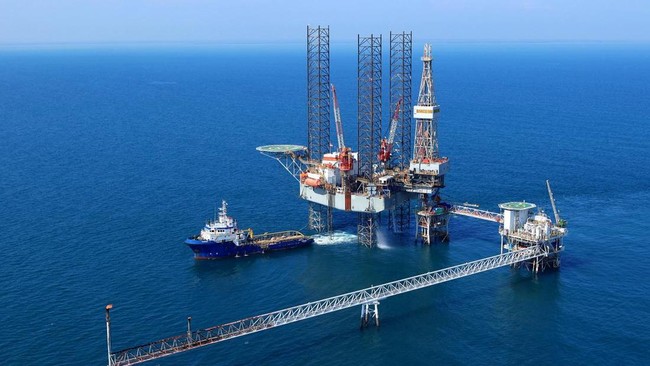
The government is continuously taking anticipatory measures to maintain national energy supply resilience, particularly amid the geopolitical dynamics in the Middle East region.
Minister of Energy and Mineral Resources Bahlil Lahadalia revealed that Indonesia’s energy imports, especially crude oil, still partially depend on the Middle East region. However, the portion is relatively small and is now being redirected to other countries.
“The crude [from there] is around 20-25 percent. And we have been able to obtain replacements from several countries such as Angola, Africa, Nigeria, America, and several other countries. So we are, insya allah, already clear,” Bahlil stated, quoted on Thursday (9/4/2026).
In addition, he emphasised that Indonesia does not import finished fuel oil (BBM) from the Middle East, but only in the form of crude oil which is then processed at domestic refineries.
“We never import finished BBM from the Middle East. What we have is just the crude,” Bahlil said.
Citing data from the Handbook of Energy and Economic Statistics of Indonesia 2024, Indonesia’s crude oil production has continued to experience a downward trend in recent years.
In 2024, crude oil production was recorded at 212.33 million barrels or equivalent to around 581 thousand barrels per day. This figure is lower compared to previous years which were still above that level.
Meanwhile, Indonesia’s crude oil exports are relatively small. Throughout 2024, exports were recorded at only 27.2 million barrels. Meanwhile, crude oil imports reached 127.79 million barrels, far larger than exports.
The data shows a trend of increasing imports over the past five years. In 2020, crude oil imports were recorded at 79.68 million barrels. This figure then increased to 104.40 million barrels in 2021, rose again to 114.52 million barrels in 2022, and reached 132.38 million barrels in 2023.