
Revealed: The Triggers Behind Long Fuel Queues in Sumatra, According to ESDM and Pertamina
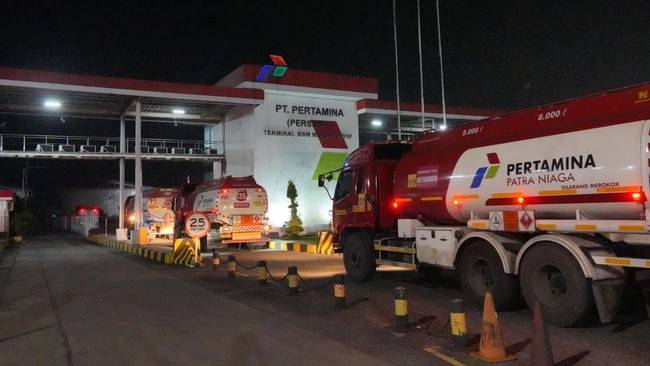
Jakarta, CNBC Indonesia - The Ministry of Energy and Mineral Resources (ESDM) has revealed the cause of the long fuel queues that occurred at a number of public filling stations (SPBU) in several areas of Sumatra.
Deputy Minister of Energy and Mineral Resources Yuliot Tanjung said his ministry had asked the Downstream Oil and Gas Regulatory Agency (BPH Migas) and PT Pertamina (Persero) to conduct a comprehensive evaluation to identify the causes of the queues in the field.
“So I, from the Ministry of Energy and Mineral Resources, have already asked the head of BPH Migas to carry out checks together with PT Pertamina, to see what the problems are on the ground. So we have identified them,” Yuliot said at the DPR RI building, quoted on Friday (17/7/2026).
The evaluation is focused, at the very least, on the fuel distribution system, from the receipt of supplies at integrated terminals through to delivery to petrol stations.
“So we have identified them. First, the availability of fuel at the integrated terminals, so the receipt of supplies has been relatively smooth. Then the distribution from the integrated terminals to the petrol stations, whether there were transport disruptions or what. We have also dispatched teams to the field,” he said.
According to Yuliot, the queues only occurred in a few areas. Even so, the government is still conducting an evaluation so that fuel distribution can return to optimal levels. In addition, the national fuel stock is in a safe condition.
“As for the stock, it is safe, more than sufficient,” he said.
Pertamina Speaks Out
The Deputy Chief Executive of Pertamina Patra Niaga, Taufik Aditiyawarman, acknowledged that there had been an unusual surge in demand at several points in Sumatra, leading to supply delays. The situation was triggered by consumers migrating from non-subsidised to subsidised fuel.
He stressed that the company is accelerating distribution in response to the increase in uptake volumes of Pertalite and Solar, which have exceeded normal daily consumption.
“We are also aware that in recent times there have still been queues and excessive purchases, or panic buying, in several regions across Sumatra, which was also influenced by the increase or shifting of fuel consumption from non-subsidised to subsidised fuel, namely Pertalite and Solar, and there may also have been a lag in distribution,” he said during a hearing with Commission XII of the DPR RI in Jakarta, quoted on Friday (17/7/2026).
The company recorded that Pertalite distribution in July had reached 104% of normal daily consumption, while subsidised Solar reached 105%. The increase came as sales of the Pertamax Series fell by 18% because consumers chose to switch to cheaper fuel types.
“This has also had a direct impact on gasoil products, where the composition of gasoil products has risen by almost 1.5% in volume, and biosolar has also increased by almost 13.9% in the July period alone,” said Eko Ricky Susanto, Director of Retail Marketing at Pertamina Patra Niaga, on the same occasion.
As a follow-up measure, Pertamina has added tanker fleets and extended the operating hours of petrol stations and depots in the affected areas. The company is committed to maintaining product availability and smooth daily distribution to ease public concerns about stock shortages.
“The increased distribution can still be served and is monitored daily. In managing this, we are committed to maintaining three main things: product availability, smooth distribution, and the accuracy of distribution targets,” Taufik concluded.