
Revealed: The Sahara Desert Was Once Filled with Forests, Rivers, and Lakes
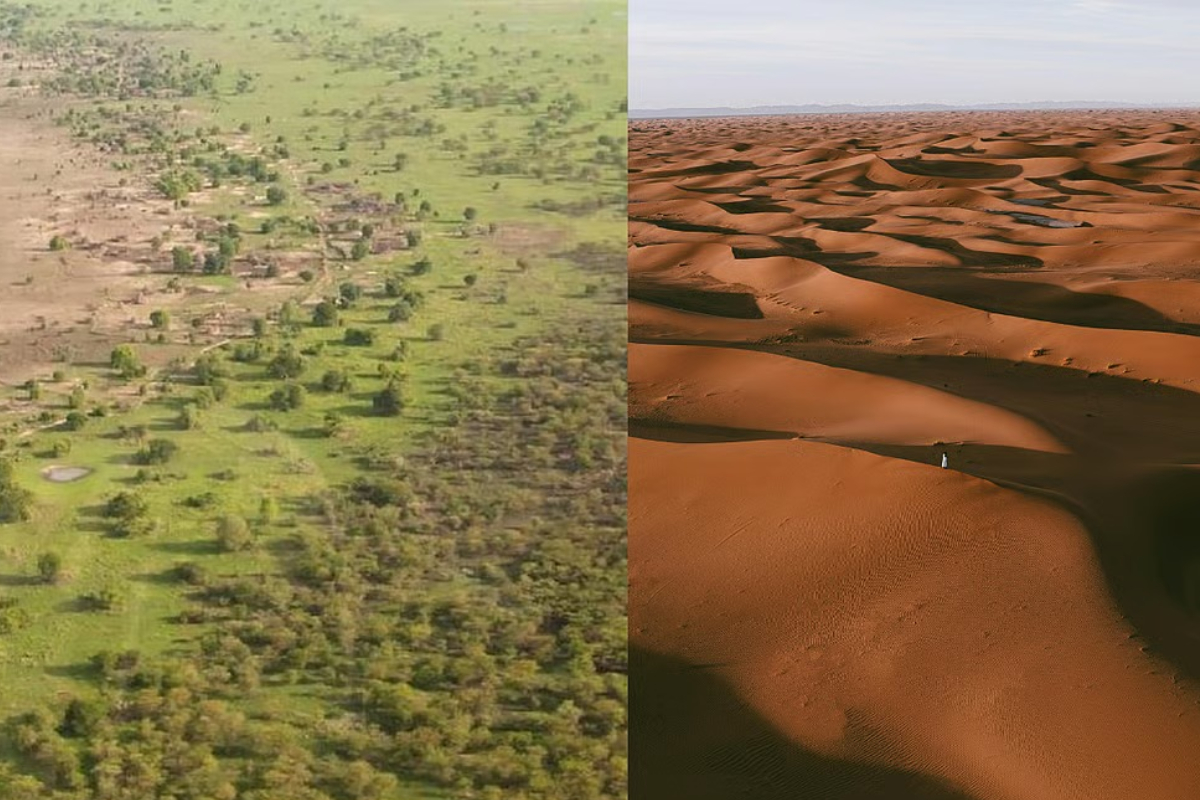
The Sahara Desert, stretching across North Africa and known as the world’s largest hot desert with its arid landscape of sand dunes and extreme heat, was once a fertile green landscape filled with forests, meadows, rivers, and lakes inhabited by diverse flora and fauna. Evidence gathered by archaeologists and palaeontologists indicates that the last major green period in the Sahara, officially known as the African Humid Period, began shortly after the end of the last Ice Age, around 11,700 to 14,500 years ago, and persisted until about 5,000 years ago. Ancient rock paintings and fossilised bones of hippopotamuses, elephants, giraffes, crocodiles, and fish prove that a freshwater ecosystem in the Sahara was once very much alive and supported ancient human communities. One piece of evidence discovered through radar satellite imagery is the Tamarasset River. This ancient river once flowed from the Atlas and Hoggar Mountains in Algeria towards the Atlantic Ocean in Mauritania and is now buried beneath vast expanses of sand. At its peak, the river’s flow and size are estimated to have made it one of the largest river systems in the world. Scientists have found that the Sahara’s transformation from desert to green landscape was not a random event but part of a natural climate cycle that repeats at specific intervals, particularly within the precession cycle of the Earth’s axis, which rotates every 20,000 to 21,000 years. Changes in the tilt and direction of the Earth’s rotational axis trigger an increase in summer solar radiation in the Northern Hemisphere. This intensive heating of the North African landmass triggered a phenomenon of precipitation air suction, multiplying the strength of the West African Monsoon and bringing abundant rainfall far into the northern regions that are now desert. The weather cycle was further reinforced by vegetation feedback mechanisms. As plants began to grow, the foliage and green cover absorbed more solar heat than the reflective sand. Vegetation also helped the soil retain moisture, reduced atmospheric dust, and triggered evaporation from lakes and wetlands, which in turn generated more rainfall. This interaction process kept the Saharan climate wet and green for thousands of years. Evidence of this cycle was found through sediment research in the Atlantic Ocean and the Mediterranean Sea. Analysis of sand dust layers and river mud sediments records that the Sahara has alternated between arid and green phases at least 230 times over the last 800,000 years. A geological study published in the journal Nature Geoscience even traced the astronomical precession footprint that triggered wet and dry climates in the Sahara back to 11 million years ago. Although the Earth’s orbital cycle continues to this day, scientists stress that the exact date of the arrival of the next ‘Green Sahara’ period cannot be predicted simply by counting backwards in 20,000-year cycles. The extent of Arctic ice sheets, changes in ocean circulation, atmospheric carbon dioxide levels, and the impact of human-induced global climate change all influence the movement of monsoon winds, meaning the Sahara’s future condition may not fully replicate the natural cycles of the past.