
Revealed! The Root Cause of Bus Brake Failures Leading to Fatal Accidents
A spate of recent bus accidents has once again cast a spotlight on land transportation safety issues in Indonesia, with the latest incidents involving an ALS bus in South Sumatra and a Chaya Trans bus in Central Java. Amidst high public mobility using buses, questions regarding how prepared the industry is to ensure operating vehicles truly meet safety standards have resurfaced.
Bus safety is not solely determined by the condition of the engine or chassis. The body-building process, mounting the body onto the chassis, the electrical system, load distribution, and vehicle inspection before handover to the customer are all sequences that determine a vehicle’s roadworthiness.
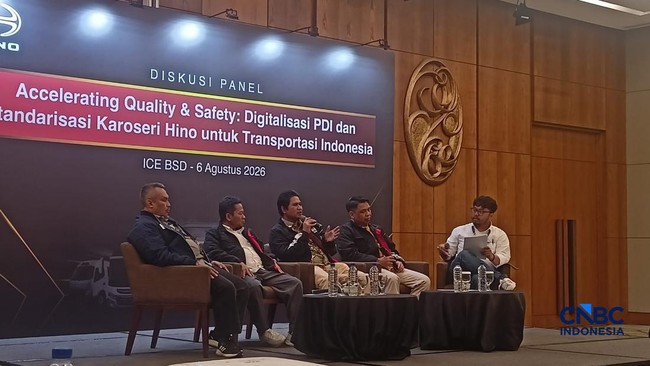
"Basically, a tough chassis is only half-finished; it is just a chassis. If this chassis is not fitted with a good body and proper body installation, the risks are quite substantial, both in terms of safety and the reliability of the unit itself," said Heri Komala, Body Maker Department Head at HMSI, in Tangerang recently.
The issue of bus safety is more complex because vehicles operating on the road are the result of integration between the chassis and the body. In the body-building process, several technical aspects must be considered, ranging from design and load distribution, the welding process, the installation of U-bolts or mounting brackets, to the electrical installation.
The body installation process is one of the most crucial parts of the standardisation programme. Errors in this process can potentially affect vehicle components. One example is the welding process on the chassis. Welding spatter that hits certain components can cause problems in the vehicle’s system.
"When welding, a single spark falling onto an air hose can disrupt the vehicle’s braking system," said Dodi.
In addition to standardising the body-building process, the industry is also promoting the digitalisation of the Pre-Delivery Inspection (PDI). Previously, vehicle inspections were conducted using paper-based check sheets. Now, an application is used so that inspections are carried out in a more uniform format and the data is stored digitally.
This digitalisation emerged after the company discovered differences in inspection methods across various coachbuilders. Through digitalisation, the vehicle inspection process is conducted using the same standards and methods.
Source: jawawa.id (https://jawawa.id/newsitem/revealed-the-root-cause-of-bus-brake-failures-leading-to-fatal-accidents-1786344764)
Originally published by CNBC Indonesia (https://www.cnbcindonesia.com/news/20260810103841-4-757871/terbongkar-ini-biang-kerok-rusak-rem-bus-bikin-kecelakaan-bawa-maut), translated from Indonesian