
Revealed: Reasons Students Confronted and Chased Nusron, Sudaryono, and Budiman During UGM Discussion
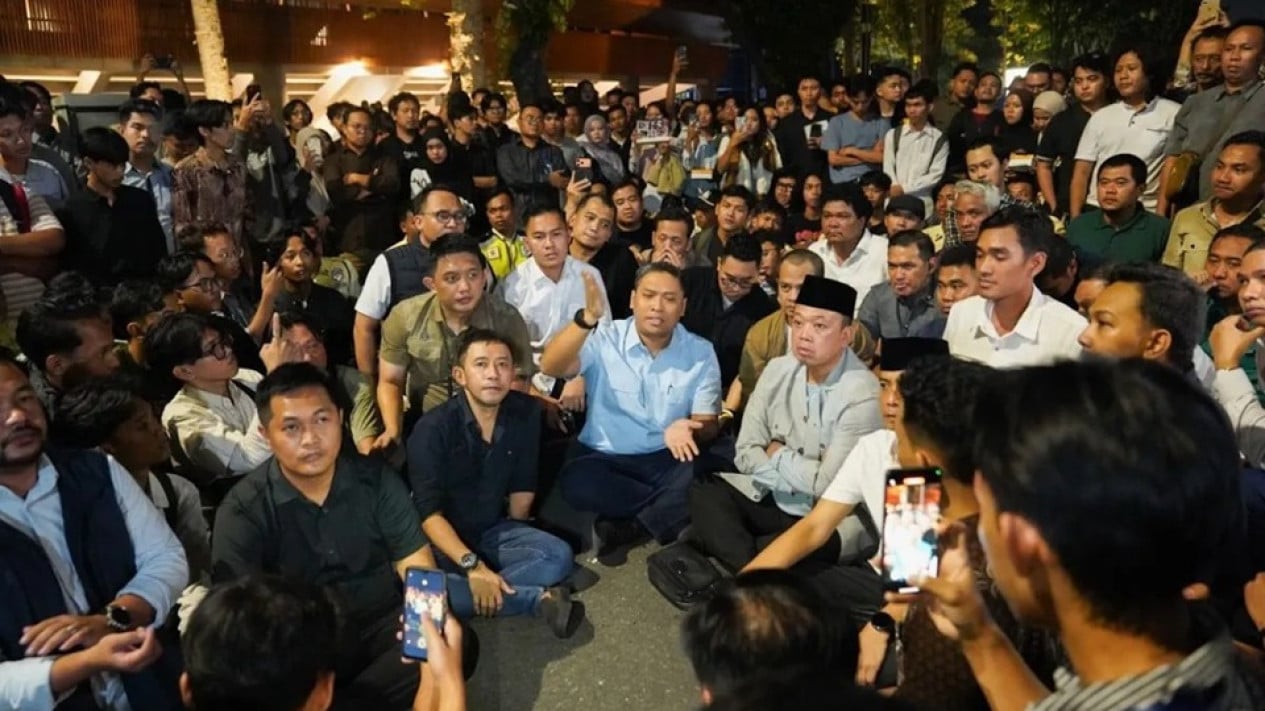
The reasons behind a student action that disrupted and chased several state officials during a discussion at the Gadjah Mada University (UGM) Innovation and Creativity Arena (GIK) have been revealed. The students asserted that the action was not without cause, but rather a form of protest against a government they deem no longer receptive to public criticism.
The incident occurred during an event titled ‘Kopdar Bareng Mas Dar’ held on the UGM campus in Sleman, Special Region of Yogyakarta, on Monday evening, 15 June 2026. The discussion featured Minister of Agrarian Affairs and Spatial Planning/Head of the National Land Agency (ATR/BPN) Nusron Wahid, Deputy Minister of Agriculture Sudaryono, and Head of the Poverty Alleviation Acceleration Agency (BP Taskin) Budiman Sudjatmiko.
Carrying the theme ‘Pancasila as the Unifier of the Nation’, the forum initially proceeded normally and was attended by many students eager to hear the officials’ views. However, the atmosphere shifted during the presentation session, culminating in an open protest from the students present.
The students involved identified themselves as the UGM Student Alliance. Some claimed they had been present from the start to follow the discussion. Mesa, the Chairperson of the UGM Student Union (SEMA), voiced the reasons behind the protest. He stated that the officials were not fit to speak about the values of Pancasila while various issues remained unresolved in society. “They are not worthy of discussing Pancasila as long as Indonesia silences the people’s voice, as long as they consider criticism a disturbance, and as long as they waste public money on useless programmes,” Mesa declared. The statement reflected the students’ disappointment with government policies perceived as not siding with the people.
Mesa assessed that conventional methods of conveying public aspirations are no longer effective in gaining the government’s attention. Therefore, he explained, directly confronting public officials was chosen as a way to deliver criticism openly. He even suggested that ordinary discussions are no longer sufficient for these officials.