
Revealed: Leonardo da Vinci’s “Secret” About Nature 500 Years Ago
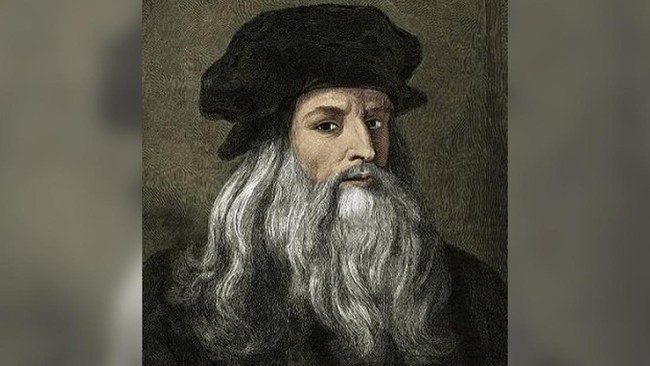
Jakarta, CNBC Indonesia – Leonardo da Vinci is best known for masterpieces recognised around the world, such as the Mona Lisa and The Last Supper.
Behind his reputation as a painter, however, Leonardo was also a scientist with a deep interest in nature.
More than five centuries ago, he studied a range of natural phenomena, from the movement of water and the structure of plants to human anatomy and the mechanics of bird flight.
His approach resonates with modern environmental thinking, which emphasises the connections between people, ecosystems and natural resources.
Fritjof Capra, a physicist and author of The Science of Leonardo, wrote in an article for the Center for Ecoliteracy that Leonardo’s scientific approach remains relevant today.
According to Capra, Leonardo understood nature as an interconnected system rather than a collection of separate parts.
As sustainability attracts growing attention from governments, businesses and communities around the world, an intriguing question arises: how can the thinking of a scientist who lived more than 500 years ago be linked to the concept of sustainability as it is understood today?
Leonardo da Vinci and his interest in nature
Leonardo da Vinci was born on 15 April 1452 in Vinci, in the region of Florence, now part of Italy. He lived during the Renaissance, a period of rapid development in European art, science and thought.
According to the Public Broadcasting Service (PBS), advances in trade, banking and the exchange of knowledge during the Renaissance helped drive progress in art, mathematics and science.
Leonardo was known as a polymath, someone with expertise across a range of disciplines. As well as painting, he studied anatomy, botany, geology, mechanics and hydrology.
He recorded many of his observations in scientific notes and sketches, emphasising the importance of direct observation in understanding natural phenomena.
One subject that drew particular interest from him was water.
In its article “Leonardo da Vinci and Water”, Active Sustainability highlights Leonardo’s interest in environmental processes and the importance of water to life.
Leonardo described water as “the vehicle of nature”.
His interest is evident in his studies of river currents, whirlpools, erosion and the relationship between water and the landscape, documented in the Codex Leicester.
Seeing the Earth as an interconnected system
One of Leonardo’s striking ideas was to view the Earth as a system with similarities to the human body.
In his scientific notes, Leonardo wrote: “We may say that the Earth has a vital force of growth, and that its flesh is the soil; its bones are the successive strata of the rocks which form the mountains.”
He described soil as the Earth’s flesh, layers of rock as its bones, watercourses as its blood, and the tides as the Earth’s breathing.
The analogy shows how Leonardo used similarities between the human body and the environment to understand natural processes.
Capra links this approach to systems thinking: a way of understanding a phenomenon through the relationships between its component parts.
For example, deforestation affects more than vegetation. It can also alter water systems, increase the risk of erosion and disrupt people’s lives.
Systems thinking therefore highlights the importance of addressing environmental problems as a whole, rather than considering one aspect in isolation.
Learning from nature to create innovation
Leonardo’s interest in nature went beyond scientific observation. He also drew inspiration from natural mechanisms when designing technology.
One example was his study of bird flight.
According to PBS, Leonardo observed how birds used air currents, wing movements and gravity to fly. He captured these observations in sketches and designs for flying machines.
This approach resembles biomimicry, the development of innovations inspired by nature’s structures and mechanisms.
Today, biomimicry is used in a range of fields, including architecture, materials, energy and technology design.
Capra argues that Leonardo treated nature as a source of knowledge and inspiration, an approach consistent with ecological design, which takes ecological principles into account.
Biomimicry, however, is a modern concept used to explain the relevance of Leonardo’s approach; it was not a term he coined.
Leonardo’s concern for living beings
Leonardo also showed concern for animal life, as well as studying nature.
According to Capra and Active Sustainability, his interest in nature began at a young age. Some historical accounts describe him as a vegetarian because he was reluctant to harm animals.
He is also said to have bought birds that were being kept in cages and sold at markets, then released them back into the wild.
Capra relates this outlook to deep ecology, an environmental philosophy that holds that living beings have intrinsic value, regardless of their usefulness to humans.
Under this approach, humans are seen as part of an interdependent web of life, rather than as separate from nature.
Deep ecology, however, is a modern concept that Capra uses to interpret Leonardo’s thinking.
Leonardo’s legacy for modern sustainability
More than 500 years after his lifetime, Leonardo’s ideas remain relevant to understanding today’s environmental challenges.
According to Capra, one of Leonardo’s most important legacies was his ability to combine art, science and design to understand the relationships found in nature.
This approach aligns with the principles of sustainable development, which require an understanding of the links between economic activity, human needs and environmental conditions.
For example, water-resource management cannot be separated from the state of forests, land use, industrial activity or community needs.
Similarly, biodiversity protection is closely connected to climate change, agriculture and infrastructure development.
Although Leonardo lived long before the modern concept of sustainability emerged, his thinking underscores the importance of understanding nature as an interconnected system.
As environmental challenges grow more complex and global awareness of sustainability increases, Leonardo’s ideas are finding renewed relevance.
As governments and businesses increasingly integrate sustainability principles into policy and business strategies, Leonardo’s legacy is a reminder that economic and technological progress must go hand in hand with an understanding of nature and the balance of ecosystems.
Source: jawawa.id (https://jawawa.id/newsitem/revealed-leonardo-da-vincis-secret-about-nature-500-years-ago-1794405131)
Originally published by CNBC Indonesia (https://www.cnbcindonesia.com/research/20261111114101-128-784247/terungkap-ini-rahasia-leonardo-da-vinci-tentang-alam-500-tahun-lalu), translated from Indonesian