
Revealed: Causes of Jakarta's Intense Heat Wave
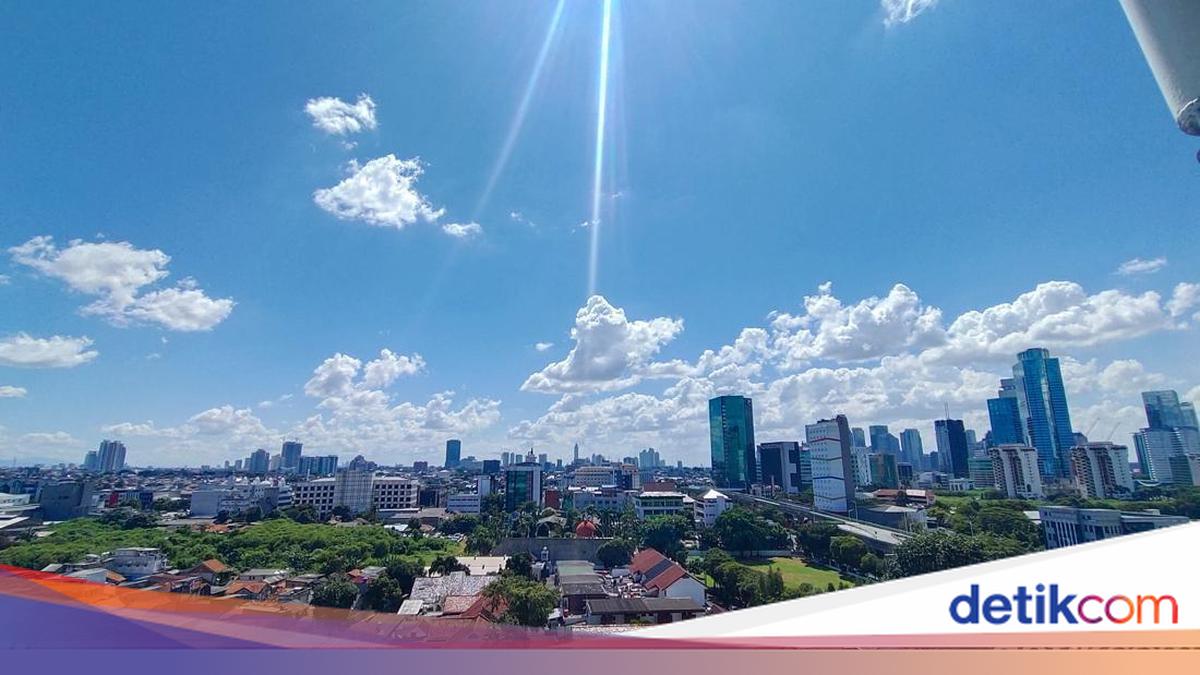
Jakarta has felt considerably warmer over recent days. The Indonesian Meteorological, Climatological and Geophysical Agency (BMKG) has identified several factors responsible for this phenomenon.
Ida Pramuwardani, Acting Director of Public Meteorology at BMKG, provided an explanation for the occurrence. She cited strong solar radiation striking the earth without cloud cover as the primary cause.
“The warmer air conditions recently have been generally influenced by relatively strong solar radiation and uneven cloud cover during daytime,” Ida stated when contacted on Saturday, 14 March 2026.
Additionally, she noted that the region is currently experiencing a seasonal transition. During this period, she explained, weather from morning through midday becomes noticeably hotter.
“Additionally, the characteristics of the seasonal transition period, in which weather from morning through midday tends to be considerably hotter, though afternoon and evening hours still have the potential for localised rainfall,” she remarked.
Ida also touched upon the potential early arrival of the dry season in Indonesia. She predicted that the 2026 dry season would begin across much of Indonesia in April.
“BMKG predicts the 2026 dry season potentially arriving earlier in several Indonesian regions. Most of Indonesia is predicted to enter the dry season during April (114 zones; 16.3%), May (184 zones; 26.3%), and June 2026 (163 zones; 23.3%), beginning with the Nusa Tenggara region and then progressively spreading to other Indonesian regions,” she stated.
This condition is also beginning to occur across Java. Consequently, she continued, weather will be dominated by clear conditions.
“Currently, the dry season has already entered several regions across Java, therefore weather patterns are dominated by clear to heavily cloudy conditions, though there remains potential for moderate to heavy rainfall in several areas,” she added.
Not Due to Early Dry Season Arrival
Subsequently, Guswanto, Secretary General of BMKG, conveyed that the hot weather in Jakarta is not actually due to an early dry season arrival. He cited atmospheric factors influencing the situation.
“The recent hot weather in Jakarta is not solely due to the dry season arriving earlier, but rather influenced by a combination of atmospheric factors. Following heavy rainfall several days ago, the sky cleared, causing solar radiation to feel more intense,” Guswanto stated when contacted separately.
He also attributed the high temperatures in Jakarta to solar radiation. He noted that sunlight has recently struck the land directly.
“Solar radiation—clear skies mean sunlight directly strikes the surface without much cloud obstruction, therefore heat feels more intense,” he explained.
Additionally, there is the factor of the apparent motion of the sun. This solar movement, he continued, influences temperatures across Indonesia.
“Additionally, the current apparent motion of the sun is moving northward from the equator, therefore Indonesia’s central and southern regions (including Jakarta) receive more perpendicular solar radiation exposure during midday. This is what makes the weather feel hotter despite not yet entering the full dry season,” he stated.
“The apparent solar motion path ranges from 23.5° South to 23.5° North throughout the year. This condition determines the intensity of solar radiation, day-night length, and the phenomenon of shadowless days,” he added.