
Returning the Academic Ability Test to Its Original Purpose
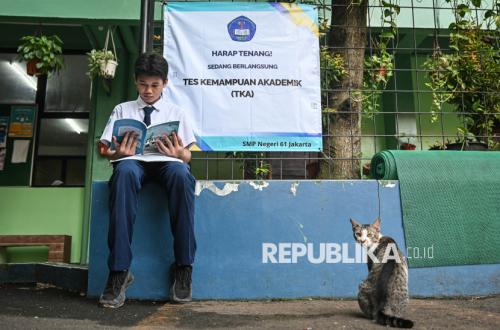
Under the rules, the primary purpose of the Academic Ability Test (Tes Kemampuan Akademik, or TKA) is to provide an overview of each pupil’s academic ability. Its results are also expected to help schools evaluate and improve the learning process. The TKA is not the same as the National Examination (Ujian Nasional, or UN), because it does not determine whether a pupil graduates.
However, the issue is not that simple. Another matter needs attention: how pupils, parents and schools understand and respond to the TKA.
When TKA scores began to be taken into account in admissions to the next level of education, particularly through the achievement pathway in the New Pupil Admissions System (Sistem Penerimaan Murid Baru, or SPMB), the test took on a different role. For parents and pupils, the result was no longer merely a record of academic ability. It could become one of the factors determining their chance of entering their preferred higher education institution.
Another consequence is that preparation for the TKA is taking up an increasing share of school learning. More of pupils’ time and attention is being directed towards practising questions, taking mock tests, studying material expected to appear in the exam and finding ways to answer correctly. Without realising it, broader learning activities — such as fostering creativity, critical thinking, collaboration, communication and character — appear to be pushed aside.
Reflection
After the TKA has been held, senior secondary pupils still have another semester of learning to complete. This raises the question of how good the teaching and learning will be during that semester if the school has already devoted much of its attention and energy to preparing for the test. Will schools still have enough time and opportunity to develop pupils’ interests, talents, creativity and other abilities that cannot all be measured through academic tests?
The TKA could turn schools into something like coaching centres, where pupils spend every day practising questions because of the test. Will schools still serve as places where children can get to know themselves, develop their abilities and interests, build character, learn to respect others and prepare for an increasingly complex life? Academic ability is important and must continue to be strengthened. But education must not be judged solely by test scores.
Another concern is that TKA preparation may begin earlier in the future. If results are considered highly influential in pupils’ chances of continuing their education, they may be steered towards preparing for the test from Year 10. This would mean that it is not only Year 12 pupils who are busy with the TKA: the entire course of senior secondary education could increasingly be shaped by the pursuit of test results.
Do not repeat the history of the National Examination
The experience of the UN should serve as a valuable lesson. When examinations become too dominant, schools can become trapped in a focus on scores, teachers lose the freedom to develop learning, and parents are encouraged to spend more on private tutoring. Surely we do not want the same cycle to recur under a different name and with a different instrument.
What should be done to prevent the TKA from repeating problems that emerged during the UN era?
First, the government needs to clarify the TKA’s place in the national education system. It should be returned to its primary function as a tool for measuring academic attainment, rather than becoming the goal of learning. Its results may be used in selection for further education, but that use should take account of other indicators, such as pupils’ learning records, non-academic achievements and individual potential.
To that end, the government should assess whether TKA scores have been given a proportionate weighting in admissions to further education. A single assessment must not become an overly dominant factor in determining someone’s educational future. The principle is that assessment should support decision-making, not become the sole determinant of opportunity.
Second, the impact of the TKA on learning in schools needs to be monitored. Education offices should ensure that schools do not turn lessons into excessive question-drilling programmes. Learning should remain meaningful after the TKA. Teachers need the freedom to develop pupils’ abilities holistically, including critical thinking, creativity, collaboration and character.
Third, the government should strengthen access to free learning support for all pupils. If the TKA requires preparation, the government and schools should provide sample questions, supplementary materials, mock tests and high-quality digital learning resources. Pupils would then not have to pay extra to gain adequate learning opportunities.
Fourth, evaluations of the TKA should involve a range of stakeholders. It is not enough for the government to assess the smooth running of the test, the quality of its questions and the scores achieved. It should also establish how pupils, parents, teachers, headteachers and the wider community respond. Does the TKA improve the quality of learning? Does it increase pupils’ psychological burden? Does it prompt families to spend more on supplementary education? Are pupils in urban and rural areas equally prepared?
These questions need to be answered through a comprehensive policy evaluation. The success of education policy is determined not only by whether administrative targets are met, but also by its impact on society.
Ultimately, educational success is not measured by how many questions pupils can answer correctly, but by how far education develops knowledgeable, principled, independent and creative people who are ready to face the future.
We must not become so busy preparing pupils for tests that we lose the opportunity to prepare them for life.