
Returning Hajj Pilgrims Undergo Layered Health Checks Before Being Sent Home
The return of Hajj pilgrims to Indonesia does not simply conclude when the Garuda Indonesia aircraft lands at Minangkabau International Airport (BIM). A series of health examinations must be completed at the airport and the Hajj dormitory before they can be reunited with their families and return to their respective regions.
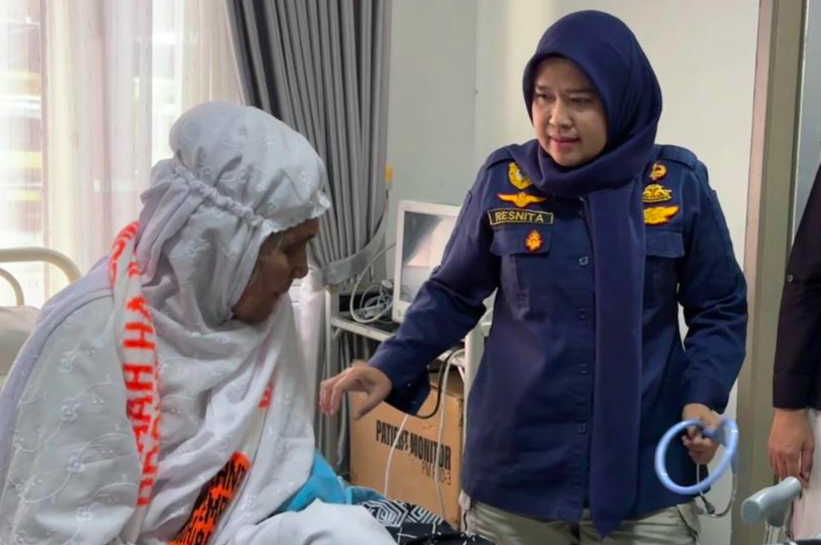
To ensure all pilgrims are in a safe condition, the Padang Debarkation Hajj Organising Committee (PPIH) and the Health Quarantine Centre (BKK) conduct continuous health monitoring from the moment the aircraft arrives until the pilgrims are at the dormitory. Doctor Resnita from the Padang Debarkation Health Clinic explained that monitoring begins as soon as the plane lands, with the BKK team conducting a health handover with the flight’s doctor at the aircraft door to identify any pilgrims requiring emergency treatment.
Upon arrival at the Hajj dormitory, all pilgrims are also monitored via a thermal scanner to detect body temperature and identify potential health issues. During the arrival of Kloter 09, which carried 390 pilgrims and staff from various cities including Solok, Padang Panjang, and Payakumbuh, four individuals required further observation. Among them, a 84-year-old pilgrim complained of dizziness and was found to have high blood sugar and a history of a herniated nucleus pulposus, requiring ambulance transport. An 81-year-old also had high blood sugar and pain radiating from the waist to the legs. A 71-year-old was monitored for hypokalemia, and a 67-year-old experienced shortness of breath upon arrival.
After examination and monitoring at the clinic, all four were declared stable and permitted to continue their journey home with the group. Officials stressed that the observation is a standard anticipatory measure, not necessarily indicative of an emergency, to ensure the safety of pilgrims, particularly the elderly, before they depart for their hometowns. To date, 3,515 pilgrims have returned through Padang Debarkation, with health services remaining on standby throughout the repatriation process.