
Return Migration Traffic at Bakauheni Port Begins to Increase on H+2
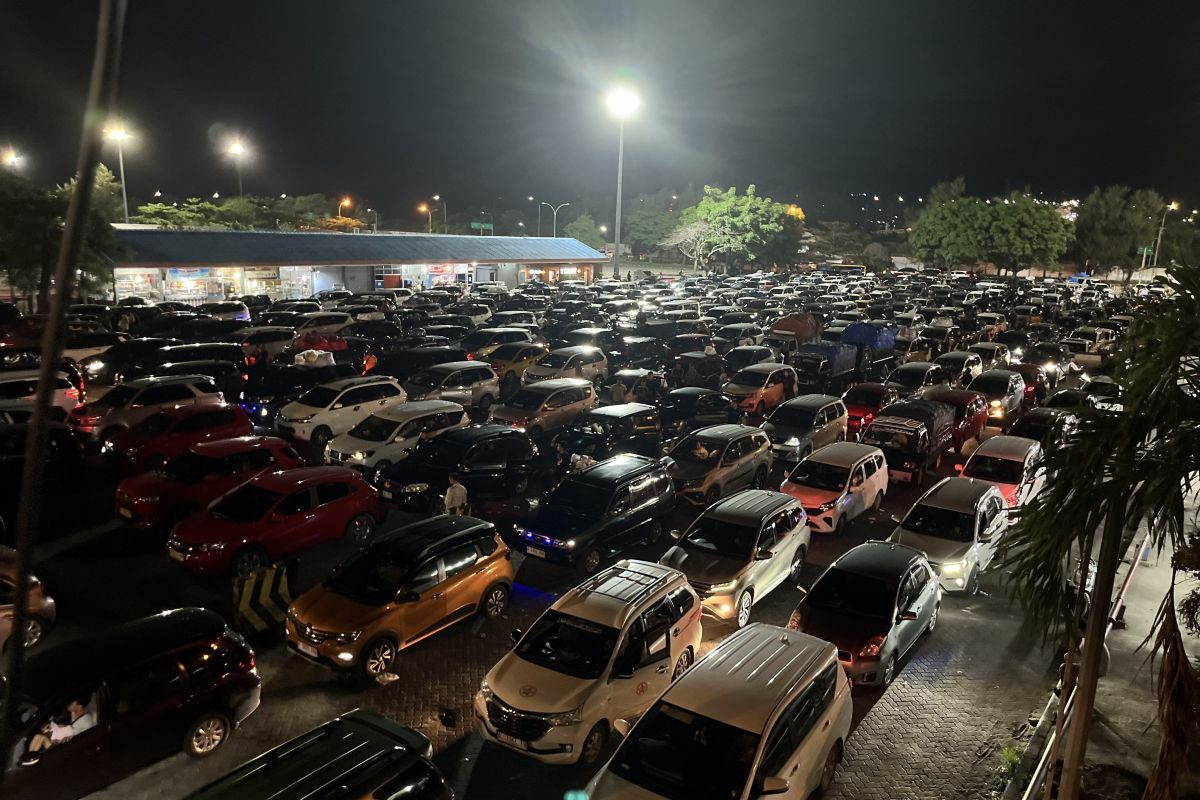
Movement that is beginning to increase indicates the return migration trend is already underway. Lampung (ANTARA) - Passenger ship movement activity for those undertaking the return Eid al-Fitr 1447 Hijriah/2026 migration journey at Bakauheni Port began showing an increase on H+2 or Monday. General Manager of ASDP Bakauheni Branch, Partogi Tamba, in South Lampung on Monday, stated that since Sunday (22/3) until Monday afternoon, traffic at Bakauheni Port was observed to be getting busier, both for foot passengers and vehicles. Although there was a surge, he said the crossing services continued to run smoothly, orderly, and under control thanks to thorough operational preparedness and cross-stakeholder coordination. “This movement that is beginning to increase indicates the return migration trend is already underway. We continue to ensure service readiness, both in terms of operations and facilities, to anticipate the peak period surge,” he said. Based on data from the Bakauheni Post during 24 hours, there were 146 ship trips with a total of 51,751 passengers or an increase of 30.5% compared to last year. The total vehicles reached 14,094 units or a significant rise of 45.3%. He also assured that operations were running optimally with an adaptive control scenario. The vehicle diversion scheme for the return flow has begun to be implemented. The flow towards Java is served through Bakauheni Port for foot passengers and vehicles in groups I, II, III, IVA, VA, and VIA. Meanwhile, he said, for vehicles in groups IVB, VB, and VIB that are excluded from operational restrictions, they are diverted through the BBJ Muara Pilu Port. Such as three-axle VIB trucks, VII, VIII, and IX which are still under restriction are directed to wait in the buffer zone or several toll rest areas to maintain smooth traffic flow. “Vehicle flow is still within service capacity limits. The arrival pattern is quite even, so the ship loading and unloading process runs quickly without significant obstacles,” he said. He added that pier service management is carried out flexibly through a multi-pier scheme, both for foot passengers and vehicles, to keep distribution even and service rhythm stable amid the increasing volume.