
Rethinking the Youth Pledge in the Echo Chamber
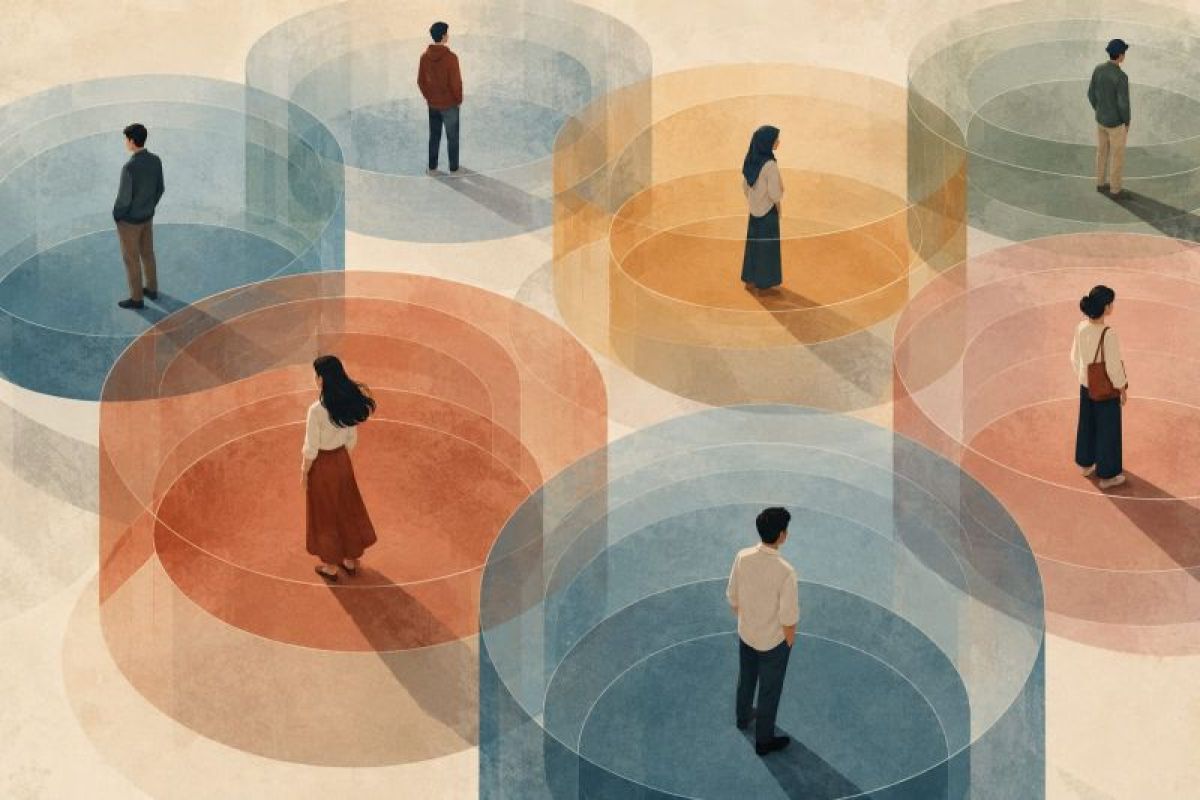
Sleman, Yogyakarta (ANTARA) - We live in an age when mobile phones know our preferences better than our neighbours do.
Our phones know which news stories make us angry, whose opinions make us nod in agreement, and even what kinds of foolishness we most enjoy criticising.
They diligently serve up a world that fits what is already in our heads, as if technology’s purpose were to ensure that we are always right.
The problem is that we live in Indonesia, a country not built that way.
On 28 October 1928, young people from diverse backgrounds gathered in Batavia and pledged allegiance to one homeland, one nation and one language. They had no timeline to filter out those with different opinions, let alone algorithms capable of hiding voices they disliked. Instead, they dared to imagine a shared home amid difference.
Nearly a century later, we have inherited that home, but are beginning to build rooms whose doors open only to like-minded people. The shortest yet most consequential word in the 1928 Youth Pledge—‘one’—is facing a test its authors could never have imagined.
‘One’ does not mean that everyone must be alike. The young people of 1928 did not suddenly lose their regional origins and wake up the next day speaking with the same accent. Nor did they melt every difference into one giant mould. They did something far more difficult: they imagined that differences could coexist under a shared ideal.
In that sense, ‘one’ is a synthesis. The word does not erase the reality of our diversity; it gives those differences direction and a shared home called Indonesia. That is why Indonesia was originally not merely a geographical reality, but an act of courage: the weaving together of a political community that had not yet fully come into being.
Today, that lofty ideal faces a challenge in an entirely new form. We are no longer confronted by soldiers blockading roads or physical conflict restricting opportunities to meet. The threat now arrives through little more than a mobile-phone screen, an internet connection and social-media algorithms that recognise our every habit.