
Retail Prices Predicted to Rise Starting October 2026, Here's the Trigger
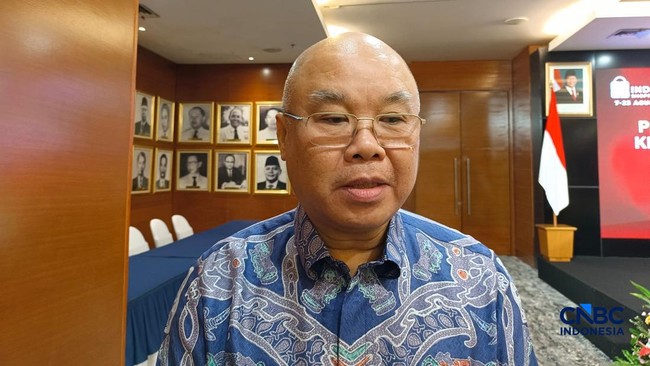
The Indonesian Shopping Centre Management Association (APPBI) has warned that retail prices are likely to increase starting in the fourth quarter of 2026, around October. The increase is triggered by rising production costs, logistics, energy, and the weakening of the rupiah, which impacts imported goods.
APPBI Chairman Alphonzus Widjaja explained that the price increases are expected to be felt in the fourth quarter of 2026, as retailers begin stocking up with goods at higher prices to prepare for the year-end shopping season. According to him, these preparations are made well in advance of Christmas and New Year, continuing through Chinese New Year, Ramadan, and Idulfitri.
Therefore, he said, retailers must start preparing large quantities of stock well in advance. Moreover, the distribution of goods towards the end of the year is also hampered by operational restrictions on transport vehicles.
“These stocks, in large quantities, will be produced from raw materials whose prices have already risen. Right now, energy prices are up, logistics costs are up, raw material prices are up. So I think that is the reason,” said Alphonzus at the Ministry of Trade Auditorium in Jakarta on Thursday (30/7/2026).
“If production costs rise, then the prices of goods will certainly rise. That is why it is estimated that in the fourth quarter of 2026 there will be a fairly significant increase in the price of goods,” he continued.
Meanwhile, for the third quarter of 2026, Alphonzus believes the price increases will not yet be strongly felt, as most retailers are still selling old stock. “I think in the third quarter of 2026, retail colleagues still have old stocks, raw materials that are still from the old batch,” he stated.
According to Alphonzus, the price increases will potentially occur across almost all product categories. This is because the rise in logistics and energy costs impacts the entire production chain, for both domestic and imported products. “I think the price increase will likely occur in all categories. Because the increase, for example in logistics costs, will affect all categories,” he said.
Nevertheless, Alphonzus stressed that raising prices is not the primary choice for retail businesses. APPBI hopes the government can suppress the rise in production costs before entering the fourth quarter of 2026 so that goods prices do not soar. “A price increase is the last option. But indeed, if conditions continue like this, it cannot be avoided. So actually, we still hope there will be no increase in raw material costs, logistics costs, energy costs, and so on. We still hope the government can quickly address this situation before the fourth quarter of 2026,” said Alphonzus.
“The aim is so that raw material prices do not rise, and therefore the price of goods also does not rise. Or if it does rise, it will not be significant,” he added.
If price increases are unavoidable, Alphonzus continued, retailers have prepared a number of strategies to maintain people’s purchasing power. These include using cheaper alternative raw materials, making product packaging smaller, and increasing promotional programmes. “But if that does not happen and product prices have to rise, then of course retail colleagues will implement various strategies. One of them is through innovations in raw material products, using cheaper raw materials,” he revealed.
Alphonzus added that another strategy is to create smaller packaging, so that prices remain relatively affordable. “Then, of course, assisted by promotional programmes,” he said.
On the other hand, Alphonzus also called on the government to focus more on maintaining domestic economic conditions, considering that household consumption is still the main pillar of national economic growth. “I think what needs to be done is for the government to be more focused, especially in addressing various domestic pressures. Because I think priority must still be given to the domestic situation. Domestic economic growth is supported 57% by domestic consumption. So I think that is what must be encouraged and focused on, how to make the domestic situation and conditions truly conducive,” he said.
He stated that the most important step the government needs to take now is to increase public confidence in the national economic situation. “How the government increases public confidence. I think that is the main thing. Because we see that the main problem is actually public confidence in the domestic situation and conditions,” concluded Alphonzus.