
Retail Investors Flee South Korean Market, Snap Up US Stocks
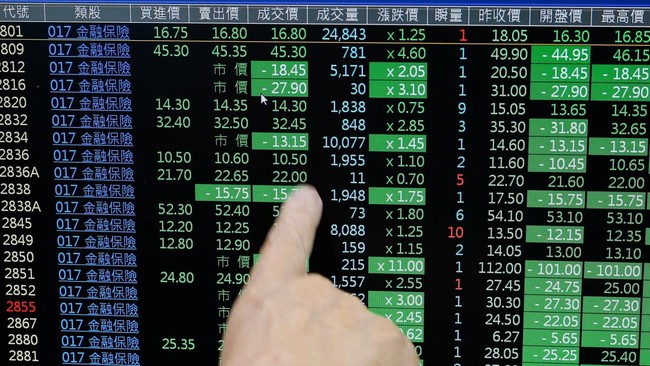
A wave of South Korean retail investors has begun flooding into the United States stock market amid concerns over a correction in the domestic market. The phenomenon is occurring even as global investors are increasingly channelling funds into US equities.
Data from the Korea Exchange, cited by CNBC, shows South Korean retail investors were net sellers of domestic shares for most of last week, even though the country’s benchmark index has entered bull market territory. At the same time, foreign investors turned around to become net buyers of South Korean stocks.
One striking development is the purchase of American Depositary Receipts (ADRs) of South Korean companies listed on US exchanges. According to data from the Korea Securities Depository, of the total US$4.5 billion in net purchases of US stocks by Korean investors in July, around US$840 million flowed into ADRs of chipmaker SK Hynix.
SK Hynix ADRs were the second most net-bought US security by Korean investors, even though the company’s shares can be bought directly on the domestic South Korean market. The ADR price has also traded at a premium to the Seoul-listed shares, which Owen Lamont, senior vice president at Acadian Asset Management, said recently reached around 10%.
Besides carrying a higher valuation, the ADRs also exhibit greater volatility than SK Hynix shares in South Korea. Lamont argued there is no reason for Korean investors to buy ADRs of their own domestic companies in the US, and the price gap is therefore a sign of excessive speculation.
According to Lamont, such price dislocations are unusual and can serve as a warning of speculative excess in the market. He compared the phenomenon to price dislocations in Taiwanese and Indian companies that occurred ahead of the dot-com bubble.
Beyond ADRs, Korean investors are also increasing bets on highly leveraged investment products in the US market. One of the ten most popular US stocks among Korean investors this month is the ProShares Ultra QQQ ETF, which ranked seventh.
In July, four of the ten US instruments with the largest net purchases by Korean investors were leveraged products, according to Korea Securities Depository data. The most bought product was the Direxion Daily Semiconductor Bull 3X Shares ETF, or SOXL, which is designed to deliver three times the daily performance of a semiconductor index.
ProShares UltraPro QQQ and ProShares Ultra QQQ ranked fourth and sixth respectively on the list of most-bought US instruments by Korean investors. The strong interest in these products indicates retail investors are still taking aggressive positions to chase gains in risk assets.
Although they are moving funds from the Korean market to the US, these retail investors have not really changed their investment bets. Phillip Wool, head of research at Rayliant Global Advisors, said most of the stocks bought by Korean investors remain tied to the artificial intelligence (AI) hardware theme that had previously come under pressure in the domestic market.
Jung In Yun, founder of Fibonacci Asset Management, said some traders who suffered losses on Korean semiconductor stocks or leveraged ETFs are likely shifting their funds to US AI stocks that are perceived to have higher quality and liquidity. As a result, these investors are not fully reducing their exposure to the AI theme, but merely swapping instruments and geographic locations to express the same investment view.
Korea Securities Depository data shows Korean retail investors booked net purchases of around US$4.5 billion in US stocks during July. That figure jumped compared with June and approached the net purchases of around US$5 billion recorded in January.
Meanwhile, the South Korean stock market suffered heavy selling after previously staging a spectacular rally that drew retail investors into semiconductor stocks and leveraged products. The market then recovered in August.
Margin loan positions in the South Korean stock market also fell sharply from around 37 trillion won, or US$26 billion, at the end of June to around 27 trillion won in early August. Based on data from the Korea Financial Investment Association, that position is the lowest level so far this year.
Lamont said Korean investors’ purchases of US stocks in July were indeed strong, though not unprecedented. However, he said the increase in US stock buying while the Korean market was falling is a phenomenon worth watching.
The scale of Korean investor flows also raises questions about the impact on US stock market volatility. Wool assessed the risk as relatively small because the US market is dominated by professional and institutional investors, so even if flows from Korean investors are large, they remain small compared with total US market turnover.
Lamont, however, sees greater potential for distortion in individual stocks and market segments favoured by retail investors. He cited Korean investors’ buying spree of quantum-themed US stocks in late 2024 and said the growing number of leveraged ETFs in South Korea, Hong Kong and the US could add to volatility and amplify market swings.
The phenomenon shows that the shift of Korean investor funds to the US market does not necessarily mean a change in investment views. Amid the domestic stock correction, some investors are instead bringing the same exposure to AI and semiconductors through US stocks and leveraged products, which could have implications for market stability.
Source: jawawa.id (https://jawawa.id/newsitem/retail-investors-flee-south-korean-market-snap-up-us-stocks-1787057541)
Originally published by CNBC Indonesia (https://www.cnbcindonesia.com/market/20260818172433-17-760392/investor-ritel-kabur-dari-bursa-korsel-borong-saham-negara-ini), translated from Indonesian