
Retail and Industry Sectors Drive Expansion of Fortified Rice Market
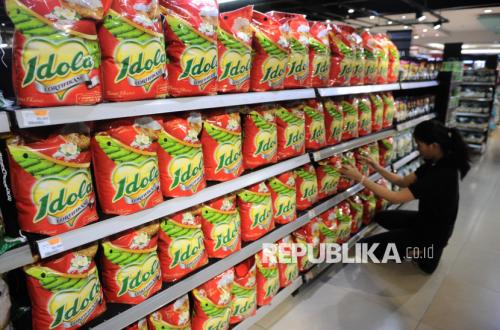
Fortified rice is beginning to be pushed into the wider commercial market. Retailers and industry players assess that the product, enriched with vitamins and minerals, already has a sufficiently strong foundation to grow in the national market.
During the Millers for Nutrition: Advancing Fortified Rice in the Commercial Market forum on Wednesday (24/6/2026), various stakeholders discussed strategies to improve the affordability and distribution of fortified rice for the public.
Executive Director of the Indonesian Retailers Association (APRINDO) Dasep Suryanto said the retail sector is ready to support the development of the fortified rice market. However, a significant price gap compared to regular rice remains a challenge.
"We in the downstream sector see market confusion because there is no clear price reference yet. On the other hand, we want to present a nutritious product that remains affordable for consumers," Dasep said on Wednesday (24/6/2026).
Currently, the price of fortified rice in modern retail networks is still around 20 to 30 percent higher than ordinary rice. According to Dasep, this condition must be addressed through distribution efficiency and more massive consumer education.
APRINDO considers three factors crucial to accelerating the growth of the fortified rice market: regulatory certainty, more efficient distribution from mills to retailers, and increased public understanding of the product’s benefits. Additionally, smaller packaging sizes such as 1 kilogram and 2.5 kilograms are seen as helpful in improving public access while reducing purchase barriers at the consumer level.
From the industry side, Commissioner of PT Pangan Nabati Umbi Nusantara Mirza Muttaqien assessed that the fortified rice sector has entered a more mature industrialisation phase. According to him, the additional cost of enriching rice with micronutrients is relatively small compared to the benefits produced.
"In principle, whatever the price of rice circulating in the market, there is room for added value of around Rp1,000 per kilogram," Mirza said.
Currently, the company’s fortified rice production capacity reaches approximately 1,000 tonnes per month. However, factory utilisation is considered still capable of being increased so that production costs become more efficient and selling prices more competitive.
Mirza added that Indonesia already has a fairly strong regulatory foundation through the issuance of SNI 9314 of 2024 and SNI 9372 of 2025, which regulate fortified rice standards. "Regulations are already in place and the state-level system is ready. The challenge now is to scale up so that this industry can grow faster," Mirza said.
Meanwhile, fortified rice industry player Diyan Anggraini believes that developing milling networks in various regions is an important step to shorten the distribution chain and reduce logistics costs. "We are forming milling networks and encouraging production in various regions. This way, the distribution chain becomes shorter and logistics costs can be reduced," Diyan said.
According to Diyan, the success of developing the fortified rice market will be largely determined by price affordability and ease of access for the public. Therefore, all business players are encouraged to keep prices affordable so that the nutritional benefits of fortified rice can be felt more widely.