
Restructuring the House of Culture
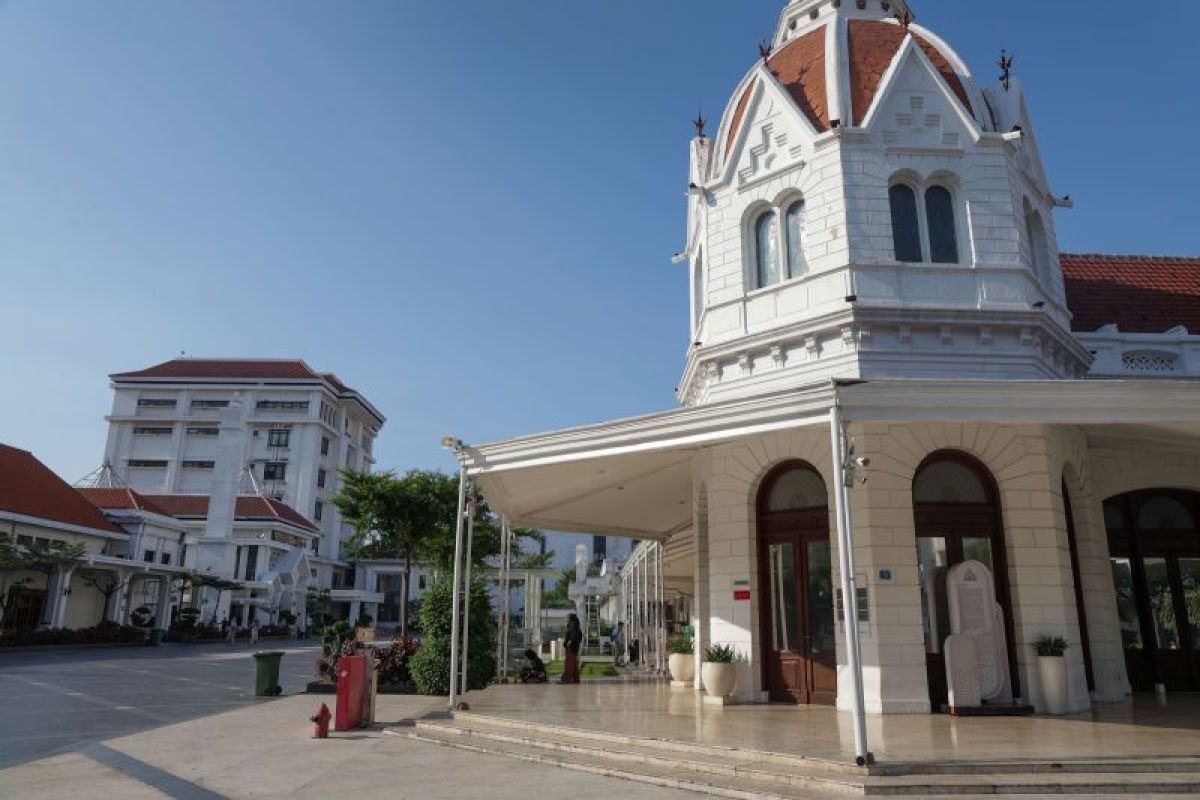
Surabaya (ANTARA) - The bustle of Balai Pemuda’s courtyard never truly fades. From those spaces, the long traces of artistry in Surabaya City are nurtured, tested, and passed down across generations.
Amid the increasingly complex dynamics of the city, a fundamental question arises: are those spaces sufficient to accommodate the pulse of culture that extends far beyond mere performing arts?
The plan to transform the Surabaya Arts Council into the Surabaya Cultural Council addresses this concern. This is not merely a change of the institution’s name, but an effort to reorganise how the city understands, manages, and advances culture.
In the context of Law No. 5 of 2017 on the Promotion of Culture, this step feels like a necessity, not a choice.
So far, the arts council has tended to focus on the arts as an aesthetic expression. However, culture encompasses a much broader spectrum, from customs and rituals to language and traditional knowledge.
When the scope is expanded, the challenges also grow. It is here that the cultural council is expected to serve as a strategic hub connecting these diverse elements.
Data and field dynamics show that Surabaya has strong cultural social capital. Regular fine arts activities, consistent dance performances, and vibrant literary communities are indicators that the city is not short of creative energy. However, that energy often operates independently, not yet fully orchestrated within a complete ecosystem.
Institutional transformation serves as an entry point to improve this situation. The question then is no longer whether a cultural council is needed, but how to ensure that this institution does not become merely an administrative symbol without real reach.
Disconnected Ecosystem
One classic problem in cultural management in large cities is fragmentation. Communities grow, activities run, but coordination is often weak. Surabaya is not entirely free from this issue.
Balai Pemuda, for example, has long been the centre of artistic activities. Since the 1970s, this space has produced many great artists and served as a meeting point for various creative expressions. To this day, its function remains vital; however, reliance on one main space actually creates new problems, such as limited access and distribution of activities.
On the other hand, the need for alternative spaces is becoming increasingly urgent. Many arts practitioners desire galleries, performance spaces, and experimental rooms scattered across various points in the city. Without them, the growth of the ecosystem will be hindered by physical limitations.