
Restructuring Post-Mining Landscapes Through Sustainable Reclamation
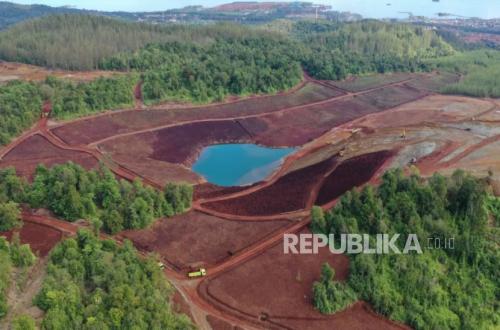
Reclamation and environmental restoration have become an inseparable part of sustainable mining practices. For member companies of the MIND ID Group, reclamation is no longer viewed merely as a post-mining administrative obligation. Instead, it has become a strategic effort to restore the ecological functions of an area while creating social and economic added value for communities surrounding operational areas.
Through various land restoration programmes, ecosystem rehabilitation, biodiversity conservation, and the development of energy crops, MIND ID Group mining companies are demonstrating that mining activities can coexist with environmental preservation efforts.
At ANTAM, reclamation is positioned as an instrument for long-term ecological recovery. The company implements systematic reclamation and rehabilitation programmes aimed at returning environmental functions to post-mining areas to ensure they remain safe, stable, and productive. These activities include land contouring, erosion and sedimentation control, revegetation using local species, and regular environmental quality monitoring. ANTAM also integrates biodiversity conservation through flora and fauna monitoring, river ecosystem rehabilitation, and the protection of high-conservation-value areas. By 2025, ANTAM has planted more than 195,000 trees in post-mining and other rehabilitation areas.
Furthermore, Bukit Asam (PTBA) is developing innovations through the utilisation of red kaliandra plants in reclamation areas. This energy crop is being developed as raw material for wood pellets to support co-firing programmes in steam power plants (PLTU). This programme not only accelerates the greening of post-mining land but also supports carbon emission reductions by substituting a portion of coal use with biomass. As of 2025, PTBA, alongside academic partners, has planted red kaliandra across 26.47 hectares with over 240,000 plants.
Meanwhile, Freeport Indonesia has made biodiversity management a primary focus of its sustainability strategy. The company implements various environmental management systems aimed at minimising operational impacts on ecosystems, including continuous environmental monitoring and tailings management according to internationally verified standards. Additionally, Freeport conducts natural condition assessments through a four-stage approach: identification, evaluation, assessment, and the preparation of mitigation steps to strengthen biodiversity protection within its operational areas.
PT Timah places post-mining landscape reclamation and restoration as a vital part of its corporate sustainability strategy. These efforts include not only land revegetation but also the rehabilitation of coastal and marine ecosystems. Programmes include the construction of artificial coral reefs, mangrove planting, and crab restocking as part of the recovery of aquatic ecosystems affected by mining activities. In 2025, the company recorded a 100 per cent realisation of its established reclamation and environmental rehabilitation targets.
PT Vale Indonesia views the reclamation and rehabilitation of mining areas as part of its strategy to maintain long-term natural resource sustainability. The company carries out land recovery through revegetation, biodiversity management, and the rehabilitation of areas impacted by mining operations to ensure that mined areas can regain ecological functions that support environmental balance around operational sites.
These various initiatives demonstrate that the mining industry paradigm is continuously evolving. Reclamation is no longer limited to replanting vegetation but has expanded into more comprehensive ecosystem recovery efforts, ranging from biodiversity conservation and the rehabilitation of terrestrial and aquatic areas to the development of energy crops that support the transition towards a low-carbon economy. Through this approach, MIND ID Group companies are proving that mining activities can proceed in tandem with environmental sustainability efforts for future generations.