
Restrictions on Subsidised Fuel Purchases Signal Anticipation of Energy Crisis
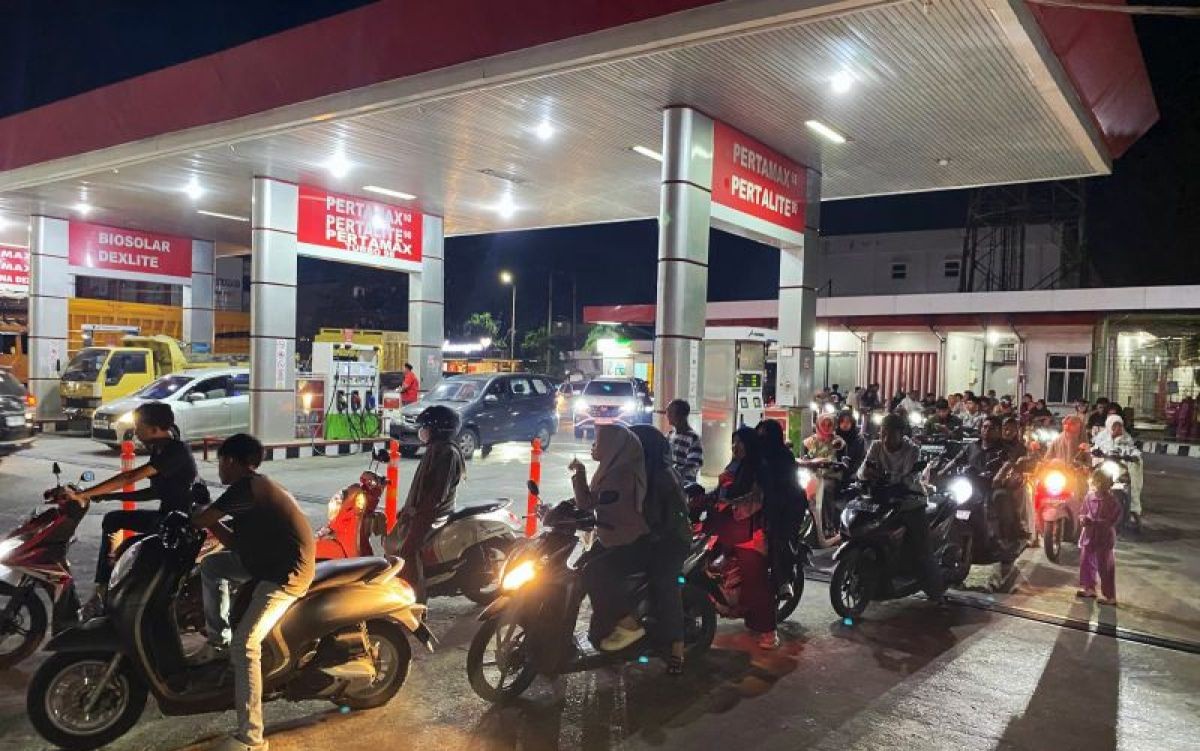
The policy of restricting purchases of subsidised fuel oil (BBM) is seen not merely as a technical measure to control consumption, but as an early signal from the government in facing potential global energy supply pressures. Economist from the Institute for Development of Economics and Finance (Indef), Abra Talattov, assesses the policy as part of the government’s anticipatory efforts to prepare society for uncertain energy conditions.
“I believe the policy of restricting purchases of subsidised BBM should be read not just as a technical step, but as an anticipatory signal from the government to prepare the public’s psychology for the risk of tightening energy supplies in the future. So this is like an early warning system, that global conditions are not normal and we need to start adapting,” said Abra when contacted on Wednesday (1/4).
He explained that in the short term, the policy does not directly hinder public mobility. However, restricting consumption is deemed important to control surges in domestic BBM use.
“At least, this restriction can hold back the pace of domestic consumption so it does not spike wildly, especially to minimise the risk of BBM hoarding. That way, the pressure on the state budget (APBN), particularly from the energy subsidy side, will not deepen,” he clarified.
On the other hand, the government’s decision to hold prices of non-subsidised BBM such as Pertalite and Pertamax is viewed as a step to safeguard public purchasing power amid global inflation pressures. According to Abra, the policy can help maintain economic stability in the short term, although it has consequences for increasing the state’s fiscal burden.
“Then, holding the prices of Pertalite and Pertamax can indeed be the best option to protect purchasing power and ensure the wheels of the economy keep turning, especially amid global inflation threats. However, the consequence is that the fiscal burden will increase,” he said.
Furthermore, he emphasised that price-holding policies cannot be implemented in isolation without more fundamental reforms in the energy subsidy system.
“Therefore, policies like this cannot stand alone. They must be accompanied by more fundamental reforms, namely pushing for more targeted and on-target subsidies, so they are not enjoyed by groups that are actually capable,” he stressed.
Without improvements to the subsidy scheme, continued Abra, the government’s fiscal space could continue to erode and instead limit the state’s ability to face greater energy crisis risks in the future.
Business circles are urging the government to ensure clarity in the implementation of the subsidised BBM purchase restriction policy so as not to disrupt distribution activities and business operations.
IESR: Government’s Assurance on BBM Availability Needs to Be Accompanied by Data Transparency
Pertamina, through Pertamina Patra Niaga, reaffirms that in line with government directives, it will not adjust fuel oil (BBM) prices, both non-subsidised and subsidised.
Source: jawawa.id (https://jawawa.id/newsitem/restrictions-on-subsidised-fuel-purchases-signal-anticipation-of-energy-crisis-1775019121)
Originally published by Media Indonesia (https://mediaindonesia.com/ekonomi/875259/pembatasan-bbm-bersubsidi-jadi-sinyal-antisipasi-krisis-energi), translated from Indonesian