
Restoring Market Confidence Amid Rupiah and IHSG Pressure
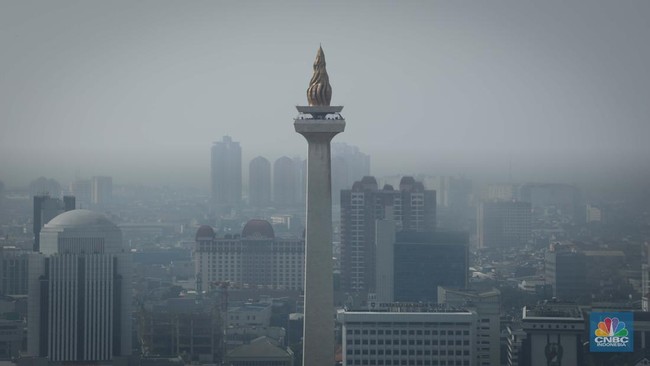
The national currency, the Garuda, has continued to experience pressure in recent weeks, reaching a level of 18,000 per US dollar. Moreover, the Indonesian stock exchange nearly touched its lowest point since the COVID-19 pandemic crash, hitting around the 5,500 level. It is true that the market is not always right, but it often provides earlier signals about domestic conditions than other macro indicators. This situation can be interpreted as a symptom of developments in the domestic economy. In other words, financial markets often serve as an early indicator of how changes in economic sentiment affect domestic conditions. If we trace the causes, the greatest challenge is not merely the market weakening, but the declining investor confidence regarding policy direction and national economic prospects, especially among foreign investors, which triggered capital outflows of more than Rp 72 trillion since the MSCI crash at the end of January 2026. The problem of the rupiah’s weakening and the plunge in the Indonesian stock exchange is not solely triggered by external factors such as global economic uncertainty, the Iran-America war, MSCI FTSE outflows, or other external factors. Looking at fellow ASEAN members, the stock exchanges of Malaysia, Thailand, Vietnam, and other countries actually strengthened, while Indonesia alone experienced a fairly severe crash. Therefore, it must be noted that the market is also assessing domestic conditions. One source of investor concern is the increasing uncertainty regarding the direction of national economic policy. Both domestic and foreign investors require certainty about fiscal discipline, the sustainability of national strategic projects, the centralisation policy for key commodity exports, the direction of industrialisation, bureaucratic reform, and the independence of economic institutions. When policy signals are perceived as changeable or inconsistent, investors tend to reduce risk exposure from their investment portfolios and move capital to safer assets offering much better returns, such as the US dollar or stock exchanges in other countries that are far more prudent and robust. Additionally, the market is scrutinising medium-term economic growth prospects. In recent years, Indonesia’s economic growth has tended to be stuck at around 5 percent. Meanwhile, the target of becoming a high-income country requires a higher and more sustainable growth acceleration. When the market has yet to see new growth engines capable of driving productive investment and increasing labour productivity, it limits investor optimism. The massive capital outflow phenomenon also shows that Indonesia’s dependence on foreign portfolio investment flows remains quite large and cannot be underestimated. When sentiment deteriorates, foreign investors can exit in a short time, creating double pressure on the exchange rate and the stock market. This serves as an important reminder for all of us, including government policymakers, that economic resilience cannot rely solely on macro stability but also requires a strong domestic investor base sourced from trust that domestic conditions are worthy and safe for investment. The first step the government needs to take immediately is to rebuild economic policy credibility and investor confidence. The government must deliver a clear, consistent, and measurable economic roadmap. Transparent and consistent policy communication is crucial to reduce uncertainty and prevent negative speculation in the market. The second step is to strengthen coordination between the government, Bank Indonesia, the Financial Services Authority, and market participants. This has been done by the government in recent days and deserves appreciation. In a situation of pressure like the current one, the market needs a signal that all economic authorities share the same view and are working in an integrated manner to maintain national economic stability. The third step is to accelerate structural and bureaucratic reform that is simple, along with incentives for market players that can boost productivity and competitiveness. Reforms in investment, education, employment, industrial downstreaming, and strengthening MSMEs must be prioritised. Investors look not only at today’s conditions but also at profit prospects over the next five to ten years. The fourth step is to strengthen the domestic investor base. The high growth in the number of investors, which reached 23.46 million as of March 2026, surged significantly from 3.8 million in 2020. It is important to maintain the confidence of these investors so they are willing to invest their capital in Indonesia through financial market instruments. The development of pension funds, insurance, endowment funds, and long-term investment instruments needs to be accelerated so that Indonesia’s financial market is not overly vulnerable to short-term foreign capital flows. Ultimately, market confidence cannot be built merely through exchange rate intervention or momentary stimulus. Confidence is the result of policy consistency, regulatory certainty and simplification, and the belief that the Indonesian economy has a clear development direction. When that confidence returns, the strengthening of the rupiah and the recovery of the stock market will follow naturally.