
Restoring Governance to Prevent Forest and Land Fires
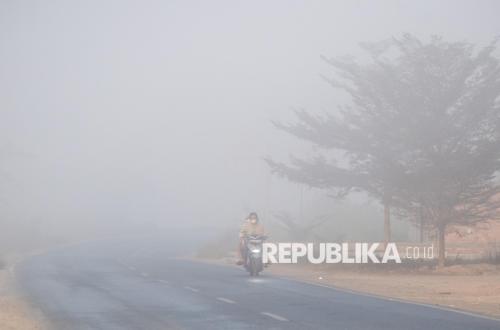
Indonesia is once again facing the threat of forest and land fires. Flames are spreading across several regions, particularly in Sumatra and Kalimantan, as the dry season worsens the condition of land already suffering ecological damage.
According to WALHI records, throughout August 2026, hundreds of thousands of hotspots were detected across various parts of Indonesia, with thousands of hotspots carrying a high confidence level. West Kalimantan and Central Kalimantan were the two regions with significant hotspot concentrations. A number of these hotspots were located within or around plantation and forestry concession areas.
These facts show that forest and land fires cannot continue to be understood merely as a natural phenomenon. The dry season does increase the risk of fire, but ecological conditions and land governance also determine whether flames can develop into a disaster. The situation must be seen as the result of various decisions and policies, including how land is managed by the relevant stakeholders.
Crime and social harm can occur when state institutions have not been able to control corporate interests effectively, as Ronald C. Kramer has argued. Kramer emphasised that large-scale social harm is not always caused by the actions of corporations or the state separately, but can also relate to patterns of relationships, policies, and the effectiveness of oversight. Thus, control over corporate activity must also be supported by healthy governance and institutional relations between the state and businesses.
State corporate crime
Kramer calls this concept state-corporate crime, which describes conditions in which weak policies, ineffective oversight, permits granted with limited control, or inconsistent law enforcement can create space for harm to occur. In certain circumstances, such situations may benefit corporations, whilst the social and ecological impacts are potentially borne by the public.
In the context of forest and land fires (karhutla), this perspective encourages us not only to look at who lit the fire, but also to understand the various conditions that cause fires to recur year after year. Prevention efforts can therefore be directed not only at firefighting, but also at improving governance and oversight so that similar risks can be minimised.
Communities living far from centres of policymaking are often the first to suffer the effects of the smoke and are in need of protection. At the same time, they do not necessarily receive the greatest benefits from the exploitation of natural resources in their own regions. This demonstrates the importance of ensuring that the benefits of development, alongside environmental protection, are shared more equitably by the public.
State governance
Forest and land fires must be read as a matter of state governance. The dry season and climate change may increase fire risk, but neither can serve as an excuse to disregard human responsibility. The situation is also tied to the various decisions and policies that influence land and environmental management.
Ineffective oversight and the granting of land-clearing permits that exceed authority and risk conflicts of interest deserve scrutiny. In this context, there is a possibility that maladministration has contributed to the problems currently being felt directly by vulnerable communities.
It is precisely at this point that the state has an obligation to protect the public by ensuring that policies, permitting, oversight, and fire response are carried out professionally, transparently, accountably, and in the public interest.
Public services
This oversight function is relevant for assessing whether the government and all related institutions have properly fulfilled their public service obligations. For example, has the government built an adequate prevention system? Does the public receive timely and open information about air quality and health risks? Are health services prepared when haze occurs? Are vulnerable groups given protection? Is oversight of permit holders running effectively? And are complaints from communities affected by fires handled promptly and fairly?
Why are the answers to these questions important? Because maladministration does not always take the form of active deeds. Maladministration can also occur through negligence, disregard of legal obligations, procedural deviations, undue delays, or other actions that cause harm to the public.
Ecological injustice
Karhutla also exposes the problem of ecological injustice. According to environmental justice theory, environmental harm and risks must not be disproportionately imposed on particular groups of society.
Yet in reality, communities near affected areas are often the group that suffers most. Children breathe hazardous air. The elderly face health risks. Schools may be disrupted. Informal workers lose income. Meanwhile, decisions about the management of natural resources are often made far away from them.
Therefore, first, the government must conduct a comprehensive audit of karhutla prevention governance, especially in areas with recurring fire patterns. The audit must not only assess who is at fault after fires break out, but must also identify systemic weaknesses before fires occur. The audit results should be made public so that people know how the state carries out its oversight function in high-risk areas.
Second, a systemic review of public service governance in karhutla prevention and response must be intensified. Such a review can map the chain of public services, from early warning systems and coordination between central and regional governments, to information transparency, health services, protection of vulnerable groups, and community complaint mechanisms. The findings can serve as the basis for recommendations to improve public service policies and procedures.
Third, compliance and accountability evaluations must be carried out on state officials responsible for preventing fires and managing their impacts. Oversight must not focus solely on whether budgets have been spent or activities carried out. What matters more is whether the public is genuinely receiving effective protection.
Fourth, the government must build an integrated service system for communities affected by smoke. When air quality deteriorates, the state must automatically provide easily accessible information, health services, protection for children and the elderly, alternative education facilities where necessary, and rapid complaint mechanisms. Response must not wait for victims to come to government offices. The state must be actively present among the people.
Fifth, ecosystem restoration must be part of long-term policy. Damaged peatland must be restored, degraded forest areas rehabilitated, and spatial planning policies evaluated against environmental carrying capacity.
It must be remembered that no fire prevention system can be truly effective if ecological destruction continues. Prevention efforts must therefore go hand in hand with environmental restoration and improved governance.