
RESSED UI Urges Optimisation of Reserves and Mining Downstreaming
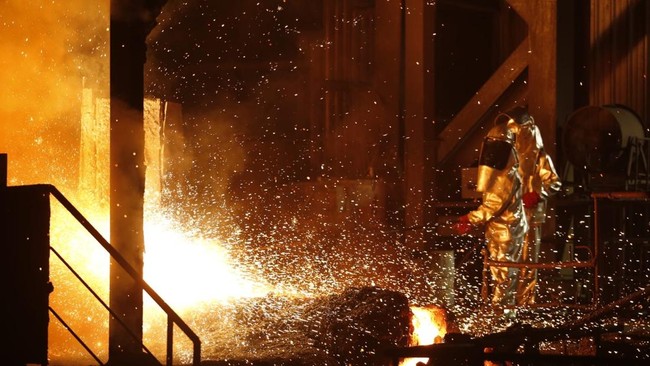
The Chairman of the Research Group on Energy Security for Sustainable Development at the University of Indonesia (RESSED UI), Ali Ahmudi, stated that Indonesia’s mining sector needs to urgently enter a new chapter regarding the implementation of integrated downstreaming. This strategic move is crucial to ensure Indonesia does not remain trapped in the old pattern of exporting raw natural resources, but instead drives domestic value creation so that the benefits of mining can be optimally felt for Indonesia’s sovereignty.
Downstreaming, according to him, must optimise the benefits of national coal and mineral wealth and create an industrial ecosystem that connects upstream to downstream, starting from the mine mouth, through processing and manufacturing, and culminating in final products ready for both domestic and global markets.
“Downstreaming is not just about building smelters. There must be certainty of supply from the upstream, and subsequently, the processed results must be connected to downstream industries until they become final products,” Ali stated on Thursday.
To date, the practice of exporting raw materials has resulted in very limited economic value for Indonesia, disproportionate to the country’s abundant mineral wealth. In reality, the selling value of a commodity can skyrocket if subjected to processing and advanced manufacturing industries.
“If it is not downstreamed, it will provide no added value; it remains merely raw material. But with downstreaming, the added value will certainly multiply,” he said.
On paper, Indonesia possesses significant resource capital to smooth this transformation. According to data from the Geological Agency, Indonesia holds approximately 42% of global nickel reserves.
Furthermore, Indonesia holds a very strategic position as the owner of the world’s largest tin reserves, the fourth largest for bauxite and gold, sixth for coal, and ninth for copper.
While most of these reserves are controlled by the state through the mining SOE holding company, MIND ID, some other strategic reserves are still controlled by foreign companies.
Optimising these benefits for Indonesia can be achieved through increasing national ownership as regulated in mining regulations, ensuring that the added value from natural wealth is maximised for the people.
In doing so, the constitutional mandate in the 1945 Constitution, Article 33, Clause (3)—which states that the earth, water, and the natural wealth contained within them are controlled by the state and used for the greatest prosperity of the people—can be fulfilled more optimally.
He reiterated that the presence of refining facilities or smelters is merely the midstream point of a long industrial chain. Therefore, smelter operations absolutely require guaranteed raw material supply from the upstream, as well as the readiness of downstream industries to absorb the processed outputs.
“Our problem is not the concept of downstreaming, but rather the process of how downstreaming occurs,” Ali added.
Aligning with this vision, the Secretary-General of the Downstreaming and Energy Security Task Force, Ahmad Erani Yustika, explained that President Prabowo Subianto has set two main objectives for the national downstreaming programme: boosting the added value of natural resources and reducing Indonesia’s dependence on imported goods.
“First, we must increase the added value of our natural resources so they must be processed here; that is the most important part. Second, we must encourage a reduction in import dependency,” said Erani.
Erani cited the procurement of submarine cables, which has long relied on foreign supplies, as an example. Despite Indonesia having large copper reserves, the country should be able to meet such needs independently.
He continued that the raw material requirements for such strategic industries should now be met by domestic production capacity. This step would strengthen national industry while suppressing the rate of imports.
“If, for example, we previously had to import submarine cables, we should now produce them ourselves. We satisfy our own needs first; only when there is a surplus should we consider other things, such as exports,” he concluded.