
RESSED UI Urges Integrated Mining Downstreaming from Upstream to Final Products
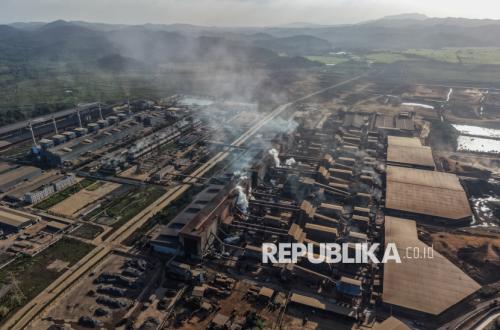
The Research Group on Energy Security for Sustainable Development at the University of Indonesia (RESSED UI) is urging that the downstreaming of the mining sector be carried out in an integrated manner, from the upstream stage to the production of final goods. This step is considered vital to ensure that Indonesia’s mineral and coal wealth does not remain merely as raw commodities, but is capable of creating greater value within the country.
The Chairman of RESSED UI, Ali Ahmudi, stated that downstreaming needs to be built as a single industrial ecosystem that connects the entire mining supply chain. This integration includes the availability of raw materials from the mine, the processing stage, manufacturing, and finally, the end products that can be absorbed by both domestic and global markets.
“Downstreaming is not just about building smelters. There must be certainty of supply from the upstream, and subsequently, the processed results must be connected to downstream industries until they become final products,” Ali said in Jakarta.
According to him, the construction of smelters is only the middle part of the downstreaming chain. The existence of processing facilities will not be optimal if they are not supported by a guaranteed supply of raw materials from upstream and downstream industries capable of absorbing the processed outputs.
Ali assessed that the current pattern of exporting raw materials means the economic benefits obtained by Indonesia are not proportional to the vast mineral wealth it possesses. In reality, mining commodities can provide much higher economic value when further processed into manufactured products.
“If it is not downstreamed, it will provide no added value; it will only remain as raw material. But with downstreaming, the added value will certainly multiply,” he added.
Indonesia possesses significant resource capital to build such an ecosystem. Referring to data from the Geological Agency, Indonesia controls approximately 42 per cent of global nickel reserves and holds a strategic position in tin, bauxite, gold, coal, and copper reserves.
Such large reserves must be accompanied by management strategies capable of extending the commodity value chain within the country. In this way, the economic benefits of mining activities are not only realised during the extraction and initial processing stages, but also through manufacturing industries up to the final products.
Ali also highlighted that some strategic reserves are still controlled by foreign companies. He suggested that increasing national ownership, in accordance with mining regulations, could be one step to ensure that the benefits of these natural riches are felt more extensively by Indonesia.
These efforts align with the mandate of Article 33, Paragraph (3) of the 1945 Constitution, which stipulates that natural resources shall be controlled by the state and utilised to the greatest extent for the prosperity of the people. Strengthening national ownership and developing integrated industries is seen as a way to optimise the benefits of mining resources.
Ali reaffirmed that the main challenge lies not in the goal of downstreaming, but in how the entire industrial supply chain can operate in a connected manner.
“Our problem is not the downstreaming itself, but the process of how that downstreaming occurs,” he noted.
On the other hand, the Secretary-General of the Downstreaming and Energy Security Task Force, Ahmad Erani Yustika, stated that the national downstreaming programme established by President Prabowo Subianto has two primary objectives. First, to increase the added value of natural resources through domestic processing, and second, to reduce dependence on imported goods.
“First, we must increase the added value of our natural resources so they must be processed here; that is the most important part. Second, we must encourage a reduction in import dependency,” said Erani.
He cited the need for submarine cables, which currently rely heavily on imported products, as an example. Given that Indonesia has large copper reserves, this commodity could be directed to support the development of domestic industry.
According to him, the results of downstreaming should first be directed towards meeting national industrial needs. Once domestic requirements are met, any surplus production can then be directed towards the export market.
The implementation of downstreaming using this pattern is expected to not only strengthen the mining industry but also create linkages with the manufacturing sector. Integration from upstream to final products is essential so that mining wealth provides greater economic benefits for Indonesia.