
Responses from Yogyakarta Provincial Government and Jogja City Government to ASN WFH Directive Every Friday
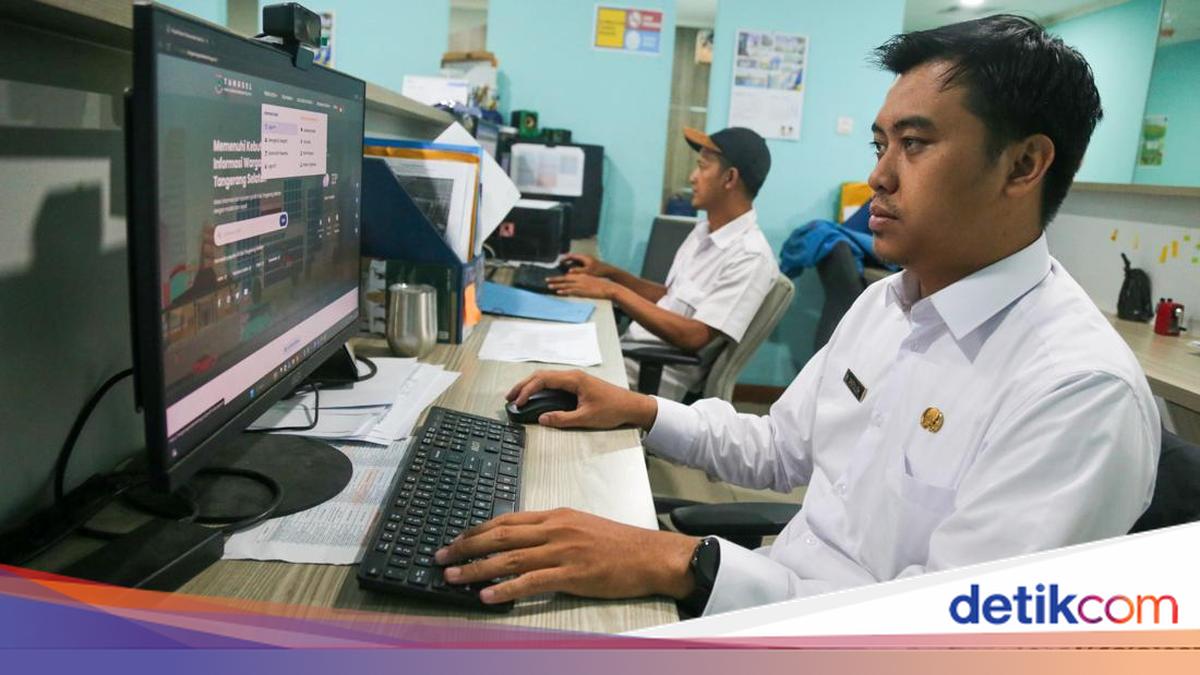
The government has officially designated Fridays as work-from-home (WFH) days for civil servants (ASN). In response to this directive, the Special Region of Yogyakarta Provincial Government (Pemda DIY) and Jogja City Government (Pemkot Jogja) have adopted different approaches.
Pemkot Jogja appears more proactive in preparing implementation steps. Beyond WFH, the city government has also outlined additional cost-saving measures. Here are the details.
Pemda DIY
The Regional Secretary of DIY, Ni Made Dwipanti Indrayanti, stated that they will promptly arrange the implementation of the directive. She emphasised that public services must continue smoothly. Therefore, regulating the quantity will be the focus of the WFH arrangements.
“If everyone from echelon one and echelon two goes to the office, what then? It would be confusing. So, we need to divide it by percentages, perhaps rotations,” Made explained when met at the Kepatihan Complex on Wednesday (1/4/2026).
Made gave an example that ASN in the Population and Civil Registration Service (Dinas Dukcapil) must still come to the office to provide services. Even with the Electronic-Based Government System (SPBE), she believes not all citizens can use SPBE.
“We’ll see later; we can’t just set it at 25-50 percent. Some regional apparatus work units (OPD) mostly cannot be delegated via IT, applications, or systems. It might be difficult; if we say 50 percent, we’re still identifying,” she elaborated.
For this reason, Made admitted that Pemda DIY has not yet determined when this policy can be implemented.
“We’re discussing it first. I haven’t seen the draft yet. We’ll see; if possible this week, maybe this week, but if it needs to be more settled, next week,” she said.
Pemkot Jogja
In contrast to Pemda DIY, Pemkot Jogja is ready to implement this WFH policy. Jogja Mayor Hasto Wardoyo said they held a meeting on the matter this afternoon.
Hasto clarified that WFH does not apply to ASN in public service sectors. It also excludes ASN from echelon 2 and below.
“Public service sectors will not do WFH. Then echelon 2 and 3 will not WFH either. Echelon 2 and above still come in as usual; only those below can WFH,” Hasto said when met after attending an event in Jogja City today.
Additionally, Hasto will impose a fuel cap policy, limiting reimbursable fuel consumption for ASN to a maximum of 5 litres per day for cars and 1 litre for motorcycles. According to Hasto, this capping will be enforced next week.
“I’ve instructed the Regional Secretary to issue a circular letter or decision on capping: 5 litres per day for cars, 1 litre per day for motorcycles for four days,” Hasto explained.
Furthermore, Hasto has prepared implementation of the Interior Minister’s directive on restricting official vehicle operations. Unproductive official vehicles will be auctioned to streamline operations.
“I just told the Acting Regional Secretary, and we want to inventory vehicles that are no longer needed. There are many operational vehicles that are actually unnecessary,” Hasto said.
“Those operational vehicles can be streamlined. Perhaps many will be auctioned. Actually, it’s sufficient without providing operational vehicles to everyone. Auction them because if used, they’re wasteful and prone to breakdowns. That’s what we’ll do,” he added.
This streamlining of official vehicles, according to Hasto, can save the budget by billions of rupiah. He also asked ASN to understand this policy.
“It could save from Rp 10 billion; hopefully from Rp 10.7 billion to Rp 6 billion for fuel. We can calculate that with capping. Please understand; if your home is far and you take an official vehicle, you’ll have to buy fuel yourself,” he explained.
Hasto also targeted official travel as a sector for efficiency. He will reduce the volume of official travel by 70 percent. Hasto hopes that not only the executive but also the legislature will adopt the same policy.
“I hope everyone is committed, both legislative and executive, to reducing official travel. This is just implementing the Interior Ministry’s instructions: 50 percent reduction for domestic travel, 70 percent for overseas,” he revealed.