
Response to 'Fat Cabinet' Criticism: Prabowo Compares Indonesian and Timor-Leste Government Ratios
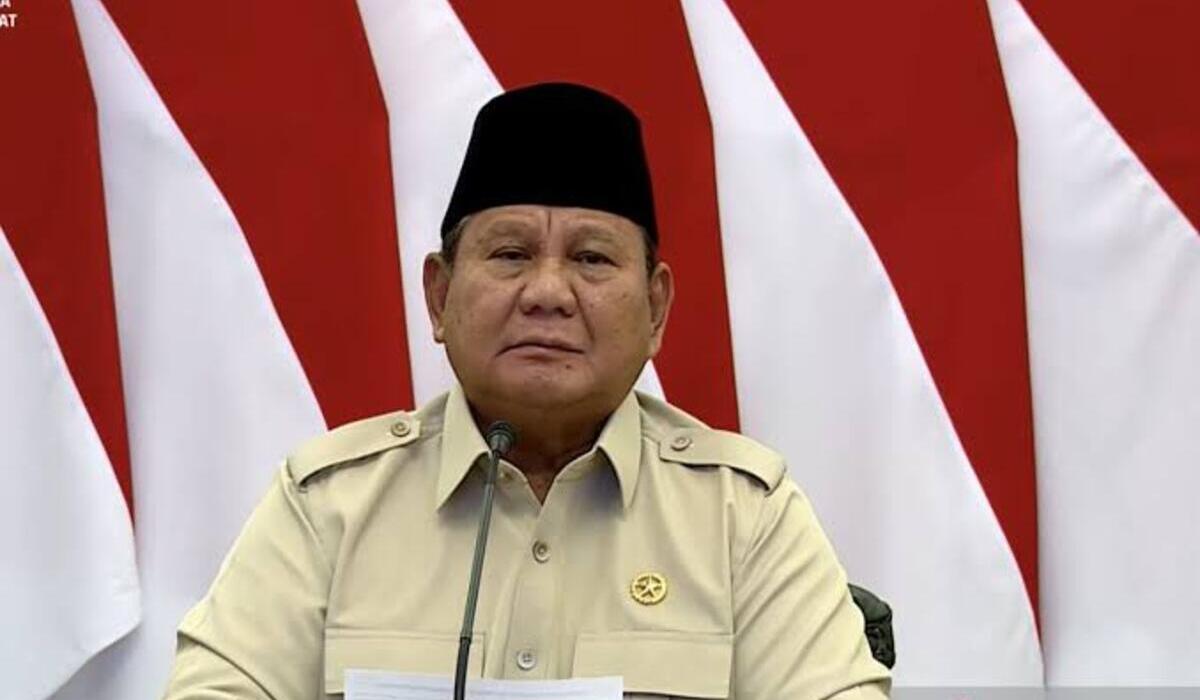
President Prabowo Subianto has offered a defence against criticisms from various parties labelling the ministries and agencies within his administration as a “fat cabinet”. Prabowo emphasised that a high number of ministries does not necessarily indicate government inefficiency.
This was stated by Prabowo during his closing remarks at the 35th NU Congress in Jombang, East Java, on Monday (31/8/2026). He acknowledged the negative perceptions regarding the cabinet structure he has assembled.
“The cabinet I have formed has been called a fat cabinet, inefficient,” said Prabowo, as quoted from an official broadcast by the Presidential Secretariat in Jakarta.
To explain the rationale behind his government’s structure, Prabowo compared the proportion of the Indonesian cabinet with that of neighbouring Timor-Leste. He emphasised that population size and territorial area are the primary factors in determining the required governmental structure.
Prabowo cited Timor-Leste, which has a population of approximately 1.1 million people—a figure he noted is smaller than the population of several Indonesian regencies, such as Bogor or Banyuwangi.
“There is the country of Timor-Leste, which has a population of only one million. Smaller than many provinces in Indonesia. Smaller than many regencies in Indonesia,” he remarked.
However, despite its relatively small population, Prabowo revealed that Timor-Leste possesses a significant number of cabinet members. “Timor-Leste’s cabinet consists of 28 [members],” the President stated.
According to the President, this comparison is highly relevant when viewing the context of Indonesia, which has a population approaching 300 million. Given this massive demographic scale, he believes Indonesia requires a balanced governmental arrangement to ensure optimal public services and state management.
In addition to demographic factors, Prabowo stated that the arrangement of this large cabinet is part of a national political consensus. He asserted that his government is supported by the majority of political forces in parliament to maintain stability.
“The coalition government I lead is quite large, comprising seven out of the eight parties in parliament,” he concluded.