
Responding to President's Directive, BRIN Accelerates Research-Based Water Technology
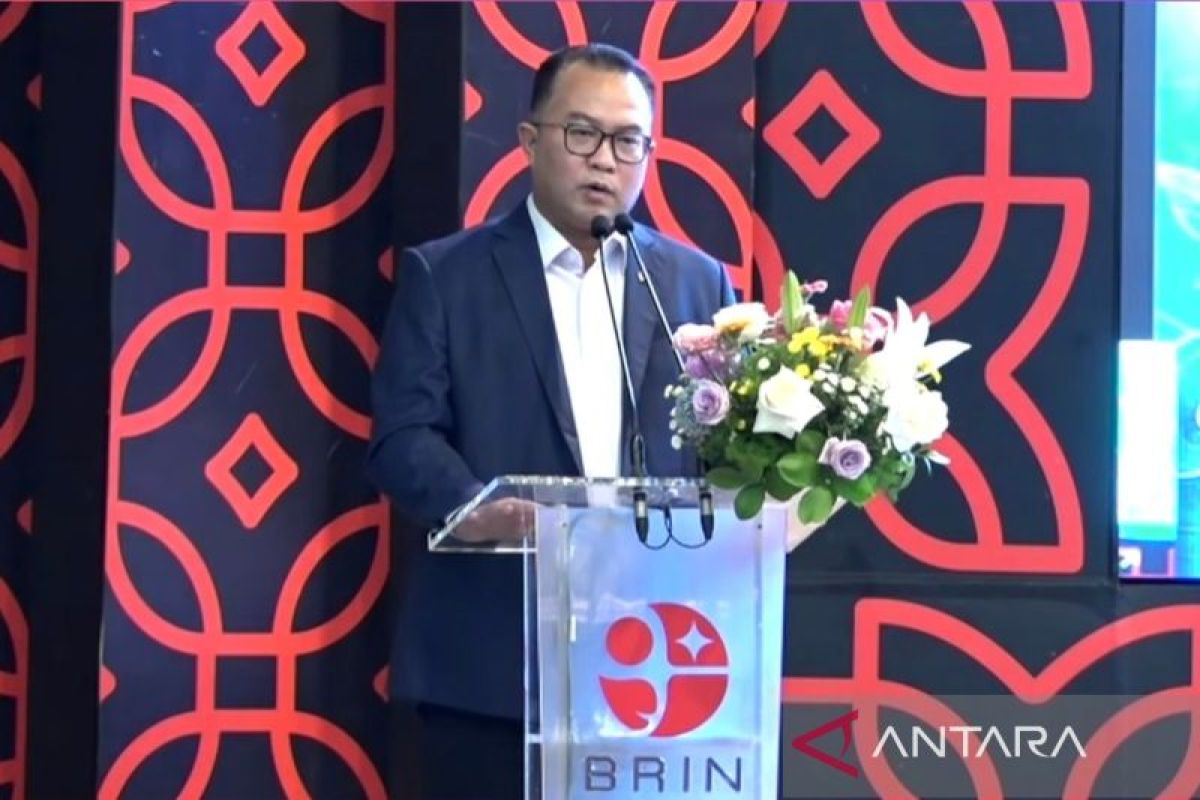
Jakarta (ANTARA) - The National Research and Innovation Agency (BRIN) is strengthening the provision of water technology to address the impacts of climate change, in follow-up to a directive from President Prabowo Subianto.
BRIN Head Arif Satria, in a statement in Jakarta on Friday, introduced various research-derived technologies as scientific solutions to guarantee water availability for communities, agriculture, industry and disaster mitigation, through an approach encompassing the entire hydrological cycle, from the atmosphere and land to coastal and marine areas.
“The sustainability of our civilisation depends on self-reliance in managing water. The technologies presented by BRIN combine the strengths of basic science with practical applications to ensure that every drop of water, whether from clouds, rock crevices or the ocean, can be optimised for the welfare of the people. This is a tangible manifestation of a water-resilient Indonesia moving towards Golden Indonesia 2045,” he said.
Next is karst speleology exploration and offshore fresh groundwater (OFG). Arif said this technology can extract rainwater that infiltrates karst soil, moving through rock cavities that act as natural filters, producing clear and stable water flows.
Third, Arif explained, is nuclear technology for reading water fingerprints and the Earth’s magnetic resonance. Nuclear technology can be used to detect water molecules that store natural fingerprints in the form of isotopes (such as 18O and 2H) which record elevation, temperature and rainfall.
“BRIN also utilises surface Nuclear Magnetic Resonance (NMR). This instrument, worth Rp15.8 billion, uses the Earth’s magnetic field to directly detect hydrogen nucleus signals in groundwater,” said Arif.
Fourth, he continued, is seawater desalination technology for small islands and coastal areas, where BRIN provides desalination systems with capacities ranging from communal to industrial scale (5,000 to more than 20,000 litres per day).
Fifth, Arif said, is a technology named Arsinum (Drinking Water Ready), a flagship innovation for processing marginal water, such as coastal peat water, turbid water and groundwater containing iron and manganese, as well as water with high hardness levels.
Sixth, BRIN presents rainwater harvesting technology and ablution water processing installations. BRIN has also introduced appropriate technology for public facilities through rainwater harvesting systems and domestic wastewater treatment installations (IPAL).
“Tested at the Wonosari Grand Mosque in Gunung Kidul, this system produces stable treated water that can be reused, making it an energy-efficient and environmentally friendly solution with minimal sludge residue,” Arif said.
Through these measures, Arif affirmed BRIN’s commitment to strengthening Indonesia’s capacity to face the threat of a water crisis expected to intensify as a result of climate change.