
Resolving the Classic Problem of Compiling Electoral Rolls in Indonesia
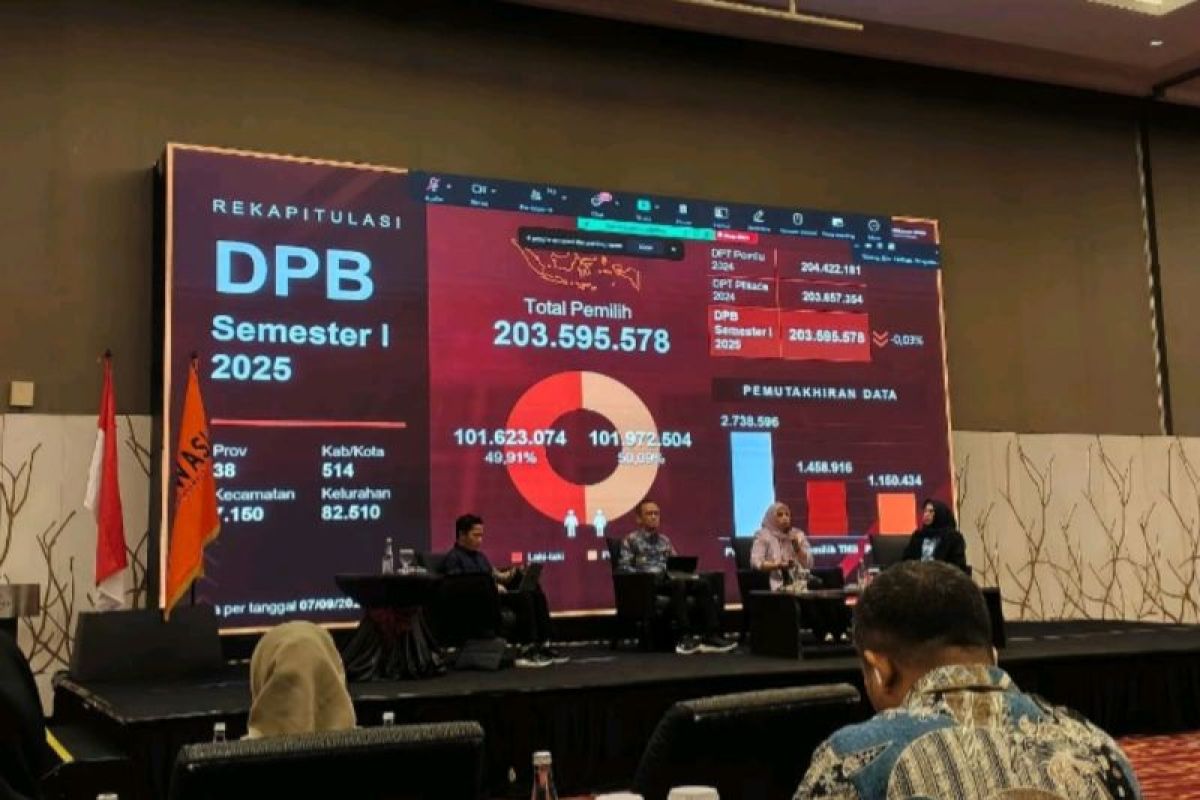
The General Elections Commission (KPU) needs to accelerate the modernisation of its data verification system to be transparently accessible in real-time. The KPU has determined 214,354,667 voters in the National Level Semester I 2026 Continuous Voter Data Update (PDPB) recapitulation. This data serves as the initial preparatory material for compiling the voter list for the 2029 General Election. Based on the PDPB data, the millennial generation dominates with a share of 32.13 percent, followed by Generation X at 27.13 percent, and Generation Z at 24.56 percent. The remainder consists of the baby boomer and pre-boomer generations.
This data appears to be a convincing administrative achievement, complete and spread across 38 provinces, 514 regencies and cities, down to the village and sub-district level. However, these large figures raise an old question that has yet to be fully answered: how accurate is the data behind the numbers? This question is not merely a rhetorical concern. On the same day the KPU finalised the recapitulation, the Chair of the Elections Supervisory Body (Bawaslu), Rahmat Bagja, specifically requested that the KPU follow up on all supervisory notes before the national recapitulation minutes were officially ratified.
This request was not just procedural. Bawaslu member Lolly Suhenty, on the same occasion, presented a number of findings, such as provincial KPU offices that had not coordinated with provincial Bawaslu offices during the updating process. Other findings included input from meeting participants that was not fully recorded in the minutes, non-uniform recapitulation forms, and differences between the established data and the information displayed on the online Permanent Voter List (DPT) checking service. Bawaslu even found discrepancies between voter data from Semester II 2025 and the results of the Semester I 2026 PDPB in several provinces. These findings serve as a reminder that voter list problems are a classic issue in every election.
Voter list problems are not new; they frequently arise in the lead-up to elections. In 2009, according to data from the Partnership for Governance Reform, the number of unregistered voters and so-called ‘phantom voters’ was estimated to reach around 31 million people—a huge figure for a republic that claims its elections are democratic and have integrity. The slow progress of the electronic ID card project was a major contributing factor, as it directly impacted voter data updating, particularly regarding the clarity of the Population Identification Number (NIK). In 2014, the root of the problem was nearly identical to the findings Bawaslu has highlighted now: data was not synchronised between institutions. At that time, the issue was a mismatch between the Potential Electoral Voter Population Data (DP4) compiled by the Ministry of Home Affairs and the final voter list held by the KPU. The question remains: why are the patterns of problems found by Bawaslu in 2026 still the same as those from elections more than a decade ago? This points to a fundamental failure in election risk management.