
Residents Urged Not to Burn Waste Near Railway Tracks During Dry Season
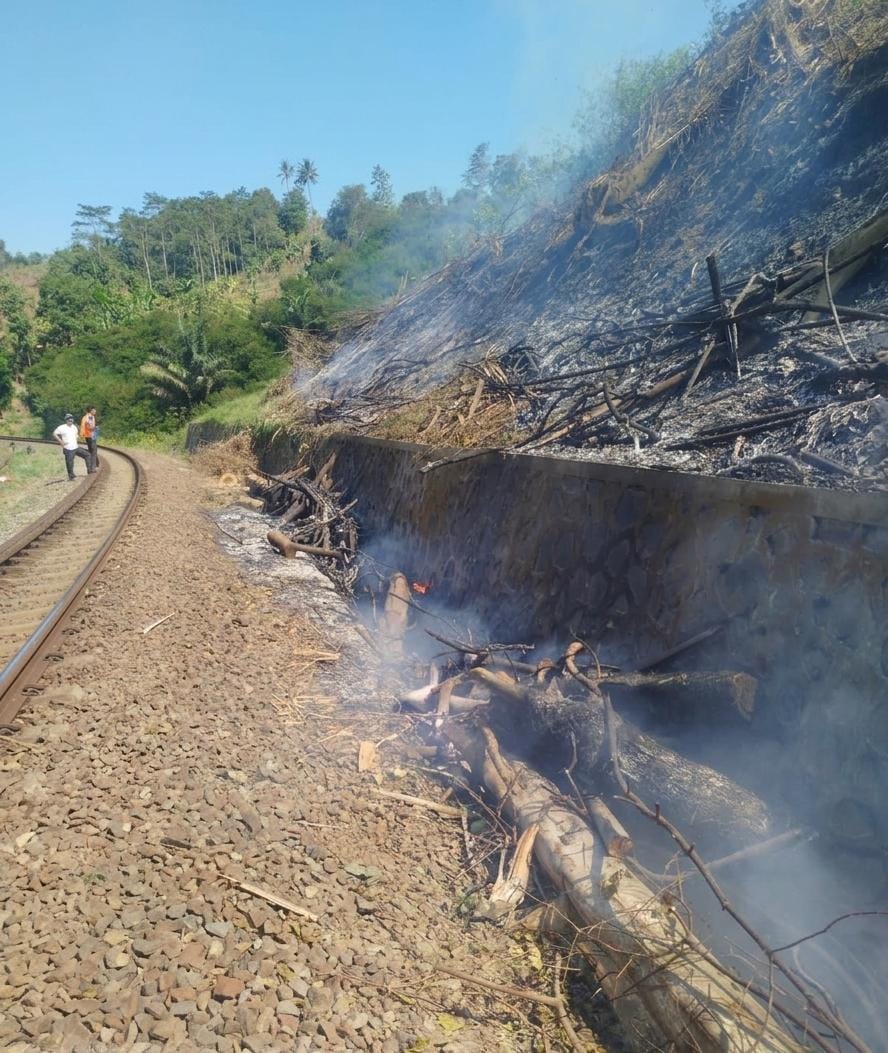
Residents living near railway tracks are being urged not to burn anything, especially during the current dry season. PT Kereta Api Indonesia (KAI) Operational Area 2 Bandung warned that smoke and the remnants of fires could disrupt mass transportation operations.
KAI Operational Area 2 Bandung Public Relations Manager Kuswardojo explained that entering the peak of the dry season, the public should not carelessly dispose of or burn waste, particularly in areas adjacent to railway lines. Although it may seem trivial, such actions can have fatal consequences for the safety of train journeys.
Thick smoke can obscure a train driver’s visibility, while fire spreading to railway infrastructure can damage existing components. “Fire spreading to the tracks has the potential to damage rail sleepers, signalling cables, telecommunication devices, and electrical installations, which are the heart of railway operations. This not only threatens travel safety but also endangers customers, officers, and the surrounding community,” he said in Bandung on Thursday (16/7).
In addition to preventing such actions, KAI is also inviting the public to play an active role as part of an early warning system for infrastructure conditions. The public is expected to immediately report to the nearest KAI officer if they find any unfit conditions on the railway line.
He explained that several conditions to be aware of and report include rails that are deformed or bent into an ‘S-pattern’, potential landslides near the tracks, fallen trees, or standing water that threatens the stability of the line. “Active public participation is very meaningful. A quick report will make it easier for our officers to conduct inspections and handle the situation before it develops into a larger disruption,” Kuswardojo added.
He stressed that PT KAI continuously deploys patrol teams and monitors the tracks regularly, especially at points considered vulnerable during the dry season. Given the extensive area, public participation is needed to optimise these efforts. Kuswardojo expressed his belief that a safety culture will be realised when concern for the environment around the railway line becomes a shared responsibility. “By minimising activities that trigger fires and actively reporting any anomalies, the public has made a real contribution to maintaining smooth, safe, and reliable train journeys for all service users,” he asserted.