
Residents Share Experience Taking Children to TMII for Idul Adha Holiday: Educational Value
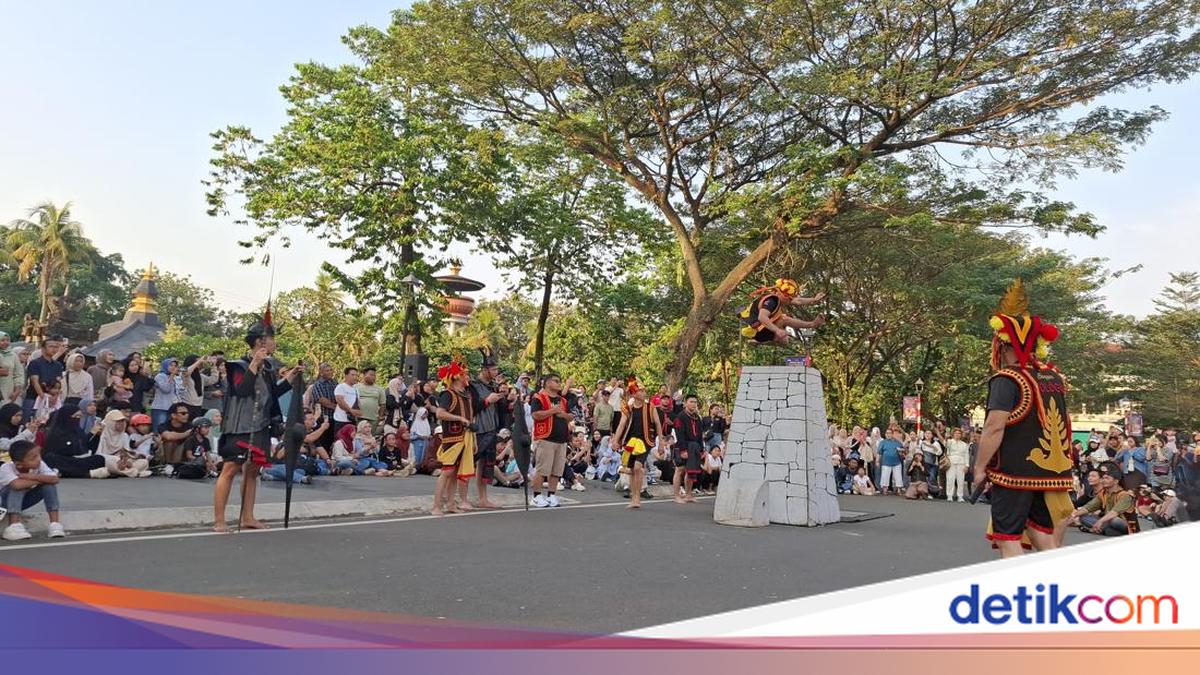
Many residents are taking advantage of the extended Idul Adha holiday to travel with their families. One of the most visited destinations is the Taman Mini Indonesia Indah (TMII) area in East Jakarta. Visitors not only enjoy the holiday atmosphere but also witness various cultural performances, including the Nias stone-jumping display from North Sumatra, which has drawn significant attention. One visitor, Dedi Saputra, 41, from Bekasi, said he deliberately took his family to TMII to make the most of the Idul Adha break. He chose TMII as it is suitable for both recreation and education for his children. “With the Idul Adha break being quite lengthy, my family and I looked for a place where we could have fun but also have educational value for the children. We initially considered Bogor but were worried about traffic,” Dedi said during an interview at TMII on Thursday, 28 May 2026. Dedi said TMII was chosen for its collection of diverse Indonesian regional cultures in one location. His children, who had never visited TMII before, were enthusiastic about exploring the various regional pavilions. “TMII offers a comprehensive view of Indonesia’s regional cultures. Since my children had never been here before, it was a good opportunity to introduce them to Nusantara’s heritage. Rather than just going to a mall, I think it’s better to visit a place with educational value,” he added. While touring TMII, Dedi and his family stopped to watch the Nias stone-jumping performance. Initially, he said he was curious after seeing a crowd at the show venue. “We watched the Nias stone-jumping display. We happened to pass by and saw it was crowded, so we stopped to watch. I was curious because I’d never seen such a performance live before,” he said. Dedi expressed admiration for the live performance, stating that the stone-jumping appeared far more intense than when viewed on television or social media. “It was really exciting; I was genuinely impressed. Watching it on TV or social media might seem ordinary, but seeing it live, the stones are quite high and require great courage,” he said. Moreover, Dedi said his children became curious after watching the performance, continuously asking how the jumpers managed to leap over the tall stones without falling. “The children even asked how they jump without falling,” he said. Dedi said experiencing such cultural performances added value to their TMII visit, allowing his children to learn about Indonesian culture firsthand. “I was very pleased. They even asked to record a video to send to their grandparents. After watching, they had many questions about Nias Island and its traditions. I think this is good—vacation isn’t just about fun but also learning something,” he explained. He hopes cultural performances like the Nias stone-jumping will continue to be showcased at TMII so younger generations become more familiar with Indonesia’s regional cultures. “It’s beneficial because not everyone can travel to the cultural origins. This allows us to get closer to Indonesian culture. Especially since today’s youth are exposed more to foreign cultures, our own should be frequently showcased to remain known,” he added.