
Residents Reluctant to Join Economic Census, Central Java BPS Chief Blames Content Creators
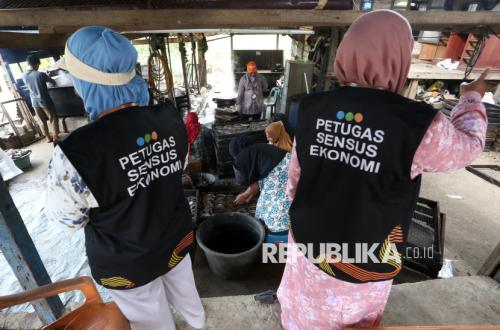
The Head of the Central Java Provincial Central Bureau of Statistics (BPS), Ali Said, admitted that reports are still being received regarding citizens refusing to participate or provide information for the 2026 Economic Census. According to him, one of the contributing factors is the presence of social media content linking the Economic Census to tax issues.
Ali argued that there is content on social media creating false narratives regarding the 2026 Economic Census, specifically associating the activity with tax levies. He added that such claims are inaccurate.
“Once again, I need to convey that content creators should understand that the data we collect will not be provided to the tax office or other agencies,” Ali stated during an interview on Sunday (5/7/2026).
He added that Ministry of Finance regulations already address this matter. “In the Ministry of Finance regulations, it is mentioned that although there is an explanation and a clause stating all government agencies must provide information to the Ministry of Finance, there is an exception clause stating that BPS is not obliged to do so,” he said.
According to Ali, the data collected in the 2026 Economic Census will not be handed over to the Ministry of Finance. “We can guarantee the security of the data or information provided by respondents individually; we certainly maintain its confidentiality,” he said.
He noted that the Economic Census is a major undertaking, meaning content regarding the activity is easily detected by social media algorithms. “This affects the public, as our society cannot yet carefully filter whether this information is true or not. They simply accept the influence,” said Ali.
To counter the false narratives circulating on social media, BPS is conducting direct socialisation with the community by collaborating with neighbourhood (RT) and community (RW) officers, as well as village and sub-district officials. They are also mapping areas where residents still refuse to be recorded or provide information during the census.
“I believe that when we go into the field, the refusal actually only involves a small number of people. It is not massive,” Ali remarked.
He revealed that as of 30 June 2026, the number of respondents in Central Java recorded by census officers reached 22.92 per cent, or approximately 4 million people. “Since this process continues until 31 August 2026, our target is 100 per cent. We aim to record everyone within the scope of the 2026 Economic Census in Central Java, which totals around 16 million people,” he said.
Obstacles in Semarang City
The Head of BPS Semarang City, Rudi Cahyono, revealed that the implementation of the 2026 Economic Census in his region still faces several obstacles. One of the main issues is that many residents are reluctant to disclose their income due to fears that it will lead to increased tax levies.