
Residents Accept Transjakarta Fare Hike Provided Facilities Are Improved
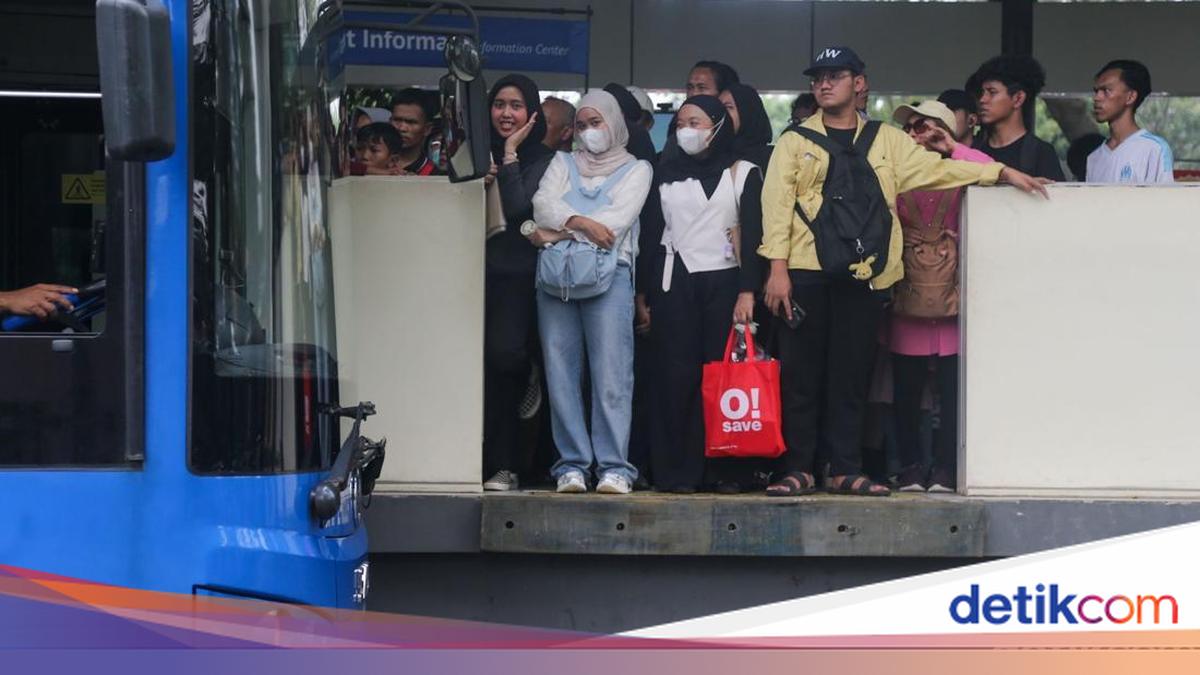
The Jakarta Transportation Council (DTKJ) has proposed a scheme to raise Transjakarta fares to Rp 5,000, while Transjabodetabek fares would increase to Rp 10,000. A number of residents consider the proposed fare adjustment to still be within reasonable limits.
One resident, Yona, has no objection to Transjakarta and Transjabodetabek fares rising. However, the Depok resident who works in West Jakarta every day asked that the fare increase be balanced with improved facilities.
“In my view, if it rises to Rp 5,000 for Transjakarta, that’s fine, it’s not too burdensome. If Transjabodetabek rises to Rp 10,000, that’s also okay. Given the long distances, paying only Rp 10,000 is quite good. But with this price increase, it must also be matched with the number of buses. Like me in Sawangan, the fleet there is still not very large,” Yona told detikcom on Thursday (9/7/2026).
Yona uses the D41 Sawangan–Lebak Bulus Transjabodetabek route daily to get to work. She complained that services on the route often fail to reach the final stop in the late afternoon.
“At 6pm, from Lebak Bulus to Sawangan, the bus doesn’t reach the terminal or final stop, only up to the Sawangan toll gate. The bus then turns back to Lebak Bulus. Because if it went all the way to the terminal, the severe congestion on Jalan Sawangan would mean the bus takes ages to get back to Lebak Bulus,” she said.
Beyond route issues, Yona said waiting facilities at bus stops remain inadequate, from the limited seating to the availability of rubbish bins.
“That’s one thing. Secondly, at every stop there still aren’t enough seats. There aren’t even enough seats for priority passengers, let alone general passengers. There’s only one rubbish bin at Lebak Bulus stop. Hopefully more will be added so people don’t litter,” she said.
If fares are officially raised, she hopes a stop at Sawangan Terminal will be built soon for passenger comfort. “The stop at Sawangan Terminal should be built soon to make waiting for the bus easier. A fare increase must be matched with facilities,” she said.
Agreeing with Yona, another Jakarta resident named Riris also felt the proposed Transjakarta and Transjabodetabek fare increases were still reasonable. She said the fares remain far cheaper than app-based (online) transport.
“It’s actually still very reasonable, especially in Jakarta. It works out as still the cheapest public transport compared to ojol (motorcycle taxis) or taxis,” Riris said.
“It is a bit more expensive than the KRL commuter train, but Transjakarta’s coverage is much wider than the KRL. So you have more choice of destinations, whereas the KRL doesn’t serve many places and is stuck in the same corridors,” she added.
Although she understands the planned increase, Riris still hopes for tangible improvements in facilities and services on the ground. Moreover, during rush hour, passenger overcrowding frequently occurs at smaller stops.
“It’s still very understandable, with the hope that facilities are also improved. Perhaps with more buses or other facilities at stops or waiting areas. If you look at non-BRT Transjakarta stops, during rush hour the queues are extremely long. And the space at non-BRT stops is small, so the queues end up stretching onto the pavement,” Riris explained.
Riris, who uses Transjakarta for her daily commute, suggested that the DKI Jakarta Provincial Government expand stops with high passenger volumes before implementing the new fares.
“Perhaps those stops could be expanded so they can accommodate the many workers who use Transjakarta every day. Certainly, before prices go up, facilities must be ensured so there is a balance between facilities and price, even though it is in fact already subsidised by the DKI Provincial Government,” she concluded.
DTKJ proposal
Earlier, DTKJ chairman Sugihardjo proposed raising fares for integrated Transjakarta and Transjabodetabek services. Transjakarta fares were proposed to rise to Rp 5,000, while Transjabodetabek would be Rp 10,000.
“The intercity one (Transjabodetabek) would become Rp 10,000. Moreover, if later we push for integration not only between road transport modes but also with the LRT and MRT. If Transjabodetabek is combined with those, it means all modes would be integrated,” Sugihardjo told reporters at Jakarta City Hall on Friday (3/7).
He said that although fares would rise, Transjabodetabek would be integrated with Transjakarta under a single payment.
“Now, with Rp 10,000, what is the benchmark for saying it’s an increase? From the current Rp 3,500, rising to Rp 10,000 is indeed an increase. But also, seen from now, passengers can use Transjakarta services with it,” he said.