
Reshuffle Rumours Subside, JCI and Rupiah Strengthen
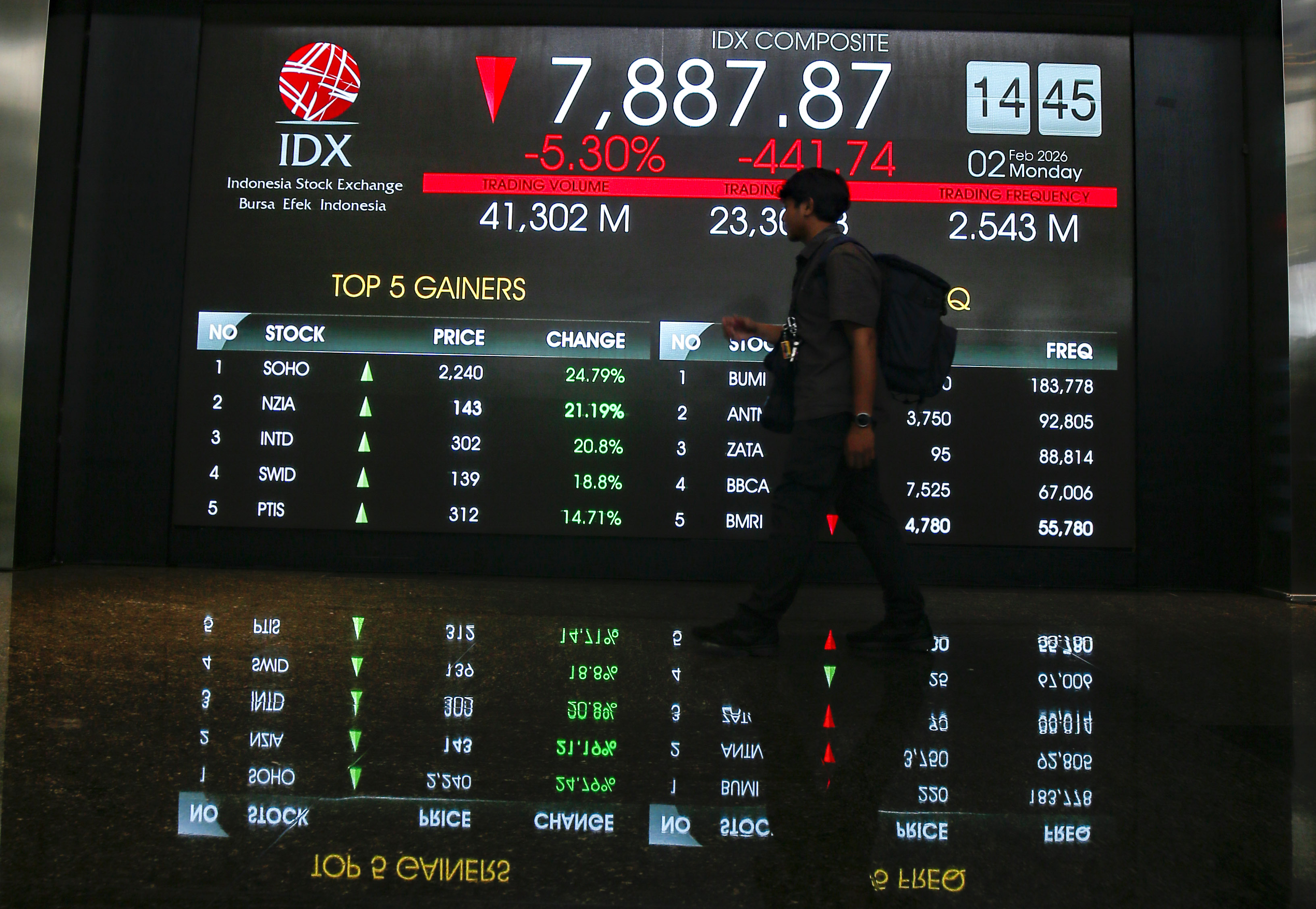
The composite stock price index (IHSG) and the rupiah exchange rate strengthened in trading on Tuesday (9/6), in line with the subsiding speculation regarding a cabinet reshuffle, particularly the issue of replacing Finance Minister Purbaya Yudhi Sadewa. On the day, the IHSG rose 2.10% or gained 112 points to a level of 5,454.58. The rupiah strengthened to around Rp18,100 per US dollar on Tuesday afternoon, recovering after hitting an intraday low of 18,234.
Aditya Hera Nurmoko, an economist from the Sekolah Tinggi Ilmu Ekonomi (STIE) Yayasan Keluarga Pahlawan (YKP) Yogyakarta, said the market responded positively after confirmation emerged that the rumour of the finance minister’s replacement was untrue. According to him, the reduction in political uncertainty was one of the factors that helped improve investor sentiment. Financial markets generally dislike uncertainty, especially that related to the direction of government economic policy.
“The rumour of replacing the finance minister had raised questions about the direction of the government’s fiscal policy. When the issue was denied, some investors regained confidence that there would be no sudden changes in economic policy,” Aditya said in his statement on Tuesday (9/6). He explained that investors also pay attention to the continuity of economic policy. Coordination between the Ministry of Finance and Bank Indonesia is considered important in maintaining the stability of the rupiah and the bond market. With no sudden changes in this strategic position, the market sees a better chance for consistent economic policy implementation, thereby increasing investor confidence.
Beyond this factor, the market strengthening was also influenced by buying actions following the pressure experienced in previous trading. A day earlier, the IHSG experienced a fairly sharp decline and the rupiah exchange rate also weakened against the US dollar. As negative sentiment began to subside, some investors took advantage of the condition where share prices had fallen to make purchases or buy on weakness. This step then helped drive the IHSG rebound and the rupiah strengthening.
Nevertheless, Aditya cautioned that the strengthening of the IHSG and the rupiah cannot be attributed solely to the subsiding reshuffle rumours. According to him, financial market movements are influenced by many factors, including foreign capital flows, interest rate policies, global economic conditions, sentiment towards the US dollar, and market participants’ expectations of government and Bank Indonesia policies. “The subsiding of the reshuffle rumour was likely one positive catalyst that reduced market panic. However, it was not the only factor determining the strengthening of the IHSG and rupiah today,” he said.
Meanwhile, Esther Sri Astuti, Executive Director of the Institute for Development of Economics and Finance (Indef), stressed that the IHSG strengthening cannot be separated from investor perception of economic prospects and national fiscal policy stability. “The main thing is, if large capital flows enter Indonesia and the country’s foreign exchange reserves are substantial, then the rupiah’s value will not depreciate,” explained Esther. She detailed that to attract capital inflows, Indonesia must meet several basic requirements that global investors consider. First, legal certainty for doing business in Indonesia. Second, good market economic prospects. Third, adequate availability of raw materials.
“Fourth, a supportive ecosystem. Fifth, integration of the global supply chain. Sixth, good availability of energy, electricity, water and other infrastructure. Seventh, harmonisation of regulations between agencies at both central and regional levels,” she elaborated. Esther emphasised that stability at the ministerial level sends a positive signal to investors because it reduces short-term policy uncertainty. According to her, if these seven factors can be met, foreign capital flows will be easier to attract and will strengthen the rupiah exchange rate as well as the domestic capital market.