
Reshaping the face of tourism in Gili Matra, Lombok
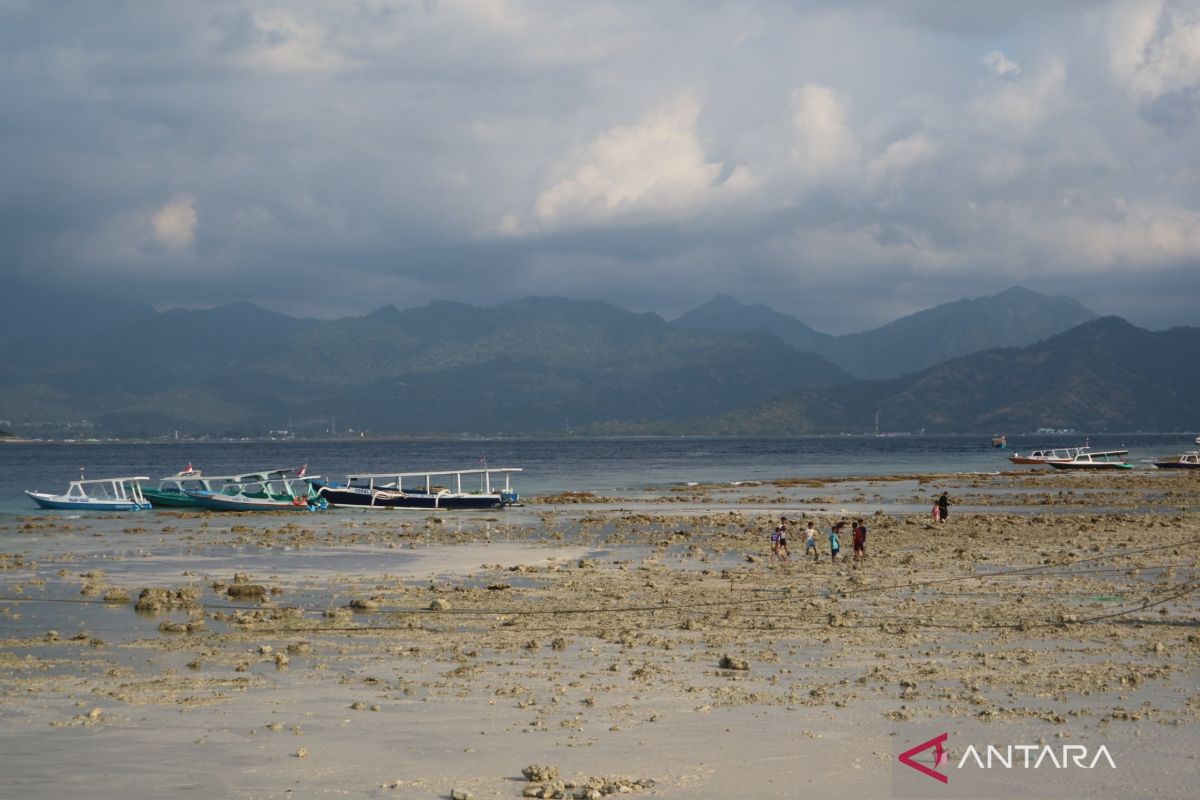
Afternoon slowly falls on a small island of approximately 150 hectares at Gili Meno, North Lombok Regency, West Nusa Tenggara.
A stretch of white sand as soft as wheat flour opens wide as the sea water recedes, leaving puddles among the coral reefs. It is there that Rara, an eight-year-old girl, finds her own world.
She wears a purple t-shirt, long denim trousers, and rubber slippers. Her short bob haircut looks yellowish in the late afternoon sunlight, while her sun-browned skin glistens with traces of sea water.
Rara walks along the shoreline with six friends. From time to time, their small hands peek behind coral rocks, hoping to find fish or octopus trapped in the tidal pools.
For the children of Gili Meno, the sea water cycle reaching its lowest point due to the gravity of the Moon and the Sun is not merely a change of tide. This daily phenomenon is a time when the beach turns into a playground as well as a place to find food to take home.
“Every time the sea water recedes, we always go to the beach to play and look for fish and octopus. If we are lucky, we can get 100 of them, but sometimes we only get 10,” said the second-grade primary school student when met by ANTARA on a day in August.
In the distance, moored traditional boats are waiting for the sea to rise again. Mount Rinjani and the hills of Lombok Island stand in the shadows of the evening light across from Gili Meno.
The blue sky is slowly covered by clouds, while the sun pours golden hues onto the turquoise sea surface that recedes further from the shoreline.
Rara and her friends continue searching for fish and octopus on the wet coral flats not far from the harbour area. They run, crouch, play, and then return to explore the tidal pools.
Laughter bursts out along with the sound of the wind and the remaining waves as they find an octopus spraying thick ink that turns their hands black. There is no fear, only the joyful clamour of children discovering something from the sea.
Every time the tide recedes, the sea seems to open a treasure chest, leaving fish, octopus, and other small creatures among the coral for small hands to find. For coastal children, the sea is both a playground and a kitchen that is never truly far from home.
Rebuilding the ecosystem
Source: jawawa.id (https://jawawa.id/newsitem/reshaping-the-face-of-tourism-in-gili-matra-lombok-1786539450)
Originally published by Antara (Indonesian) (https://www.antaranews.com/berita/5691335/membenahi-wajah-pariwisata-gili-matra-di-lombok), translated from Indonesian