
Resembling Humans in the Womb, a Baby of Another Species Is Born
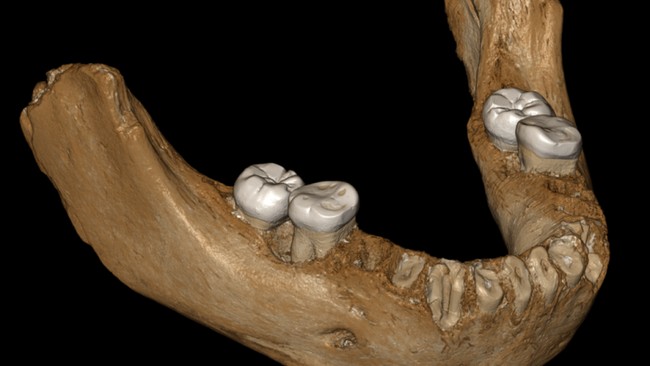
A study has successfully reconstructed the prenatal growth patterns of a Neanderthal infant dating back 50,000 to 60,000 years, revealing similarities with modern humans. The Neanderthal infant specimen was discovered in the Sesselfelsgrotte cave in Germany. Twelve bone fragments belonging to the prenatal Neanderthal, referred to as Sesselfelsgrotte, were excavated. Researchers conducted analysis using micro-computed tomography. Micro-CT scans were performed on fragments of the femur, humerus, ulna, fibula, three ribs, mandible, vertebra, and frontal bone. These were then compared with infant skeletons found at La Ferrassie and Le Moustier in France, as well as with modern humans. The results showed that the Neanderthal infant resembled a premature Romano-British infant aged 30 to 36 weeks from an archaeological site less than 2,000 years old. “All the bones display an extensive microanatomical pattern consistent with modern human foetal growth in the final trimester of pregnancy, at eight to nine months,” the study authors stated. However, the researchers noted they could not make general comments about Neanderthal foetal development based on a single incomplete skeleton. The researchers also found the remains of two other Neanderthal children in the same cave. From their analysis, they suggested that both children likely suffered from vitamin D deficiency. The children’s teeth exhibited interglobular dentin due to poor mineralisation, a condition often seen in modern human children with rickets. “This is the earliest evidence of metabolic bone disease in humans not classified as anatomically modern to date,” the researchers explained.