
Researchers Uncover New Evidence in the Mystery of the Origins of Life on Earth
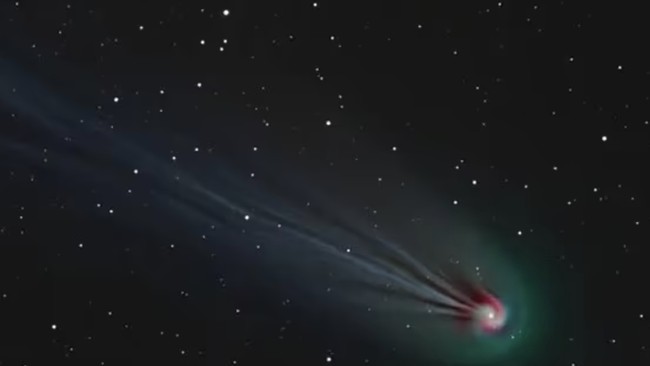
Jakarta, CNBC Indonesia — The theory that comets brought the basic ingredients for life to Earth is being questioned. A new study has found that impacts on the early Earth were likely to destroy the organic molecules carried by comets because of the extreme temperatures and pressures generated during collisions.
The findings, published in the journal Scientific Reports, could unsettle a theory about the origins of life on Earth that has been developed over several decades.
Comets have long been thought to have supplied water and organic compounds needed to initiate the chemical processes that led to life. Composed of ice, dust and organic material, comets are often described as “dirty snowballs”.
The idea that the ingredients for life came from outer space is known as panspermia. It has been discussed scientifically since 1908, while the theory that comets supplied organic material to Earth dates back at least to 1961.
However, new computer simulations suggest the process may not have been as straightforward as previously thought.
The research team used an updated model of comet formation and evolution to simulate conditions on the early Earth more than four billion years ago. They ran 100,000 simulations to test whether comets could deliver organic molecules without destroying them.
In 54% of the simulations, no comet hit Earth. The remaining 46% showed at least one impact, but only a very small proportion produced as many as three collisions.
Researcher Richard Anslow, who conducted the study during his doctoral programme at the Institute of Astronomy at the University of Cambridge in the UK, said that most impacts would not allow organic molecules to survive.
“Based on what we know about the surface environment of the early Earth, on average our simulations found that no impacts succeeded,” Anslow said, according to CNN on Sunday (1 November 2026).
He said comets do contain high concentrations of several molecules important to life. However, their very high impact speeds put those materials at risk of being damaged before they could be used in the chemical processes that led to life.
“The typical speeds of these comets when they hit Earth mean that very few, if any, could deliver intact organic molecules; so comets appear to be less useful for prebiotic chemistry than previously thought,” Anslow said.
Important molecules destroyed on impact
The study focused specifically on hydrogen cyanide (HCN), a naturally occurring compound made up of hydrogen, carbon and nitrogen. The molecule has been detected in dozens of comets, including Halley’s Comet and Hale–Bopp.
HCN is an important precursor in prebiotic chemical processes. When it reacts with water, it can potentially produce amino acids — the building blocks of proteins and an essential component of life.
But when a comet strikes Earth’s surface, the material inside it is subjected to extremely high pressure and temperatures. These conditions can destroy the organic molecules that might otherwise have provided the raw materials for life.
Anslow explained that even if an impact allowed some HCN to survive, the quantity delivered would probably not be sufficient to support the chemical processes in question.
In addition, if a comet landed in the ocean, its HCN could dissolve quickly, leaving its concentration too low.
The formation of life also requires more than HCN. Other compounds containing phosphorus and sulphur are needed to support prebiotic reactions, but these elements are not routinely found in comets.
Therefore, a comet’s success in supplying one type of molecule would not necessarily be enough to create an environment conducive to the emergence of life.
Asteroids and Mars as alternatives
If comets were not the main source of life’s ingredients on Earth, researchers see several other possibilities that warrant further investigation.
One is the theory that the primordial soup on Earth could have produced the molecules needed to initiate life through natural chemical reactions.
Asteroids are another candidate for bringing organic material from space. Unlike comets, they generally hit Earth at lower speeds and are more numerous.
Findings from samples collected from the asteroids Bennu and Ryugu have strengthened this possibility. Both asteroids are known to contain most of the types of amino acids used to build proteins.
The study also raises the possibility that comets played a greater role in supplying life-forming chemicals on ancient Mars than they did on Earth.
Anslow explained that Mars’s smaller size and greater distance from the Sun mean comet impacts there are relatively slower than on Earth.
That could give HCN a better chance of surviving when a comet strikes the Martian surface.
He said the findings could provide an additional perspective on Mars’s early evolution, including the possibility that the Red Planet once had conditions capable of supporting life.
Comet theory not entirely ruled out
Even so, the new study does not definitively rule out the possibility that comets contributed to the emergence of life on Earth.
Queenie Chan, an associate professor of Earth sciences at Royal Holloway, University of London, who was not involved in the study, said HCN may have undergone chemical reactions before a comet entered Earth’s atmosphere.
Those reactions could have produced biologically important compounds, including the building blocks of proteins, that were more stable and more likely to survive an impact.
Chan said that comets’ inability to deliver HCN intact does not entirely rule out their role in supplying other organic compounds that contributed to Earth’s stock of prebiotic chemicals.
Nicolle Zellner, a professor of physics at Albion College in Michigan, expressed a similar view. She said she was not surprised by the findings, but was not yet willing to dismiss comets as one of the factors that contributed to the emergence of life.
Zellner said the study had provided a clearer picture of, and set limits on, the likelihood that comets delivered the basic ingredients for life to Earth.
Source: jawawa.id (https://jawawa.id/newsitem/researchers-uncover-new-evidence-in-the-mystery-of-the-origins-of-life-on-earth-1793512245)
Originally published by CNBC Indonesia (https://www.cnbcindonesia.com/tech/20261101115633-37-781238/peneliti-bongkar-fakta-baru-misteri-asal-usul-kehidupan-di-bumi), translated from Indonesian