
Researchers Uncover Major Evidence of Jerusalem's Destruction
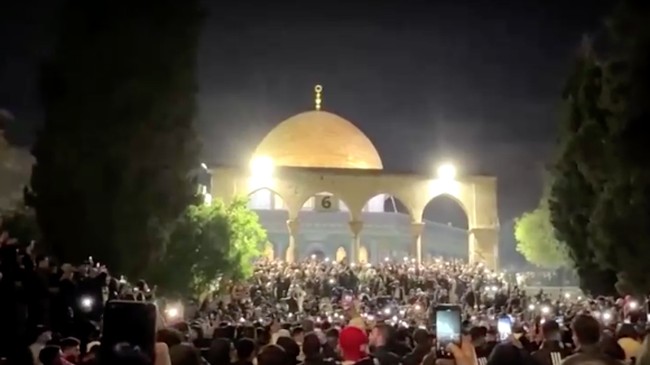
Researchers have uncovered significant evidence that could explain the destruction of Jerusalem, as detailed in a journal article titled ‘Radiocarbon Chronology of Iron Age Jerusalem Reveals Calibration Offsets and Architectural Developments’. The research team sought to reconstruct Jerusalem’s urban history using radiocarbon dating, atmospheric radiocarbon measurements, and tree ring analysis. However, the work was not as straightforward as anticipated. The researchers faced challenges from the Hallstatt plateau, where a mixture of cosmic rays and atmospheric conditions interferes with radiocarbon dating, preventing the generation of specific ages. To overcome this, the scientists utilised biblical texts and historical records, alongside studying pottery and various pieces of evidence with radiocarbon measurements. They successfully conducted more than 100 radiocarbon measurements on organic materials, and the collected samples were successfully identified. The new precise dating of archaeological sites in Jerusalem supports several major historical events described in the Bible, including the city’s settlement, a major earthquake, and its destruction by the Babylonians. Elisabetta Boaretto, a researcher and director of the Scientific Archeology Unit at Weizmann, described Jerusalem as a living city, one that is continually built upon with archaeological evidence scattered throughout. ‘Despite the challenges of layered construction and the Hallstatt plateau, we were able to compile its chronology during the Iron Age,’ she explained. The researchers examined 103 samples of seeds and other remains from five sites in the ancient City of David neighbourhood in Jerusalem, south of the Temple Mount. The new approach applied radiocarbon dating and precise analytical methods, collectively termed ‘micro-archaeology’, to sediment layers associated with the grains and then verified the dates with atmospheric radiocarbon measurements from tree growth rings dating between 624 and 572 BC. This effectively removed the uncertainty from most of the Hallstatt plateau time period, Boaretto stated, allowing them to establish a chronology using evidence of the Babylonian destruction in 586 BC. The settlement period ended with a large fire identified as the Babylonian destruction of 586 BC, as described in both the Bible and Neo-Babylonian records. However, not all experts are convinced the new chronology is reliable. Israel Finkelstein, a professor at Tel Aviv University who was not involved in the study, noted that many of the samples used came from less-than-ideal archaeological contexts, and that only one of the five historical sites was considered reliable.