
Researchers Reveal New Facts: Java's Earthquake Threat Larger Than Previously Thought
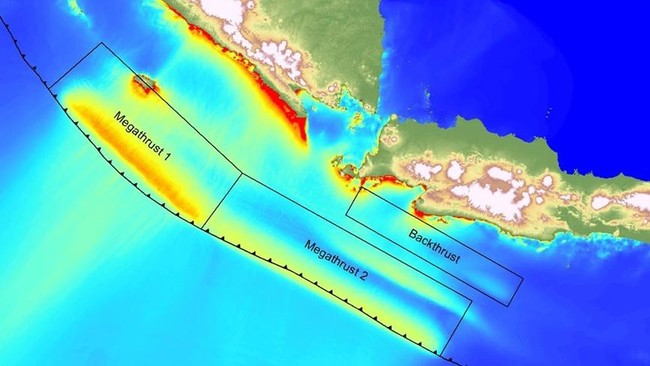
Researchers have revealed that earthquake sources in Java require further study to improve the accuracy of hazard and disaster risk assessments. This was stated by Danny Hilman Natawidjaja, a lead researcher at the Geological Disaster Research Centre, National Research and Innovation Agency (BRIN).
Danny noted that there is still significant uncertainty regarding earthquake sources in the Java region. He explained that Java possesses a complex system of earthquake sources; in addition to the subduction zone or megathrust in southern Java, there are various active faults on the mainland that have the potential to trigger destructive earthquakes.
“Our knowledge regarding active faults in Java still contains much uncertainty. There are several known faults, but their critical characteristics, such as slip rates, segmentation, and maximum magnitude, are not yet fully understood,” he said, as quoted from the official BRINT website.
One geological structure of particular concern is the Java Back-Arc Thrust, a large thrust fault extending from the Jakarta area to Surabaya. According to him, the existence of this fault contributes to the earthquake hazard level in northern Java, which has traditionally been considered relatively safer compared to the southern region influenced by the subduction zone.
He explained that current earthquake hazard maps are the result of interpretations from evolving geological and seismological data. Therefore, active fault maps and earthquake hazard maps are not static but are continuously updated as new research findings emerge. For instance, the BRIN team recently conducted detailed mapping around the Mount Ciremai area, which yielded new information regarding the presence of active faults and changes in the segmentation of previously known fault structures. These findings could potentially affect earthquake hazard estimates on a local scale.
“Every new piece of geological evidence can change our understanding of earthquake sources. The impact may not be massive on a regional scale, but it can be significant for hazard assessments at a local level,” he explained.
Danny emphasised that earthquake threats are not limited to ground shaking. Active faults can also trigger secondary hazards such as surface ruptures, landslides, liquefaction, and even local tsunamis. He noted that surface rupture is an aspect that often receives insufficient attention in development planning. In reality, critical infrastructure such as motorways, railways, dams, energy pipelines, and other public facilities are at risk of serious damage if built directly atop active fault lines.
“Buildings can be designed to be more resistant to earthquake shaking, but it is very difficult to design structures capable of withstanding surface ground displacements of several metres caused by fault movement,” he said.
He added that several countries, such as Japan, New Zealand, the United States, and Taiwan, have implemented policies to restrict development within active fault zones. In Indonesia, implementing similar policies still faces challenges due to the limited availability of detailed data regarding the location and characteristics of active faults.
During the discussion, Danny also highlighted the importance of integrating hazard, exposure, and vulnerability data in disaster risk studies. He argued that improving the quality of exposure and vulnerability data will not result in optimal risk assessments if the information regarding hazard sources remains highly uncertain.
“Risk is a function of hazard, exposure, and vulnerability. Therefore, improving the quality of hazard data, including the mapping of active faults and the understanding of earthquake and tsunami cycles, is a vital foundation for producing more accurate risk assessments,” he explained. This information is expected to support the formulation of more effective disaster mitigation policies.
Source: jawawa.id (https://jawawa.id/newsitem/researchers-reveal-new-facts-javas-earthquake-threat-larger-than-previously-thought-1781502849)
Originally published by CNBC Indonesia (https://www.cnbcindonesia.com/tech/20260615111433-37-742862/peneliti-ungkap-fakta-baru-ancaman-gempa-di-jawa-ternyata-lebih-besar), translated from Indonesian