
Researchers reveal ancient humans consumed betel nut to treat toothache
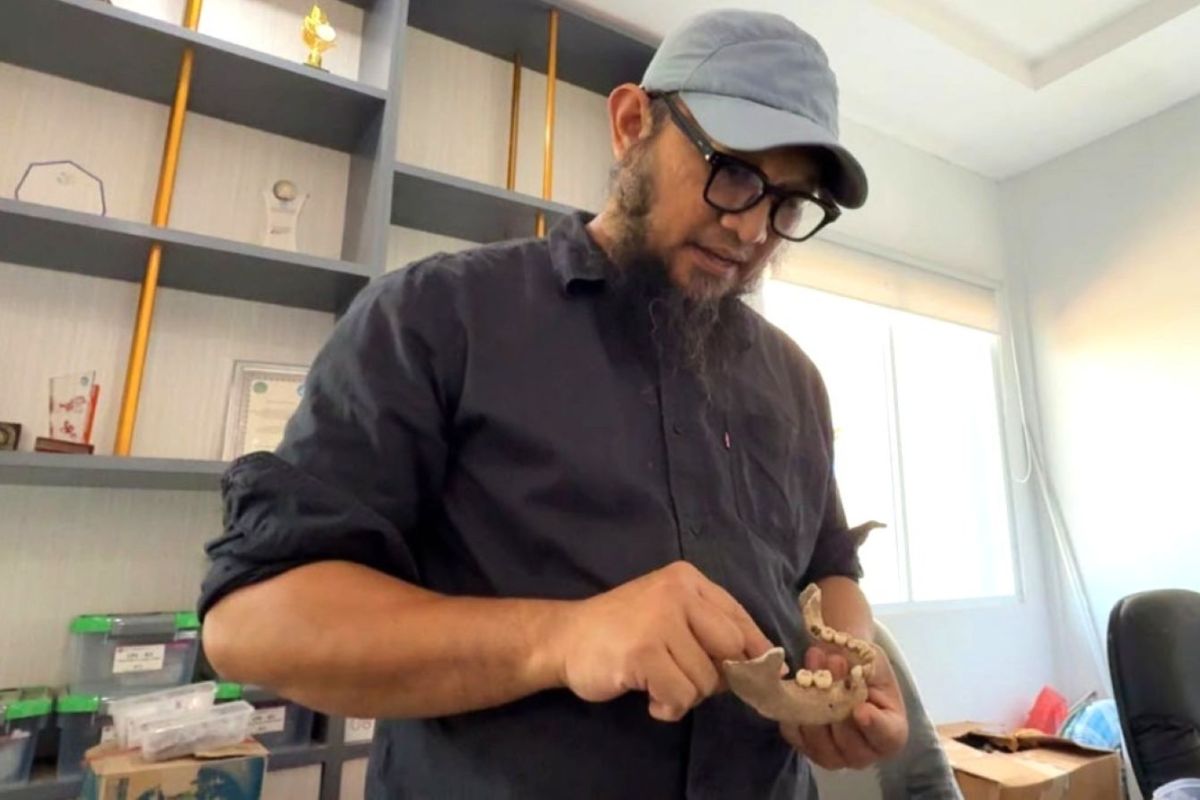
Makassar (ANTARA) - International archaeologists and scientists, in collaboration with the National Research and Innovation Agency (BRIN), have found empirical evidence that ancient humans in Sulawesi have used betel nut for 25,000 years as a remedy for toothaches.
BRIN researcher and archaeologist Fakhri, in a press release received on Monday, revealed that the investigation began with macroscopic and microscopic analyses of the shape and condition of teeth from two ancient human samples found in South Sulawesi.
“Our analysis was based on macroscopic observations. Before proceeding to microscopic analysis, there were visible observations, including assessments of paleopathological conditions,” Fakhri stated.
The research was motivated by an anatomical anomaly that had puzzled researchers during the excavation of ancient human skeletons in Sulawesi.
The first sample, from Leang Bulu Bettue in Maros Regency, is estimated to have lived during the late Pleistocene, between 25,000 and 16,000 years ago. The teeth of this individual showed severe and unusual circumferential wear patterns on the occlusal surface of the molars.
The second sample was found in Leang Cappa Lombo, Bone, dating from the Middle Holocene between 7,600 and 6,300 years ago. The same pattern of circumferential wear was found in an adult male specimen, aged approximately 33–50 years (known as specimen CPL-R2).
Based on a groundbreaking study published in the journal Science Advances by international archaeologists and scientists alongside BRIN, ancient humans in Sulawesi have used psychoactive, consciousness-altering substances for thousands of years.
Basran Burhan, a Geoarchaeology researcher from Griffith University, Australia, noted that this unusual dental pattern was initially thought to be the result of using teeth as hand tools.
“At the time, we thought they might have been used for twisting rope or something similar. That is why the level of tooth wear was so drastic and abnormal,” said Basran, adding that his hypothesis shifted after round objects were found that had been held in the oral cavity.
To prove this hypothesis, the research team applied a highly advanced and non-destructive biomolecular analysis method known as Liquid Chromatography-Mass Spectrometry (LC-MS). Dental calculus samples were soaked in a special solution to detect the smallest chemical residues embedded within the tooth tissue.
The results were surprising; the analysis detected the presence of arecoline, the primary alkaloid found in betel nut (Areca catechu), which acts as a psychoactive stimulant to the central nervous system.
Budianto Hakim, a researcher at the Sulawesi Research Collaboration Centre, explained that this discovery positions betel nut as the oldest known addictive substance used by humans before the era of modern substances.
“Before humans knew caffeine, before they knew nicotine, the first and oldest addictive substance that provided a stimulant to the nerves was betel nut, approximately 25,000 years ago,” he said.
Further laboratory experiments replicating the oral cavity proved that sucking on whole betel nut, even without mixing it with lime powder as in modern methods, is capable of releasing sufficient amounts of arecoline to trigger real physiological effects in the human body.
“The existence of the tradition of chewing betel nut from the Pleistocene through to the Toalean era suggests they may have shared a common ancestor, continuing from the culture of rock painting to the Toalean culture,” added Suryatman, a researcher of Lithic Technology and Prehistoric Stone Tool Industry at Hasanuddin University.
Source: jawawa.id (https://jawawa.id/newsitem/researchers-reveal-ancient-humans-consumed-betel-nut-to-treat-toothache-1791208839)
Originally published by Antara (Indonesian) (https://www.antaranews.com/berita/5772382/peneliti-ungkap-manusia-purba-konsumsi-pinang-atasi-sakit-gigi), translated from Indonesian