
Researchers Race to Restore Seagrass Meadows to Protect Marine Ecosystems
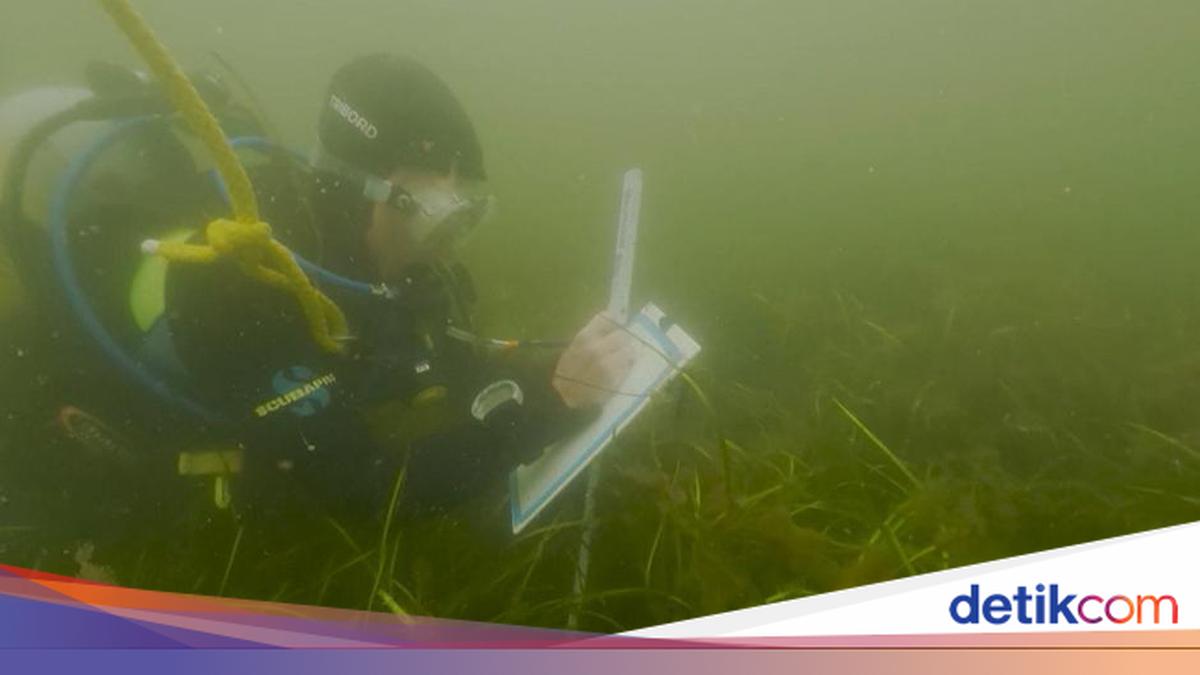
Six divers are exploring the cold waters of the Baltic Sea off Dahme, a small town in northern Germany. The conservationists carefully pull up shoots rooted on the seabed and place them in bags.
They take only a few shoots from each location, then replant them elsewhere so they can flourish. The conservationists have chosen an ideal site: sandy sediment, protection from waves and currents, and sufficient light and oxygen for growth.
Scientists consider this work important. Myriam Spicka, who leads the Seagrass Conservation NGO, says she has witnessed many changes during more than 30 years of diving. She is not alone in seeing the damage to seagrass meadows.
Scientists estimate that around 60% of seagrass meadows along the Baltic coast have disappeared. “That is the bad news,” said marine ecologist Thorsten Reusch of the GEOMAR Helmholtz Centre for Ocean Research Kiel. “The good news is that the area is no longer continuing to shrink.”
Why should we care about seagrass?
Underwater seagrass meadows provide food and shelter for fish, crabs, shellfish and many other species. They improve water quality and slow waves, helping to protect coastlines from erosion. Seagrass can also store carbon on the seabed around 30 to 50 times faster than forests.
Around 70 seagrass species are found along the coasts of more than 150 countries. Some grow just below the surface, while others can be found at depths of 60 metres.
“Some countries have much larger seagrass meadows, particularly in the Indo-Pacific region,” Reusch said. “There, seagrass can play an important role in their carbon balance.”
But seagrass does more than store carbon. Baltic Sea meadows are among the ocean’s most valuable habitats. They shelter marine wildlife, stabilise the seabed and act as natural filters by trapping particles and nutrients.
How can seagrass be replanted on a large scale?
Planting seagrass shoots one by one is laborious. People such as Reinhard Helbig are trying to make the process easier.
Through ZosteraTec, the start-up he founded with a colleague, Helbig helps restore marine habitats, including seagrass meadows damaged by offshore activities such as the construction of wind farms. Restoration begins on the shore.
“Bad weather actually helps us. Waves and currents wash seagrass off the seabed. A day or two later, it washes up here, still fresh,” he said.
The collected shoots are planted and propagated at ZosteraTec’s cultivation facility. A few months later, the seedlings are placed on plant supports. A specially developed machine ties them to the supports with biodegradable thread. The finished units can be placed on the seabed, reducing the need for diving.
“We grow them on land to reduce the work underwater. That means fewer dives, and we can do more of the work on shore,” Helbig said.
Could planting seeds be a solution?
Researchers at the GEOMAR Helmholtz Centre in Kiel are also testing new ways to restore seagrass over larger areas, including by using seeds.
Marine ecologist Esther Thomsen reaches into an aquarium tank and takes out a flowerpot containing seagrass.
“Ten per cent of the plants in our seagrass meadow produce seeds. You can clearly see the seeds here,” she said.
“The great advantage of restoring seagrass meadows from seeds is greater genetic diversity. In future, we should be able to sow seeds over much larger areas,” Thomsen explained.
Reusch of GEOMAR said that, at present, they believe “the most promising way to grow seagrass meadows that can withstand climate change is to plant individual shoots as a foundation, then sow seeds between them to increase genetic diversity”.
It takes time to see the results
The success of a planting project may only become clear months or even years later.
Thomsen and her colleagues are visiting the first seagrass meadow planted in German Baltic waters, in 2021. Divers count the shoots, check how densely they are growing and record the meadow’s development.
They then compare it with the original meadow from which the seagrass came. Only through this comparison can they determine whether the new plants are merely surviving or beginning to develop into a natural seagrass meadow.
“We have just checked the meadow, and it is very dense. We counted many shoots per unit area,” Thomsen said. “It looks very good.”
Source: jawawa.id (https://jawawa.id/newsitem/researchers-race-to-restore-seagrass-meadows-to-protect-marine-ecosystems-1793274838)
Originally published by detikcom (https://news.detik.com/dw/d-8729918/peneliti-berpacu-pulihkan-padang-lamun-demi-pertahankan-ekosistem-laut), translated from Indonesian