
Researchers highlight traceability challenges in the national palm oil industry
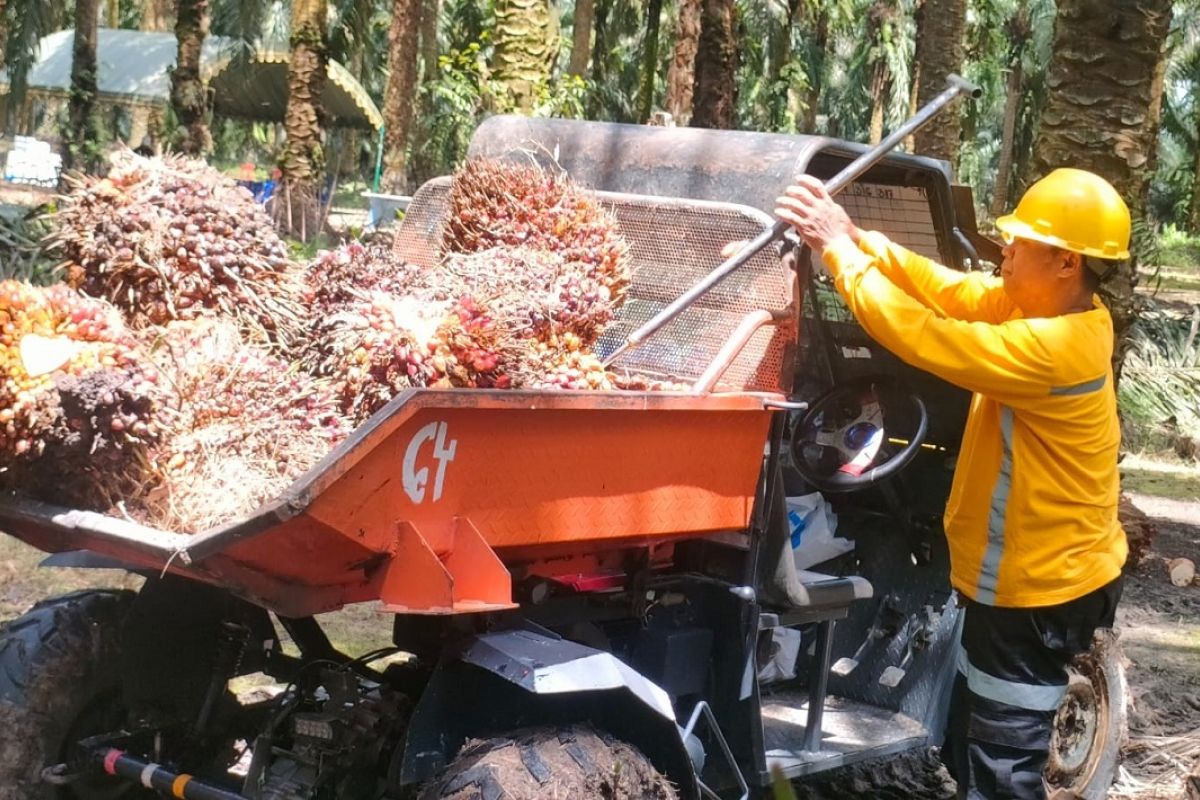
In the context of traceability, smallholder farmers represent the most vulnerable point in the supply chain.
Jakarta (ANTARA) - Traceability is considered to play a crucial role in the palm oil industry to maintain access to global markets while strengthening the legitimacy of sustainable governance practices.
However, researcher Windrawan Inantha from the Strategic Advisor Center for Entrepreneurship, Change, and Third Sector (CECT) Sustainability at Trisakti University explains that the main challenge in implementing traceability in the national palm oil industry is that 42% of Indonesia’s palm oil area is managed by smallholders.
“In the context of traceability, smallholder farmers become the most fragile point in the supply chain,” he stated during his remarks in Jakarta on Monday.
He noted that the European Union, through the EU Deforestation Regulation (EUDR), demands that commodities like palm oil be proven free from deforestation and traceable from the final product in supermarkets back to the original plantation location.
In the global palm oil trade arena, he continued, the European Union has shifted from being a market or buyer of products to a determinant of the industry’s direction.
This pressure from the European Union presents a major challenge for the national palm oil industry because the domestic market has almost never requested information on the origin of crude palm oil (CPO) in cooking oil bottles or derivative products.
“Palm oil traceability today is largely driven by market access pressures and global governance rather than domestic consumer demands,” he said.
According to him, there are at least five challenges in implementing traceability at the smallholder level, namely land legality, technical capacity, weak economic incentives, certification costs and farmer organisation, as well as limitations in supporting human resources.
“A system that demands precise geolocation, legal documents, administrative recording, and digital connectivity will always be easier to implement by large companies than by independent smallholders,” he said.
Therefore, Windrawan hopes that the Plantation Fund Management Agency (BPDP) can act as a catalyst for transformation in the plantation sector while addressing traceability challenges in the national palm oil industry.
He encourages BPDP to make traceability readiness a priority condition for programme beneficiaries. BPDP’s replanting programmes, infrastructure facilities, training, and institutional support should give more weight to farmer groups that already have E-STDB, plantation maps, or ongoing legalisation processes.
“Policy incentives must feel tangible at the farmer level,” he said.
He hopes BPDP will fund data infrastructure at the smallholder level. BPDP needs to support people’s plantation mapping, training in geolocation device usage, digitalisation of farmer group archives, and sustainable field mentoring schemes.
Furthermore, BPDP should link the traceability agenda with land legality resolution; additionally, the agency needs to collaborate with the Ministry of Agrarian Affairs and Spatial Planning/National Land Agency, the Ministry of Forestry, local governments, and farmer institutions so that legality issues are not left as a permanent bottleneck.
“As long as land status is unclear, traceability data will not be solid,” he stated.
He hopes BPDP can facilitate pilot incentive programmes such as price premiums, purchase contracts, or other support schemes that allow farmers to see direct economic benefits from traceability.
“As long as fruit from traceable plantations is priced the same as non-traceable ones, change will progress slowly,” he said.
He added that BPDP should continue to promote the development of harvest traceability methods related to supply chain traceability certification as a priority topic by using its research and development function more sharply.
On that occasion, the Doctor in Sustainable Development Management appreciated BPDP’s announcement of preparations to develop a WebGIS-based ISPO information system and mobile application.
“This is the right signal. The challenge now is to ensure that research, digital systems, and field financing move within one architecture, rather than operating independently,” he said.