
Researchers Find 1,600 Worms in This Fish, Widely Consumed by Indonesians
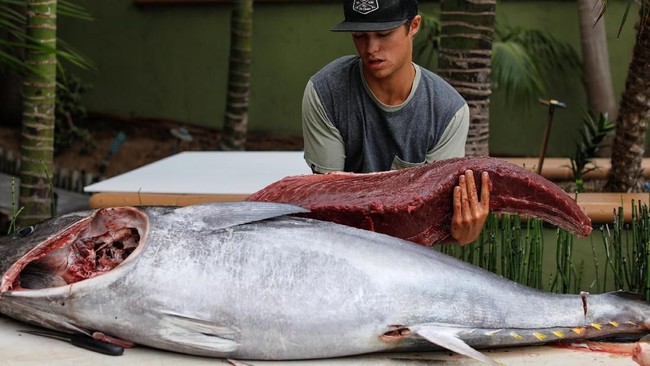
Fatty tuna, often processed into sashimi or canned, frequently contains parasites. A recent study has found parasites in almost all the tuna examined by experts.
Researchers from the Federal University of Salgrade, Brazil, analysed 53 tuna caught in local waters. The results showed that 96% of the fish were found to be infected with worms.
According to ScienceAlert, researchers discovered more than 1,600 worms across the entire sample of fish examined. The findings were published in the journal Ocean and Coastal Research.
Using microscopes, the research team examined various fish organs. Only the kidneys and heart were consistently found to be free of parasites.
Meanwhile, the intestines showed the highest infection rate. Following this, parasites were most frequently found in the muscle tissue—the part of the fish generally consumed by humans—and the stomach.
“These findings highlight the importance of sanitation inspections,” the researchers wrote.
They also emphasised the importance of removing the internal organs of the fish immediately after capture. This step is necessary to prevent larvae from migrating from the internal organs to the muscle tissue.
The tuna studied belongs to the Katsuwonus pelamis species, known as skipjack tuna, oceanic bonito, or katsuo. In Indonesia, this type is more commonly known as skipjack (ikan cakalang).
This species has high commercial value and is the most abundant type of tuna in Brazil. In 2022, skipjack was even the third most caught marine species in the world, with a volume reaching 3.1 million tonnes.
The study identified two groups of worms commonly infecting the fish: Trypanorhyncha and Anisakis. The presence of parasites in fish is not a new phenomenon, as fish and parasites have coexisted in marine ecosystems throughout a long evolutionary process.
However, the number of parasites found in this study and their distribution across various organs has become a concern for researchers.
Nevertheless, the study remains small-scale, as it only involved 53 fish and was conducted during a specific period. Therefore, the results cannot yet be used to conclude that 96% of all tuna or skipjack worldwide are infected with parasites.
Is it dangerous to eat?
Consumers do not need to immediately discard canned tuna at home. Human infection caused by Trypanorhyncha larvae is considered rare. Furthermore, not all Anisakis species are known to cause disease in humans.
Most parasites are no longer dangerous after being killed through the processes of cooking or canning. The greater risk arises when fish containing certain parasite species are consumed raw or undercooked.
Live parasites can attach to the walls of the human digestive tract. This condition can cause various digestive disturbances, ranging from stomach pain, nausea, and vomiting to diarrhoea.
The seafood industry generally conducts inspections before fish are sold to consumers. Visible parasites are removed during the processing stage.
However, some very small parasites may still escape inspection. Beyond health concerns, the presence of parasites can also affect the market value of seafood products.
“Beyond the potential impact on human health, parasites can reduce the marketability and value of seafood products due to implications for food safety and quality, lowering consumer confidence, and causing economic losses for the fishing industry,” the researchers wrote.
Previous research has even indicated an increase in the number of Anisakis parasites in raw seafood. A study by researchers at the University of Washington in 2020 found that the number of Anisakis worms had increased approximately 280-fold since the 1970s.
On average, findings changed from fewer than one worm per 100 caught fish to more than one worm per host fish. However, this increase is not necessarily a bad sign for humans or marine ecosystems.
Anisakis parasites have a life cycle involving various marine creatures, including fish, squid, whales, and dolphins. These parasites do not actually use humans as their primary host.
Chelsea Wood, a parasitology expert from the University of Washington, stated that the presence of certain parasites can be an indicator of a healthy marine ecosystem.
“Everyone assumes that worms in salmon are a sign that something is wrong,” said Wood.
“However, the life cycle of anisakids involves many components of the food chain. I see their presence as a signal that the fish on your plate comes from a healthy ecosystem,” she continued.
Scientists have not yet been able to confirm whether the number of parasites found in skipjack in Brazil is considered normal. Research into parasites in this fish is also still relatively limited, even though the species is vital to the global fishing industry. For consumers, the simplest way to mitigate risk remains cooking fish thoroughly.
“If I am being honest, there are worms in everything you eat,” said Wood.
“But cooking kills various parasites that we find in food. It is only when we consume raw or undercooked food that we potentially face live and infectious parasites,” she added.
Source: jawawa.id (https://jawawa.id/newsitem/researchers-find-1-600-worms-in-this-fish-widely-consumed-by-indonesians-1790905956)
Originally published by CNBC Indonesia (https://www.cnbcindonesia.com/lifestyle/20261001201731-33-772682/peneliti-temukan-1600-cacing-di-ikan-ini-banyak-dikonsumsi-warga-ri), translated from Indonesian