
Researchers Attempt to Engineer Male Mosquitoes to Eradicate Malaria
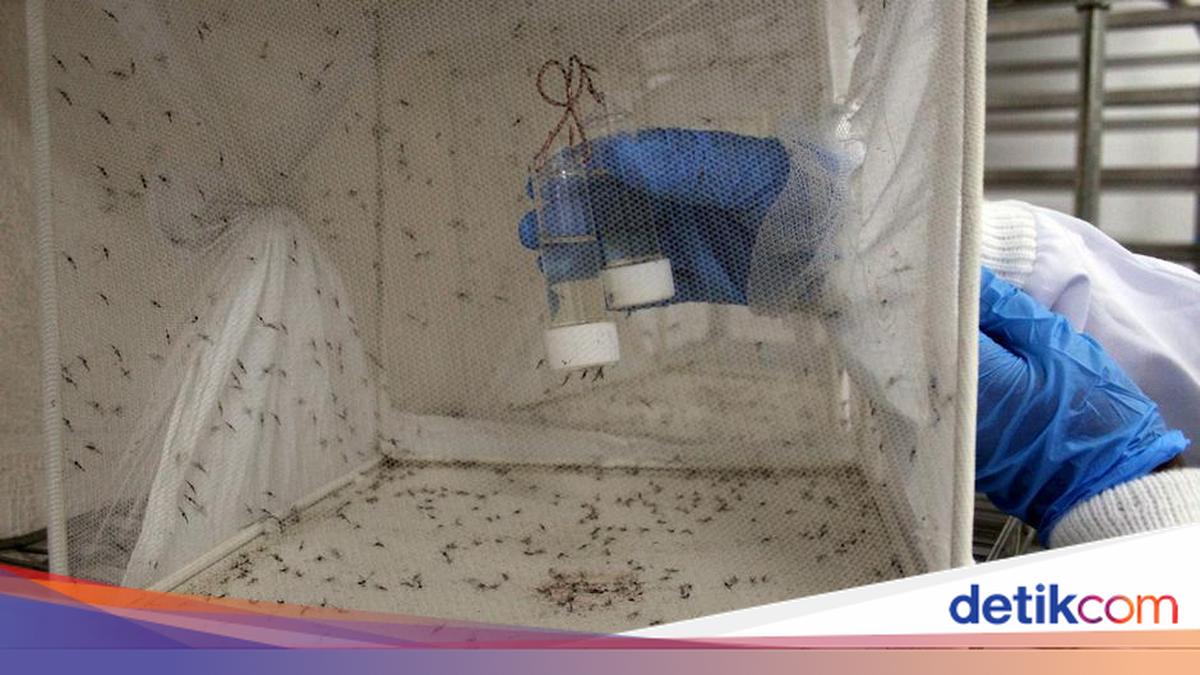
At a high-security laboratory within the Uganda Virus Institute, scientists are busy researching genetically engineered Anopheles mosquitoes. These mosquitoes can carry the parasite that causes the dangerous disease malaria. Laboratory assistant Angela Nakamura, wearing blue plastic gloves, reaches for a box wrapped in mosquito netting. Inside, hundreds of mosquitoes buzz about, seeking blood. ‘Before starting, I must ensure I comply with safety rules,’ explains the Ugandan insect researcher, ‘including wearing gloves and a lab coat to avoid mosquito bites.’ At the heart of the high-security lab reside the mosquitoes under study. ‘To get them to lay eggs, we have to feed the adult mosquitoes blood for three days,’ Nakamura clarifies. She feeds them human blood from a blood bank, heated precisely to body temperature, 37 degrees. ‘The next day, we wait for the mosquito eggs, and we have already prepared hatching sites for them,’ she adds.
Malaria, also known as swamp fever, is one of the deadliest diseases in tropical regions, especially for young children. Almost every minute, a child under five dies from this disease worldwide. According to World Health Organization estimates, around 263 million people test positive for malaria each year, with 94 per cent of cases occurring in Africa. The disease’s spread is widening due to climate change and rising temperatures, now even reaching Europe and North America. However, researchers are determined to wipe it out, with the global community setting a target to eradicate malaria completely by 2030.
To approach this target, the leading research institute in Uganda, which also studies deadly viruses like Ebola and Zika, is trying a new approach. The core idea is to precisely modify the genetics of mosquitoes to eventually eliminate them from the world entirely. Dr Jonathan Kayondo, head of the insect research department at the Uganda Virus Institute, leads a 40-person team that is part of an international consortium. Their joint project, called ‘Target Malaria’, involves over 200 researchers from the US, UK, Italy, and Burkina Faso. ‘By manipulating one gene, we can increase the number of male mosquitoes,’ the insect researcher explains. If more male larvae hatch than females over several generations, Kayondo elaborates, ‘then malaria transmission will stop because only female mosquitoes bite and spread the disease.’
This unique project is still in its early stages. So far, genetic engineering has only been carried out in laboratories at the US Centers for Disease Control and Prevention, along with effect trials. Genetically engineered mosquito larvae have now been flown to Uganda in high-security boxes for imminent field trials. ‘The gene modification might be the easiest part,’ Kayondo notes. After the gene is altered, the mosquitoes must pass various safety studies. ‘We want to ensure the gene modification only affects malaria transmission, without causing other effects,’ he adds, ‘like increasing the transmission of other diseases.’
The institute is situated in the highlands with a panoramic view of Lake Victoria. Kayondo points towards the Kalangala or Ssese Islands, an archipelago named after the tsetse fly. It was here in 1906 that Robert Koch, a young German tropical doctor and Nobel laureate, researched sleeping sickness on behalf of the German colonial administration. The disease, transmitted by the tsetse fly, had killed a quarter of a million people in German East Africa at the time. To test his drugs, the German researcher established a concentration camp on Ssese, housing dying Africans and forcing toxic chemical drugs upon them. It is on these same islands that Kayondo plans to release the genetically engineered mosquitoes in the coming years to test them in their natural habitat. ‘In the final study, we must prove effectiveness through field trials,’ he states. ‘We are still planning the study’s course. If the field trial is approved, we might be ready in two or three years.’