
Researcher: Lower Tar and Nicotine Levels Could Affect Tobacco Farmers and Workers
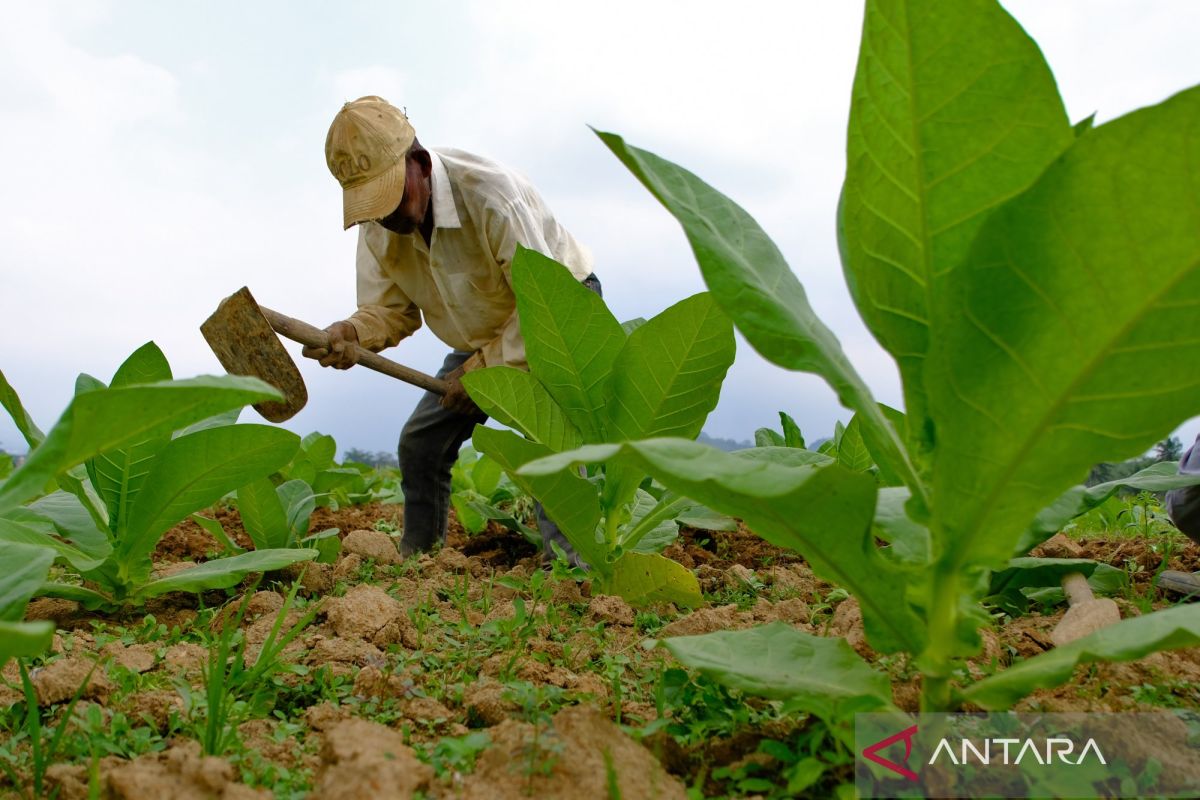
The findings indicate that a policy limiting tar and nicotine levels in cigarettes could affect demand for raw materials and economic activity throughout the tobacco industry supply chain.
Jakarta (ANTARA) — A policy to lower tar and nicotine content in cigarettes is expected to affect the upstream tobacco sector, from farmers to workers in the tobacco-products industry.
Professor Candra Fajri Ananda, head of research at the Centre for Economic Policy Research at the Faculty of Economics and Business, University of Brawijaya (PPKE FEB UB), said in Jakarta on Friday that an estimated 8,500–23,700 tonnes of domestic tobacco could go unused, resulting in an estimated loss of Rp115.5 billion to Rp322.0 billion in farmers’ income.
In a study entitled “Implications of Lower Tar and Nicotine Levels and Restrictions on Flavour Variants in Indonesia”, he said the impact was estimated to affect between 81,880 and 228,390 farmers, as well as 128,820–220,840 workers.
“These findings show that a policy limiting tar and nicotine levels in cigarettes can affect raw-material requirements and economic activity throughout the tobacco industry supply chain,” Candra said in a statement.
For a ban on flavour variants, the low, moderate and high scenarios assume daily consumption falls by 10 per cent, 25 per cent and 50 per cent respectively among consumer groups, alongside assumed shifts in the market. These percentages are scenario parameters.
He added that a ban on flavour variants would reduce legal cigarette production by 4.60–22.35 per cent compared with the baseline.
“On the other hand, the share of illicit cigarettes in each scenario is projected to rise sharply, reaching as much as 25.61 per cent,” he said.
The market changes simulated under a flavour-variant ban would also reduce tobacco excise receipts to Rp203.60 trillion in the low scenario, Rp189.03 trillion in the moderate scenario and Rp165.77 trillion in the high scenario.
“Compared with baseline receipts of Rp213.48 trillion, the potential revenue loss ranges from Rp9.88 trillion to Rp47.71 trillion,” he said.
Professor Candra therefore recommended that the government take account of changes in consumption, market shifts, state revenue, domestic raw-material needs and employment in an integrated way when formulating policy.