
Researcher assesses electricity contraction does not disrupt manufacturing
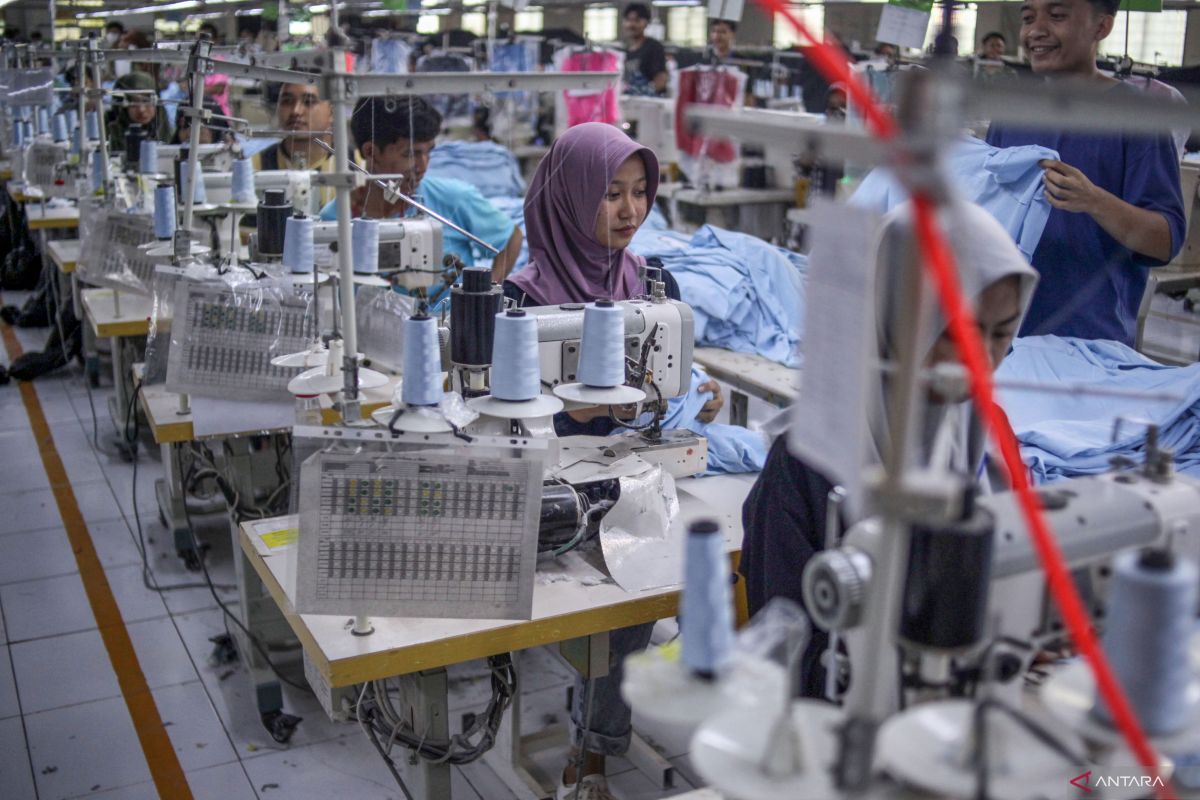
Jakarta (ANTARA) - Economist from the Great Institute Adhamaski Pangeran assesses that the contraction in the electricity, gas, and water procurement sector in the first quarter of 2026 by 0.99 percent (year-on-year) does not contradict the manufacturing industry’s growth achievement of 5.04 percent.
Adhamaski stated that several factors are driving the contraction in the electricity, gas, and water sector, including the slowdown in business activities during the Eid al-Fitr period, up to the impact of the end of electricity tariff discounts, but it does not directly disrupt manufacturing growth due to its seasonal nature.
“Electricity consumption does indeed historically tend to decline during the Eid al-Fitr period because commercial business and office activities temporarily stop during the holiday. For illustration, in the second quarter of 2025 during Lebaran, the electricity, gas, and water sector also experienced a quarterly contraction,” he said in his statement in Jakarta on Thursday.
Adhamaski mentioned that external pressure factors in the form of geopolitical turbulence in the Middle East also temporarily disrupted the distribution of gas commodities. In such conditions, the government tends to prioritise gas needs for households over the business sector.
He noted that the limited supply of domestic natural gas and adjustments to industrial gas quotas also pressure energy-intensive industries such as ceramics, glass, and cement.
“However, the impact on the national manufacturing sector is relatively limited because not all manufacturing subsectors have the same dependency on gas,” he said.
In addition, the normalisation of electricity consumption following the electricity tariff discount programme in the first quarter of 2025 also influenced the contraction in the electricity and gas procurement sector at the beginning of 2026.
“In the first quarter of 2025, there was a government stimulus of electricity discounts that encouraged public electricity consumption. When this policy was not re-implemented in the first quarter of 2026, statistically, there was a normalisation from the electricity demand side,” he explained.
Adhamaski also assessed that there is an important conceptual difference in reading data on the electricity sector and manufacturing within the Gross Domestic Product (GDP) structure.
He explained that the value added of the electricity, gas, and water sector in GDP is calculated based on the electricity producer’s margin, which is the difference between output and production costs of PLN or Independent Power Producers (IPPs).
“This means that a contraction in the value added of the electricity sector does not automatically mean that the physical volume of electricity distributed also experiences a contraction at the same level. Increases in electricity production costs, energy prices, or subsidy burdens can affect the value added of that sector,” said Adhamaski.
Furthermore, the Great Institute also stated that consideration should be given to the role of “captive power” in the national industrial structure, especially in smelter-based industries.
Nickel smelters, for example, are one of the main drivers of current manufacturing growth and most use “captive power” or independent power plants.
“This means that manufacturing growth does not entirely depend on electricity supplied by PLN or IPPs. Therefore, the relationship between the contraction in the electricity sector and manufacturing growth cannot be read linearly,” said Adhamaski.