
Researcher and student challenge new Police Law in Constitutional Court
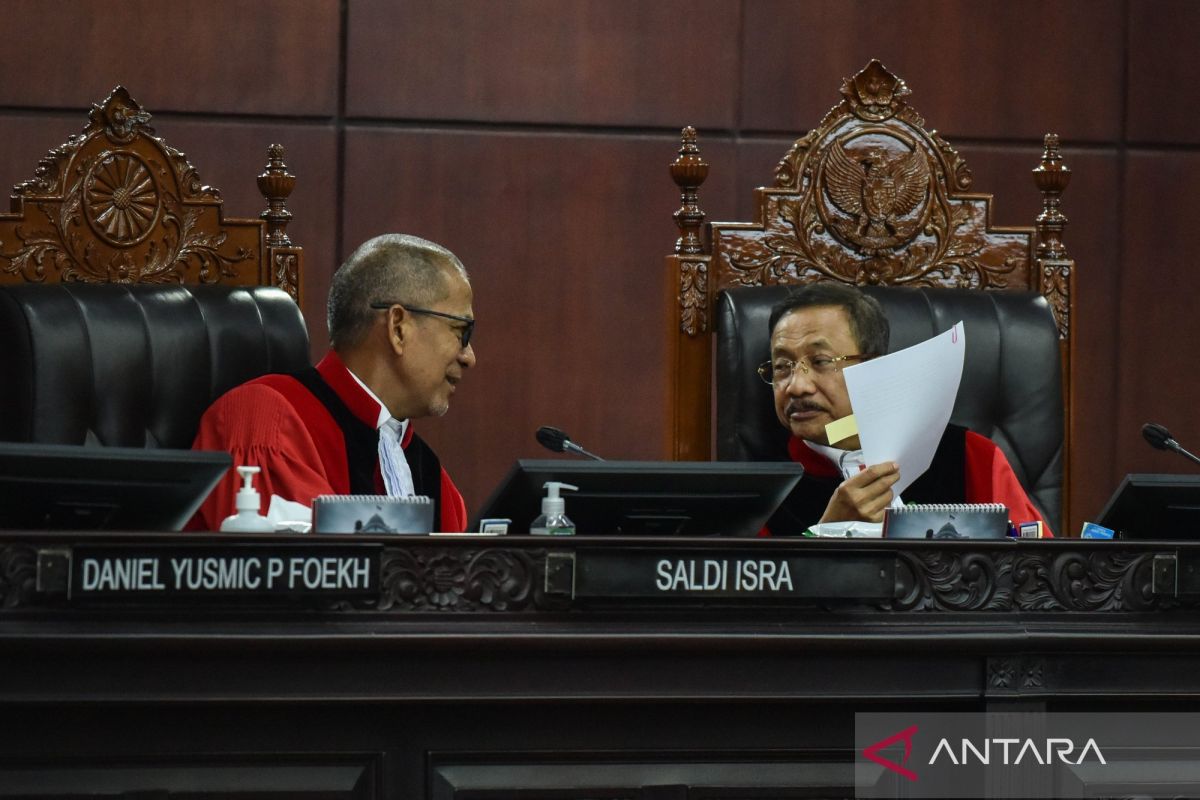
A researcher and a student have filed a judicial review petition with the Constitutional Court (MK) concerning Law Number 5 of 2026, the third amendment to Law Number 2 of 2002 on the Indonesian National Police, which was enacted on 9 June. The applicants are Zulfikar Putra Utama, a researcher at the Indonesian Parliamentary Center, and Muhammad Ezra Suhaeri, an active student and Chair of the Student Senate at Syarif Hidayatullah State Islamic University Jakarta. According to the preliminary hearing minutes published on the MK’s official website, the petition is registered under case number 251/PUU-XXIV/2026. The applicants argue that the formation of the Police Law did not comply with the legislative requirements stipulated in the 1945 Constitution. They are requesting a formal review, alleging strong indications that the law’s formation disregarded various principles and procedures of proper legislation, including the principles of openness, utility, and public participation. The applicants contend that the legislative process consists of five stages: planning, drafting, deliberation, ratification, and promulgation. They emphasised that harmonisation is a mandatory stage before a bill can obtain official proposal status from the House of Representatives (DPR). Citing Article 129 of DPR Regulation Number 1 of 2020, they noted that bills originating from commissions must undergo harmonisation, rounding, and consolidation of conception by the Legislation Body (Baleg). The applicants stated that, conceptually, harmonisation ensures a bill’s alignment, consistency, and integration with the national legal system. They argued that in the context of the Police Law, this stage was crucial, especially given the availability of various strategic studies on police reform, including recommendations from the KPRP. Zulfikar stated in his posita that the quality of harmonisation directly influences the overall quality of the legislative process. The applicants discovered that the Police Bill was not harmonised by Baleg before being designated as a DPR initiative during the Plenary Session on 20 May 2026. Consequently, they argued, Baleg was denied the opportunity to exercise its constitutional and legislative functions. The preliminary hearing was held on Tuesday, 7 July, presided over by Chief Justice Suhartoyo alongside Constitutional Justices M. Guntur Hamzah and Daniel Yusmic P. Foekh. In their petition, the applicants requested a provisional decision to suspend the enforcement of the Police Law and a primary ruling declaring its formation unconstitutional. Following the hearing, Justice M. Guntur Hamzah provided notes regarding the legal standing of the first applicant and the formal review submitted by the second applicant. Chief Justice Suhartoyo also noted the inclusion of the Job Creation Law in the petition, remarking that the Police Law had seemingly never been linked to the Job Creation Law before. The applicants were given until Monday, 20 July, to revise their petition.