
Research: 99 Per Cent of Indonesian Consumers Care About Sustainability
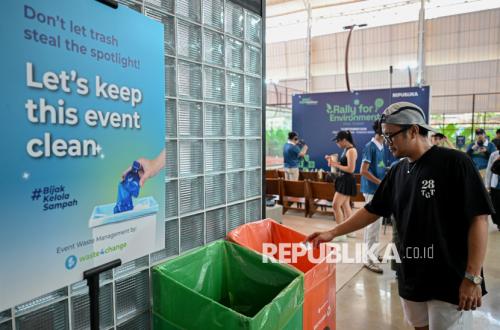
Indonesia has emerged as one of the markets with the highest levels of consumer engagement regarding environmental sustainability in the world. Research from consulting firm Bain & Company shows that 9lar 99 per cent of Indonesian consumers express concern for environmental sustainability, including all surveyed Gen Z respondents.
These findings are part of the fourth edition of the Visionary CEO’s Guide to Sustainability released by Bain & Company in September 2026. The report indicates that concern for sustainability is on the rise, even though investments and the development of sustainable technologies remain unevenly distributed.
Dominik Utama, Partner and Head of Sustainability Practice APAC at Bain & Company, stated that the high level of concern among Indonesian consumers provides an opportunity for businesses to develop products that combine sustainability with consumer needs.
“Indonesia stands out as one of the consumer markets with the highest level of engagement in sustainability we have ever seen, with 99 per cent of consumers caring about environmental sustainability and all surveyed Indonesian Gen Z respondents sharing the same view,” Dominik said in a statement on Monday (14/9/2026).
According to him, businesses need to understand the factors that truly influence consumer purchasing decisions. Health is a primary consideration, while the use of digital technology, including Artificial Intelligence (AI), is also beginning to play a role in driving more sustainable choices.
Among surveyed AI users in Indonesia, 83 per cent told Bain they have used AI to make more sustainable choices. This figure is nearly double the global average.
“Businesses that can meet consumer needs at the intersection of health, digital aspects, and sustainability will be the ones to win the competition,” said Dominik.
Globally, Bain’s survey of 7,500 consumers in the United States, the United Kingdom, Italy, Brazil, and Indonesia showed that 85 per cent of respondents care about environmental sustainability in 2026. This is an increase from 79 per cent in the previous year.
Experiences with extreme weather, such as heatwaves, floods, and wildfires, are the greatest environmental concerns for consumers. This concern is particularly high among young consumers and populations in rapidly growing markets.
Changes in concern are also beginning to be reflected in behaviour. Approximately 83 per cent of surveyed consumers have adopted at least three sustainable living habits, an increase from 73 per cent in 2023.
However, consumer motivation does not always stem solely from environmental concern. Economic, health, and resilience factors are also primary reasons for changing behaviour. Bain refers to this phenomenon as the ‘do-say gap’—the gap between action and words.
Globally, consumers are also willing to pay an average of 18 per cent more for sustainable products. This willingness increases to 24 per cent if the products also offer health benefits. More than half of respondents stated they are now shopping locally more often, primarily to support local businesses and strengthen supply resilience.
Amidst rising consumer concern, global investment in sustainable technology has reached 17 trillion USD over the last decade. In 2025 alone, investment reached a record 2.4 trillion USD.
However, this investment is not evenly distributed. Approximately 90 per cent of investment in 2025 flowed into three sectors: green energy, buildings, and mobility.
Meanwhile, the agriculture, manufacturing and materials, and natural capital sectors received less than 10 per cent of investment, despite these three sectors collectively contributing approximately 37 per cent of global greenhouse gas emissions.
Disparities are also evident in technological development. Of the 37 sustainable technologies analysed by Bain, only solar power, batteries, and electric vehicles have exceeded the adoption projections made a decade ago. Twenty-nine other technologies remain below projections.
Bain identified three factors acting as ‘gateways’ for the development of these technologies: technology, behaviour, and policy. The failure of any one of these factors to progress can hinder the adoption of sustainable technology.
Source: jawawa.id (https://jawawa.id/newsitem/research-99-per-cent-of-indonesian-consumers-care-about-sustainability-1789369344)
Originally published by Republika (https://esgnow.republika.co.id/berita/tlca53490/riset-99-persen-konsumen-indonesia-peduli-keberlanjutan), translated from Indonesian