
‘Republic of Blok M’ Discussed at WCCE 2026 as Pramono and Teuku Riefky Target Creative Economy Growth
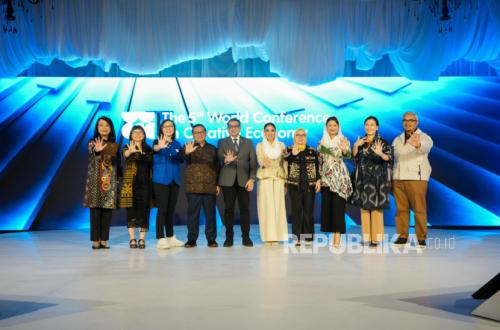
JAKARTA — The creative economy sector contributes more than Rp 410 trillion, or around 11 per cent, to Jakarta’s Gross Regional Domestic Product (GRDP). The Jakarta Provincial Government is encouraging the development of creative districts and the staging of large-scale events to broaden the sector’s economic impact.
Jakarta Governor Pramono Anung said Blok M was an example of a creative district capable of attracting young people, businesses and communities. The area brings together food, music and good access to public transport.
The district’s popularity even prompted Pramono to joke that it was the “Republic of Blok M”. The quip came amid strong public interest in visiting the area.
“Blok M is one successful example of a creative district for young people that is integrated with the MRT and TransJakarta public transport networks,” Pramono said during the “Jakarta, Home for the Creatives” session at the fifth World Conference on Creative Economy (WCCE) 2026 at the Hotel Kempinski in Jakarta on Friday (23 October 2026).
Pramono said the development of creative districts such as Blok M should be expanded. The aim is for Jakarta to be known not only as a centre of government and business, but also as a home for creative people and a destination for international events.
He said large-scale events could be a key driver of economic activity in the capital. Pramono cited the Pestapora festival at JIExpo Kemayoran and The Weeknd concert at Jakarta International Stadium (JIS) last September, which together generated nearly Rp 250 billion in economic activity over a single weekend.
This year’s Jakarta Fair Kemayoran recorded transactions worth Rp 8.2 trillion and attracted 6.1 million visitors. Meanwhile, the Jakarta Great Sale, held from December 2025 to March 2026, generated Rp 26.8 trillion in transactions.
Pramono said the economic benefits of these activities were not limited to event organisers and the entertainment industry. They also created opportunities for hotels, restaurants, trade, transport and micro, small and medium-sized enterprises (MSMEs).
The Jakarta Provincial Government is therefore seeking to transform the capital into an “epicentre of events”. The initiative is intended to spread the economic benefits more widely among the public.
“I call it the Epicentre of Events. When they bring people to Jakarta, we want to capture the economic benefits and reach as many people as possible,” Pramono said.
To widen opportunities for creative professionals, the provincial government has established Jakarta Creative Hub as a development centre. It provides young entrepreneurs and creators with access to co-working space, equipment, training and collaboration opportunities.
Through the Creative Future Labs initiative, the government also brings young creators together with small businesses. Support for the creative industry includes fiscal measures intended to benefit arts practitioners.
Pramono said a 50 per cent tax discount had been introduced for screenings of Indonesian films under Governor Regulation No. 591 of 2026. He added that around 80 per cent of Indonesia’s film production houses are now based in Jakarta.
“We hope Jakarta will not only be a place to watch films, but also a place where great films are made,” he said.
Source: jawawa.id (https://jawawa.id/newsitem/republic-of-blok-m-discussed-at-wcce-2026-as-pramono-and-teuku-riefky-target-creative-economy-growth-1792770650)
Originally published by Republika (https://ekonomi.republika.co.id/berita/tnd3rl370/negara-blok-m-dibahas-di-wcce-2026-pramono-dan-teuku-riefky-bidik-pertumbuhan-ekraf), translated from Indonesian