
Repositioning Population Education
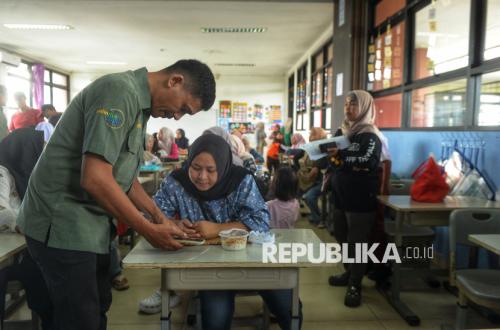
President Prabowo’s administration is targeting an 8% economic growth rate, aiming to achieve this through three new economic drivers: the Free Nutritious Meals (MBG) programme, the Red White Cooperative (KMP), and Danantara. Amid Indonesia’s 5.61% economic growth in the first quarter of 2026, a strategic question remains: has this growth been matched by improvements in human capital readiness?
The 2025 Inter-Census Population Survey (SUPAS) reveals increasingly complex demographic dynamics, including shifts in population structure, high mobility, labour market challenges, and issues with education quality and adolescent reproductive health.
From a public policy perspective, population education must no longer be seen as an auxiliary activity or mere normative counselling. It should be positioned as a strategic national development tool to foster demographic awareness, social risk consciousness, and responsible life decisions among Indonesians.
Data and Facts
SUPAS 2025 data confirms Indonesia is at a critical demographic dividend moment. The working-age population stands at 219.54 million, with a labour force of 154.91 million. However, human resource quality faces serious challenges: 35.49% of workers have primary school education or below, while only 13.13% hold diploma to doctoral degrees. Without adaptive, inclusive, future-oriented education, the demographic dividend could turn into a burden.
Population education is not merely about teaching fertility rates or age structures, but building collective awareness of the links between population size, family quality, reproductive health, economic resilience, environmental sustainability, and development continuity.
On the ground, teenage issues are increasingly multidimensional. Data shows school bullying cases rose from 194 in 2022 to 573 in 2024. School dropout rates persist across all levels, and 34.9% of teenagers face mental health problems. These challenges cannot be resolved through formal education administration alone but require strengthened life literacy, family parenting, and community-based social education.
Repositioning Population Education
Population education programmes are crucial as a visionary step. They should integrate with formal, non-formal, and informal education systems, such as the Population Issues Education Centre for the Public (PESAT) under the Ministry of Population and Family Development/BKKBN. PESAT not only establishes education centres but also integrates demographic issues into schools, universities, communities, Quality Family Villages, and digital spaces. This approach is vital as demographic challenges today are cross-sectoral and intergenerational.
Indonesia’s population education success hinges on grassroots efforts by Family Planning Counsellors and Field Officers (PLKB). As of April 2026, Indonesia has 17,299 counsellors and officers, serving as frontline drivers of family development and population education. Supported by 6,463 Family Planning Counselling Centres and over 77,000 Quality Family Villages, they operate in often unseen social spaces but have strategic impact on public behaviour change.
In modern development paradigms, these counsellors are no longer limited to contraception programmes. They have transformed into human development facilitators, collaborating with schools under the School Population Readiness Movement (SSK), part of PESAT. They guide young families in child-rearing, educate adolescents on reproductive health, promote school readiness initiatives, and strengthen digital family literacy. They reach social spaces inaccessible to formal bureaucracy.
Investing in strengthening these counsellors as population education facilitators is a strategic national investment. When Indonesia discusses achieving the Sustainable Development Goals (SDGs), these officers directly contribute to key targets: poverty eradication, good health, quality education, gender equality, decent work, and reduced inequalities.
Operating in remote, outermost, and frontier regions (3T), they bridge gaps in education governance and welfare for teachers, especially non-tenured staff. Though seemingly distinct, these issues are deeply intertwined in shaping Indonesia’s future human development.
The focus on education in 3T regions underscores that education is not merely administrative school management but a strategic instrument for social justice and national unity. Education in border areas, islands, hinterlands, and disadvantaged regions is a tangible manifestation of the state’s presence.