
Reports of Many Bali Hotels Being Sold Online: Is the Business Collapsing?
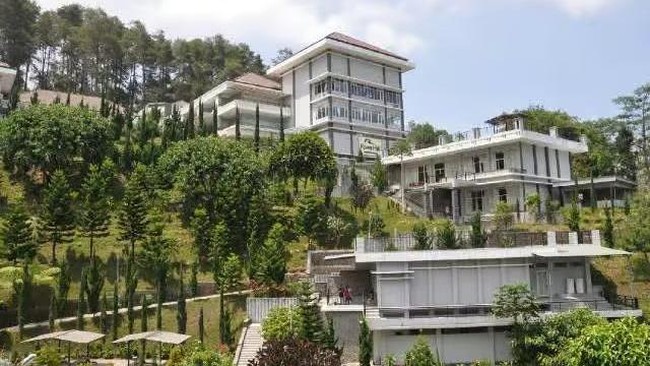
Reports have emerged that several hotels in Bali are currently being offered for sale. This phenomenon has raised questions regarding the state of the hospitality business on the island, specifically whether the proliferation of unlicensed, low-cost accommodation is undermining the performance of formal hotels.
Ferry Salanto, Head of Research at Colliers Indonesia, stated that the offering of hotels for sale does not necessarily indicate that Bali’s hotel business is deteriorating. In property investment, the sale of assets can occur due to various needs and owner strategies.
“In my view, this phenomenon should not be immediately interpreted as the hotel business in Bali being in poor condition. Selling a hotel is a normal part of the property investment cycle. Usually, owners intend to divest, require liquidity, restructure their portfolios, or see this as the right momentum to realise capital gains,” Salanto explained.
Amidst these sales, the Bali hotel market is indeed facing intensifying competition. Tourism growth is beginning to slow as the number of accommodations continues to increase, including within the high-end hotel segment.
Hotel occupancy rates in Bali remain in the range of 69% to 70%. This implies that tourist demand remains available, even though businesses must contend with an increasingly diverse range of accommodation options.
“The current market condition is quite competitive. Tourism growth is slowing, while accommodation continues to increase, including hotels in the upper segment. However, the occupancy levels we monitor are still around 69%-70%. So, demand actually still exists, and Bali remains a very large tourism market,” said Salanto.
According to Salanto, the hotel business in Bali remains attractive to investors. However, future investment strategies can no longer rely solely on the growth in the number of tourists; they must also consider asset quality and the ability to generate higher revenue from each guest.
“Hotels in Bali are still attractive, but they will become more selective. Investors are no longer just relying on the growth of tourist numbers, but are also looking at location, positioning, product quality, the operator, the ability to maintain room rates, and how to create revenue from F&B, wellness, and other revenue streams,”
This strategic shift means businesses need to pursue the economic value of tourists, rather than merely increasing the number of visits. The length of stay and the amount spent by tourists during their time in Bali are crucial factors in maintaining hotel performance.
“There is a necessary shift in Bali, from chasing volume to chasing value. This means not just chasing as many guests as possible, but how to increase the economic value of every guest, including extending the length of stay and encouraging spending that comes not only from rooms but also from other revenue sources,” Salanto added.
Competition also arises from lower-priced accommodation. Villas, homestays, and short-term rentals that do not possess proper permits are part of a tourism landscape that requires attention.
“The phenomenon of cheap accommodation, particularly villas, homestays, and unlicensed short-term rentals, is indeed a factor adding pressure to licensed hotels. They can offer lower prices because their cost structures and tax obligations are different. However, I am not saying that is the sole reason hotels are being sold,” he noted.
Meanwhile, the Secretary General of the Indonesian Hotel and Restaurant Association (PHRI), Maulana Yusran, mentioned that illegal accommodations emerge because they do not hold business permits in accordance with regulations.
“If we observe complaints from the accommodation sector, many illegal accommodations do not have the appropriate business permits for their type of business, even though such regulations are already established in the licensing process,” he told CNBC Indonesia.
A Natural Phenomenon
According to reports, hotels in Bali are being widely sold via online sites. Locations range from Badung, Tabanary, Gianyar, to Karangasem, with prices varying up to tens of billions of rupiah.
To the media, the Vice Chairman of PHRI Bali, I Gusti Agung Ngurah Rai Suryawijaya, stated that the phenomenon of many Bali hotels being sold is caused by various factors.
These include low occupancy rates, internal company decisions, owners testing the value of their assets, or the inability to continue operating the hotels.
“From our perspective, buying and selling is normal. However, people may choose to build elsewhere; that depends on the individual,” he said.
“First, it could be low occupancy rates. Second, it could be due to internal decisions from shareholders wanting to sell. Third, some may want to test the price to see the property’s value. Fourth, it could also be because they are no longer able to operate the hotel,” he added.
Source: jawawa.id (https://jawawa.id/newsitem/reports-of-many-bali-hotels-being-sold-online-is-the-business-collapsing-1791359651)
Originally published by CNBC Indonesia (https://www.cnbcindonesia.com/news/20261007132856-4-774074/muncul-kabar-banyak-hotel-di-bali-dilego-online-bisnis-lagi-ambruk), translated from Indonesian